



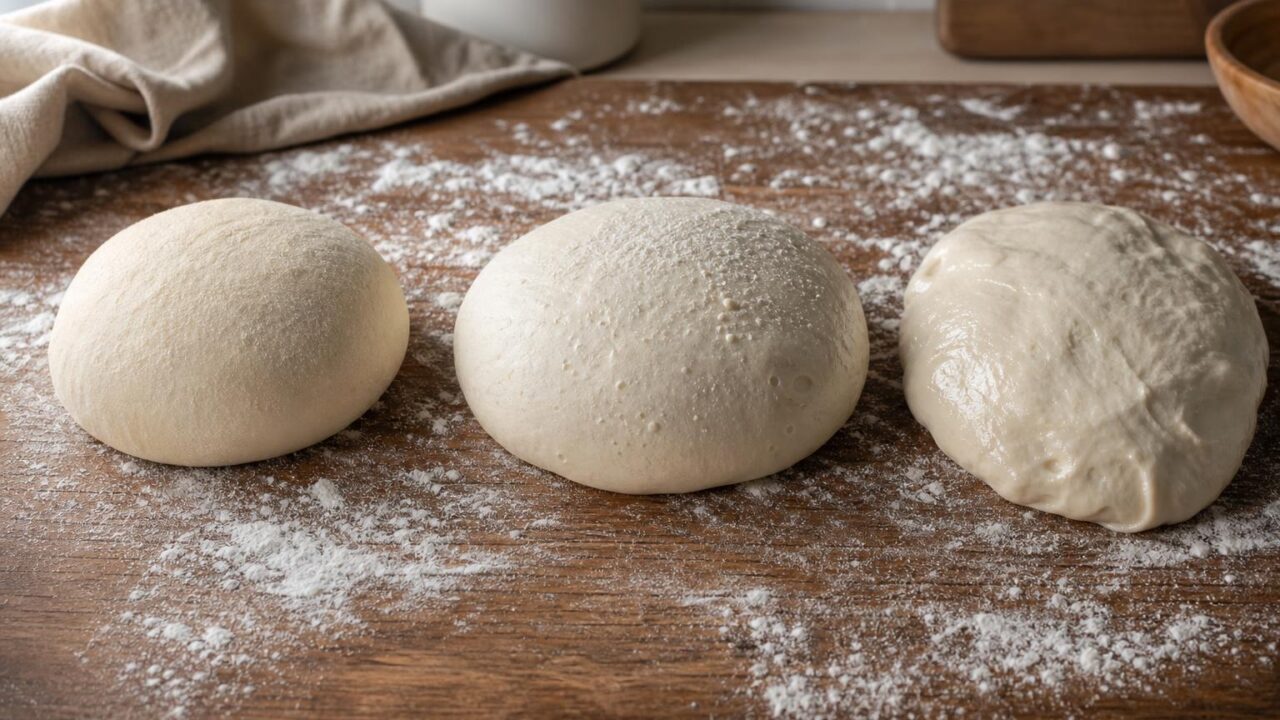
You found a recipe with 70% hydration, you follow it meticulously – and at the end, the dough sticks to everything. To the bowl, to your hands, to the work surface. Sound familiar?
In my workshops, “Which hydration should I use?” is the most frequently asked question. And the honest answer is: It depends on a heck of a lot of things. On the flour, the season, the humidity, the water temperature – and on how much experience you already have with dough.
I’ll try to break it down as honestly as possible here. And a practical dough calculator will be included at the end.
What does hydration (water content) mean in pizza dough?
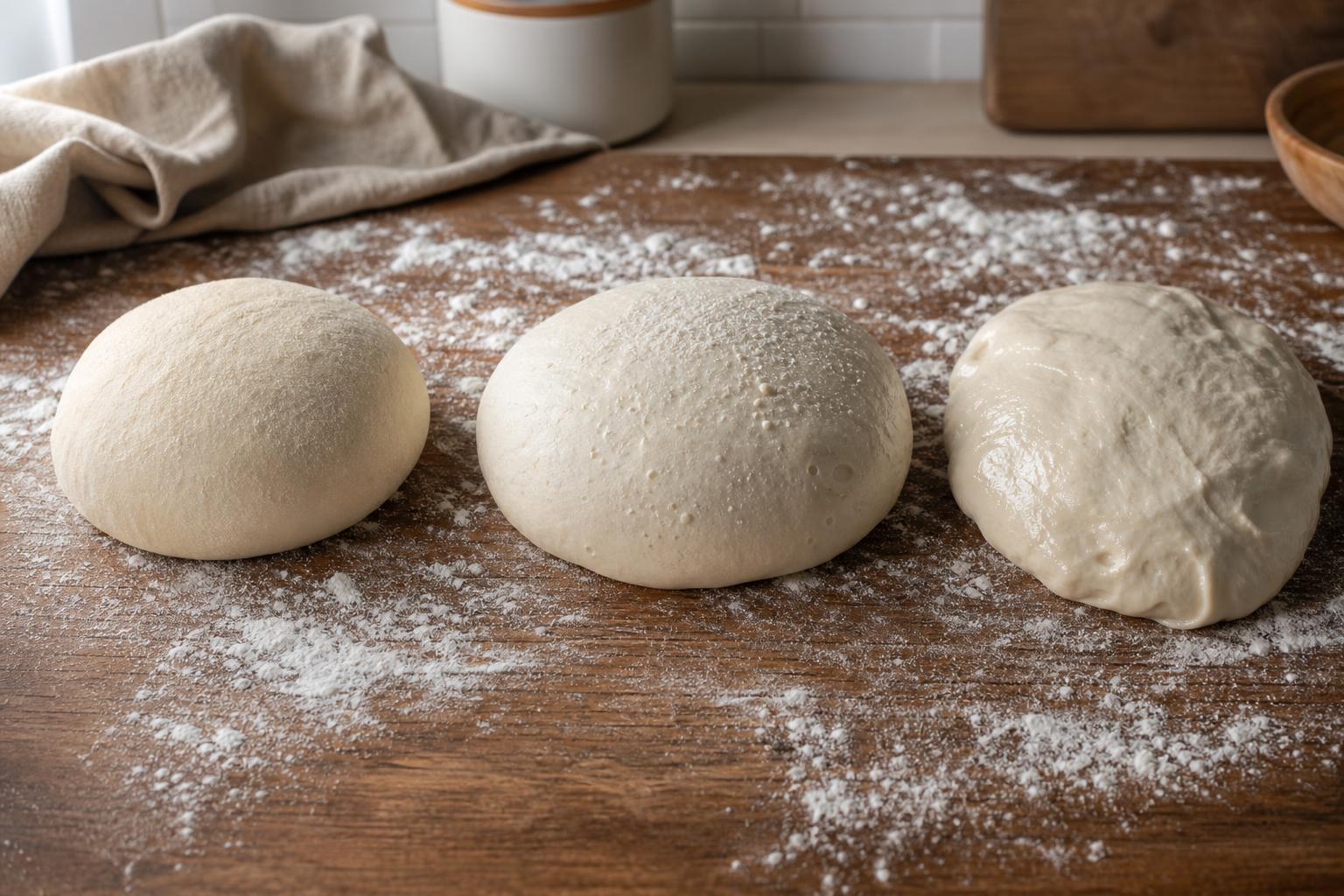
Hydration is the ratio of water to flour – in percent. 1000g flour + 650g water = 65% hydration. More water makes the dough softer, airier, and – if everything is right – impressively light. But also stickier and less forgiving of mistakes.
What many underestimate: A single shot glass of water more (2cl per 1kg of flour) already results in 2% more hydration. You notice it in the dough immediately. That’s why I always dose water for pizza dough to the gram on the scale – never by feel.
What the AVPN standard really says
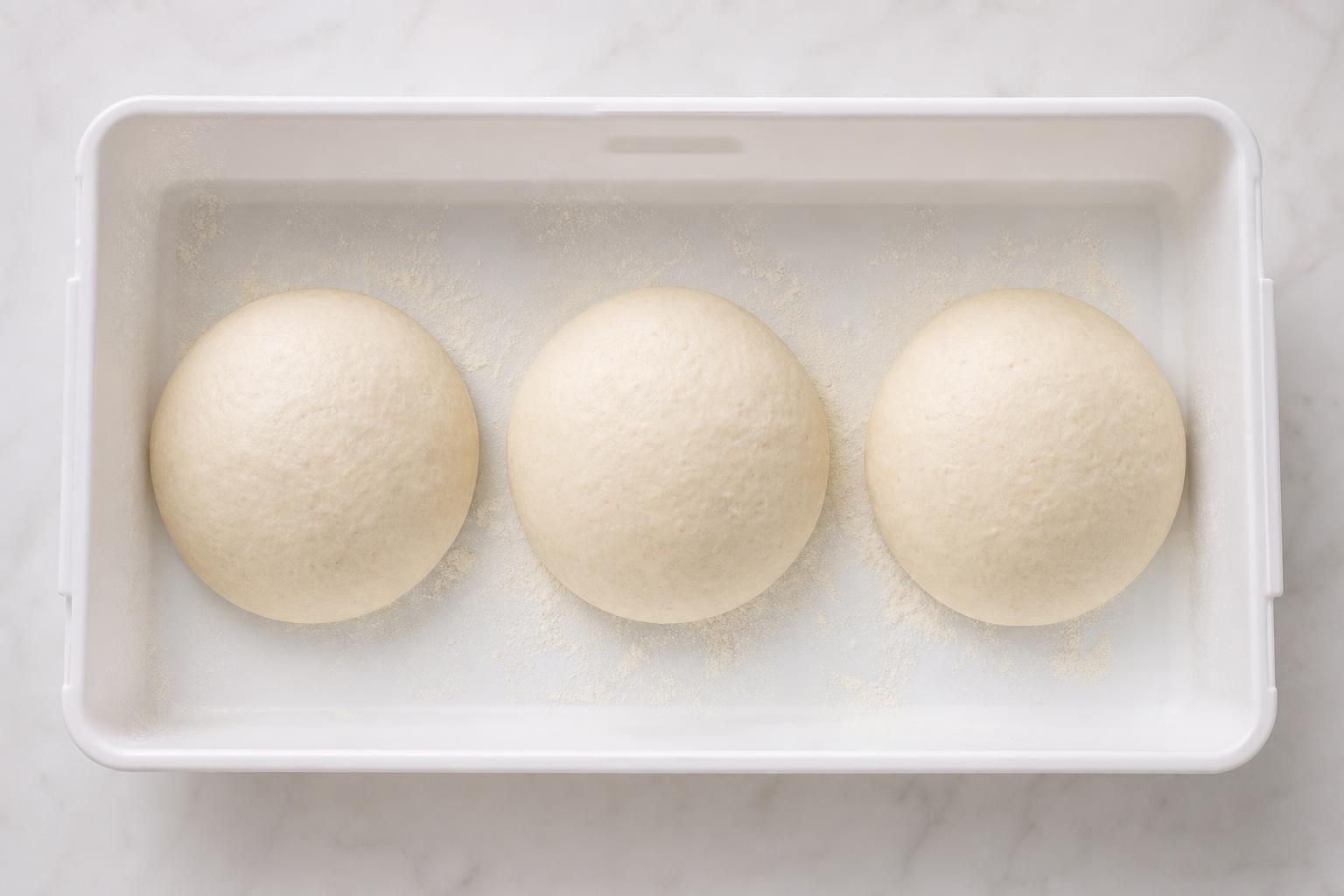
The AVPN – the association for true Neapolitan pizza – defines the standard for vera pizza napoletana at 55–62% hydration. That sounds low at first when you read in forums where everyone talks about 70% +.
In my courses, I work with 62%. That’s the limit where the flour I like to work with most – Molino Dallagiovanna La Napoletana – shows its full potential without the participants having to struggle. For the first pizza night, that’s the perfect starting point: controllable, yet with real character.
Why season and humidity are so important
This is almost always forgotten. In midsummer at 30°C and high humidity, your flour absorbs water differently than in January with dry heating air. Same hydration, completely different dough feel.
My rule of thumb: In summer, I go 2–3% lower than in winter. And the water temperature also makes a difference – warm water accelerates fermentation, cold water slows it down. For long cold fermentation (24h+), I always use cold water straight from the fridge. How you decide between 24, 48, or 72 hours in the first place, I cover separately here.
60%: The safe start
Firm, grippy, hardly sticky. The dough forgives mistakes when stretching, stays on the work surface where you put it, and doesn’t misbehave when sliding into the oven. For everyone who is just starting: this is where you learn the technique before you struggle with the water.
The cornicione remains more compact – but at 450°C+ (Gozney, Effeuno, Witt), the heat does a lot of the work, and you still get beautiful leopard spotting. Suitable for anyone who is building confidence in their technique – and of course also for true Neapolitan pizza according to AVPN standard (55–62% is the guideline).
🌾 Flour recommendation for 60–70%: Dallagiovanna La Napoletana – our standard flour, ideal for this range. For those who want it even easier or plan very short fermentation times, use Le Divine Sofia (weak baking strength, uncomplicated).
70%: Where most people are happy
The dough now has noticeably more life. More elasticity, nicer bubble formation when stretching, airier cornicione. But it also demands more attention now: longer kneading time, sufficient gluten development, keep it cooler during bulk fermentation.
With Dallagiovanna La Napoletana, 70% is easily achievable and a lot of fun. This is often the first moment where people in workshops say: “Okay, this is a completely different league now.”
🌾 Flour recommendation for 65–75%: Dallagiovanna La Napoletana (excellent for up to 70%) or Le Divine Monica for the upper range from 70–75% – medium strength, higher water absorption capacity.
80%: A discipline of its own
Very soft, definitely sticky, flows a bit. Anyone who has never worked with 80% will curse on their first try. That’s normal – I did too.
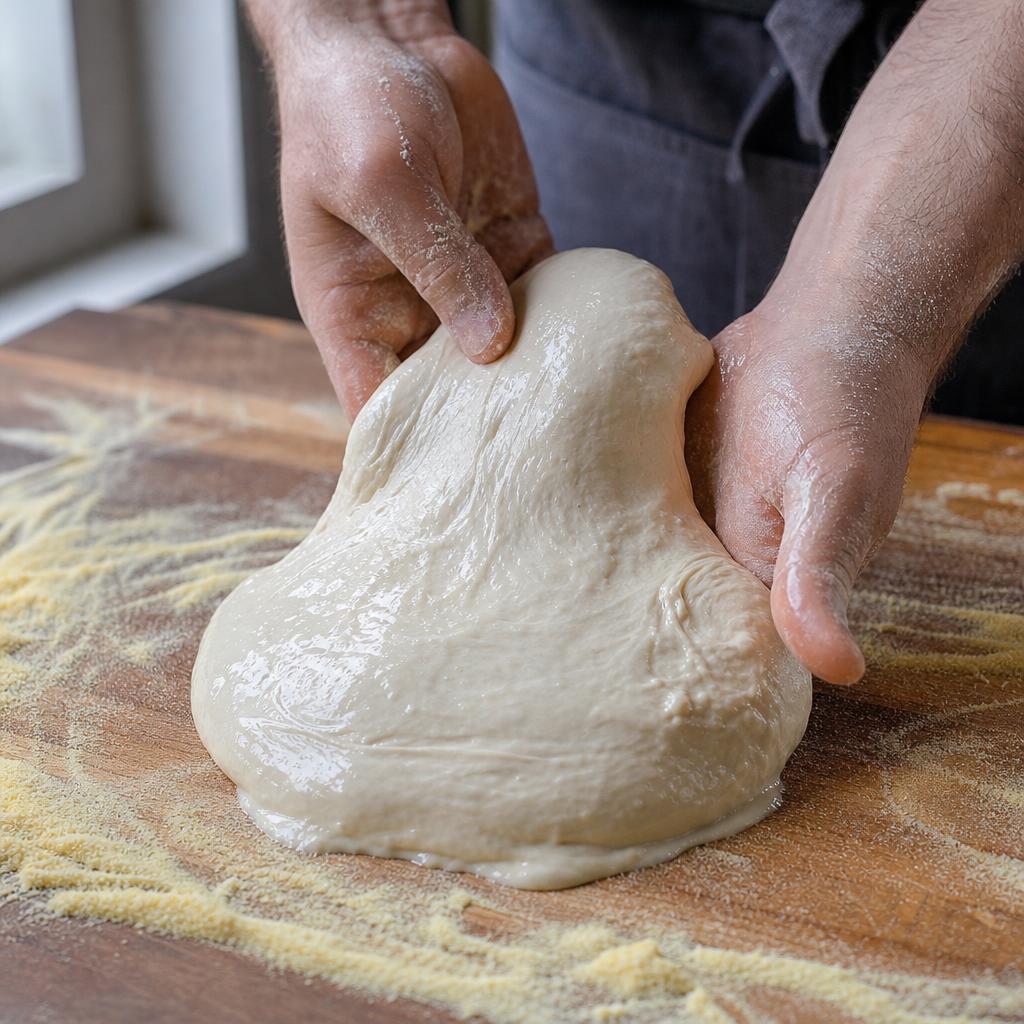
If everything is right – strong flour (W 300+), 48–72h fermentation, sufficient kneading – the result is spectacular. Huge bubbles in the cornicione, almost transparent base, open crumb. Canotto style at its best.
But this is not a recipe for every Friday night. This is a project.
🌾 Flour recommendation for 75–85%: Dallagiovanna Le Divine Anna – the strongest of the three Le Divine flours, high W-value, can absorb a lot of water and holds together even during long fermentation. Without strong flour, 80%+ becomes torture.
My personal sweet spot
Depending on the flour and season, I prefer to work with 68–73%. For me, this is the range where handling and results optimally match. With Dallagiovanna La Napoletana, I tend to go for 68–70% in summer and 71–73% in winter.
This is not a universal guideline – it’s my personal one. Your sweet spot will develop over time. And that’s exactly what makes pizza dough so interesting.
Help: My pizza dough is too sticky – what to do?
It almost always comes down to one of these points:
- Too high hydration for the flour: Supermarket flour (W 180–220) is often overwhelmed at 70%. Dallagiovanna La Napoletana handles 60–70% without problems; for more, you need a W 300+ flour.
- Too little kneading time: The gluten network is not yet strong enough to hold the water. Incorporate more Stretch & Fold, or knead longer mechanically.
- Dough too warm: Above 25°C, it becomes soft and uncontrollable. Cold water, cool bowl, don’t overheat the kneading machine.
- Working too slowly: The higher the hydration, the faster you need to be when stretching. Body heat transfers to the dough – the longer your hands are on it, the softer and stickier it becomes. Work quickly, don’t hesitate, touch the dough as little as possible.
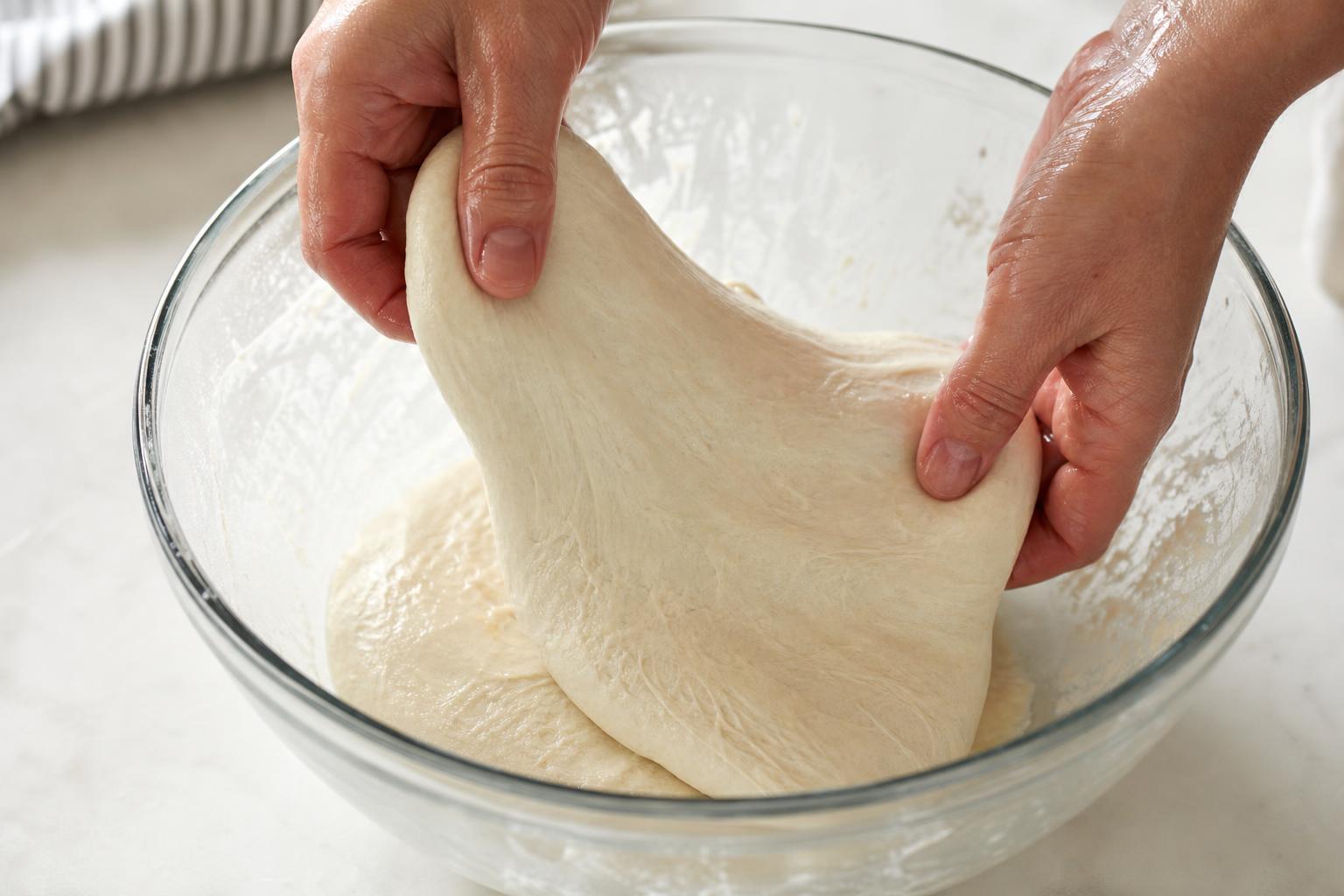
And please: Don’t flour your hands when stretching. I know, everyone does it – but flour on your hands changes the surface of the dough and causes problems when sliding it into the oven. I briefly wet my hands with water, or use a small splash of olive oil. And for spreading on the work surface, I always use Semola – not Tipo 00. Semola sticks much less and is easier to shake off the peel.
What matters just as much as hydration
Quick reminder: An 80% dough made with supermarket flour will not beat a carefully handled 65% dough made with good flour. The three factors that are just as important:
- Flour type: The higher the W-value, the more water the flour can absorb and hold. Dallagiovanna La Napoletana is my daily companion – the ideal starting point for 60–70%.
- Fermentation: Longer cold fermentation makes the dough grippier despite high hydration. 24h is the minimum for 70%+.
- Temperature: Dough too warm = too soft. Always keep an eye on it, especially in summer.
Dough Calculator: Calculate Hydration & Water Content
Enter your flour amount and desired hydration – the calculator will immediately show you how much water you need.
🍕 Pizza Dough Hydration Calculator
My starting point for Neapolitan dough: 1000g Dallagiovanna La Napoletana, 650g water (65%), 28g salt, 2g fresh yeast. From there, I adjust up or down depending on the season and my mood.
And if you like: Let me know in the comments what hydration you prefer to bake with. I'm always curious where others have found their sweet spot.
Klausi 🍕
