



Ask anyone where Italy’s best pasta comes from. The answer is almost always the same: Gragnano. The town near Naples, Pasta di Gragnano IGP, protected origin, the whole story. Rightly so, the pasta is great.
But just a stone’s throw away is a town that used to be just as famous for pasta. And that hardly anyone remembers today: Torre Annunziata.
It is precisely from there that a pasta comes, which from now on will be available at PizzaLaden: from Pastificio Marulo. I was there myself, spoke with Luigi Marulo, who runs the company with his siblings, and this story has stayed with me ever since.
How an entire pasta city fell into oblivion
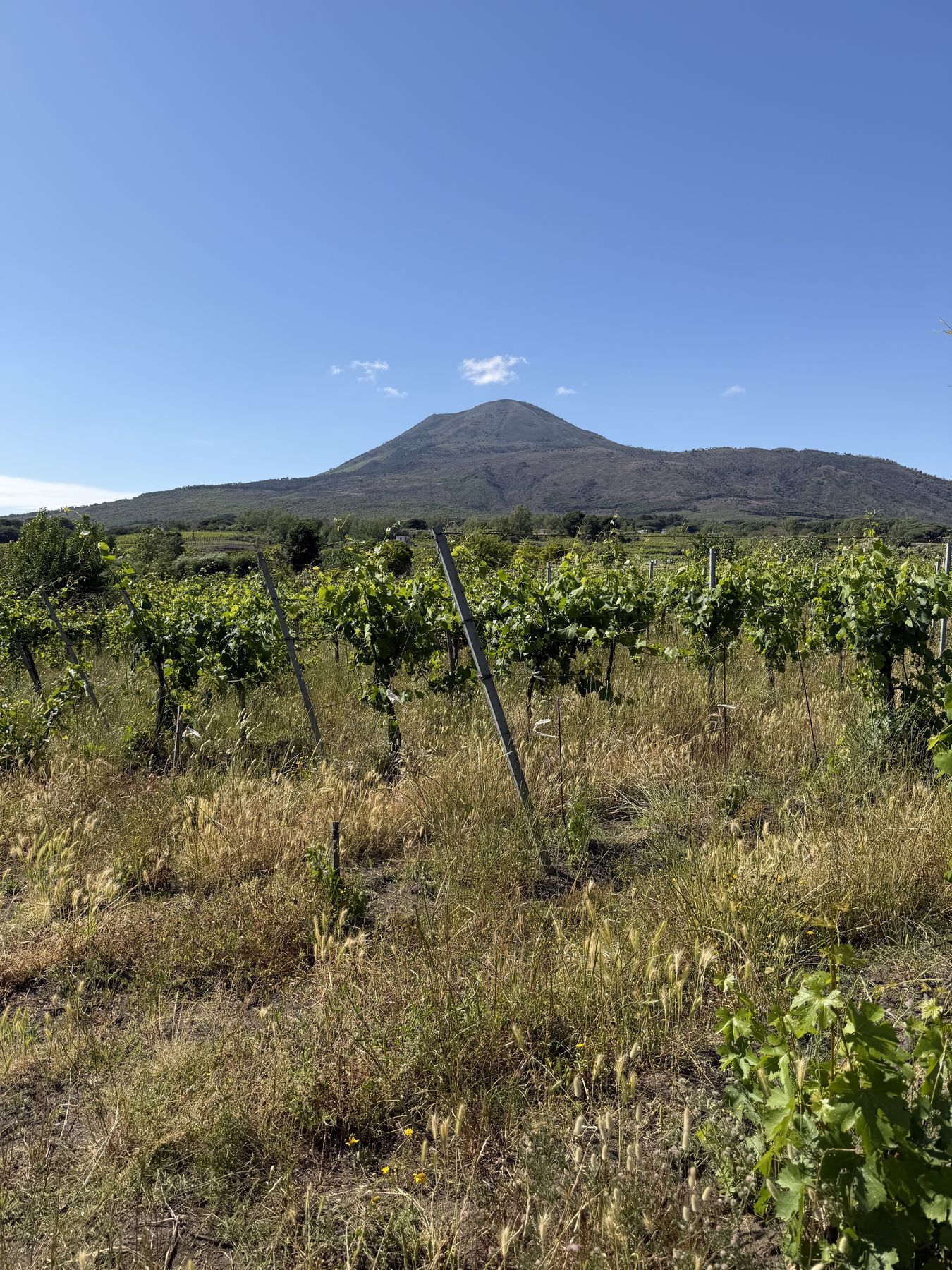
Torre Annunziata is located on the Gulf of Naples, right by the sea, with Vesuvius at its back. Sounds like a postcard, but it’s also the reason why the best pasta has been produced here for centuries. The sea in front, the volcano behind: a natural thermal balance, wind changing multiple times a day, a warm and humid atmosphere. Exactly what is needed for the slow drying of good durum wheat pasta.
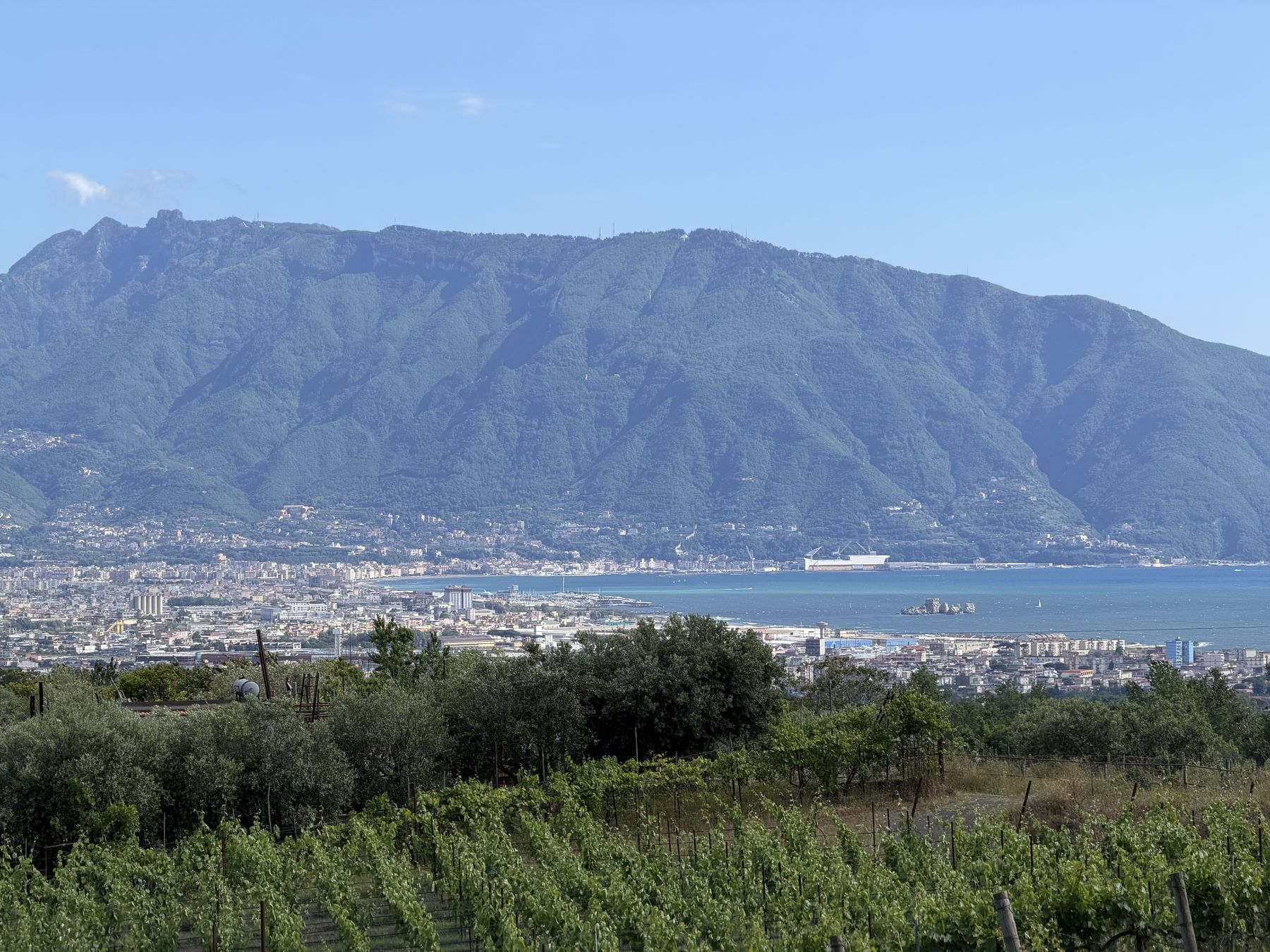
In the 19th century, Torre Annunziata, along with Gragnano, was *the* pasta center near Naples. Over 100 pasta factories, bamboo poles full of pasta in the streets, its own port with silos, which the Bourbons built specifically to make the city a central hub for grain trade. It’s even documented in literature: The writer from Torre, Maria Orsini Natale, herself the daughter of a pasta factory family, wrote a novel about the generational change in a pasta factory with “Francesca e Nunziata”. It was later even filmed, starring Sophia Loren and Giancarlo Giannini.
And then? The Great Depression of 1929, the first turning point. The industrialization of the post-war years in the 1960s, the second. Large players from Emilia-Romagna (Barilla) and Abruzzo (De Cecco) arrived with industrial capacity. The many small pasta factories in Torre Annunziata could not join forces and were left behind. In Gragnano, on the other hand, the companies joined together and fought for IGP certification, which to this day protects small producers from price competition from the big ones. Torre Annunziata missed this step. Not because the pasta was worse, but because that’s how history unfolded. I explain what PGI and PDO actually mean and where the difference lies, using San Marzano tomatoes as an example, here.
The Marulo family: from vegetables to pasta
Marulo is the family name. Three siblings are behind it: Luigi, Francesco, and Maria Vittoria, already the third generation of entrepreneurs, but in very different industries. The Pastificio Marulo itself is still “first generation”: Luigi and his brother founded the company ten years ago. It took two years until the factory was built and the first test production was running.
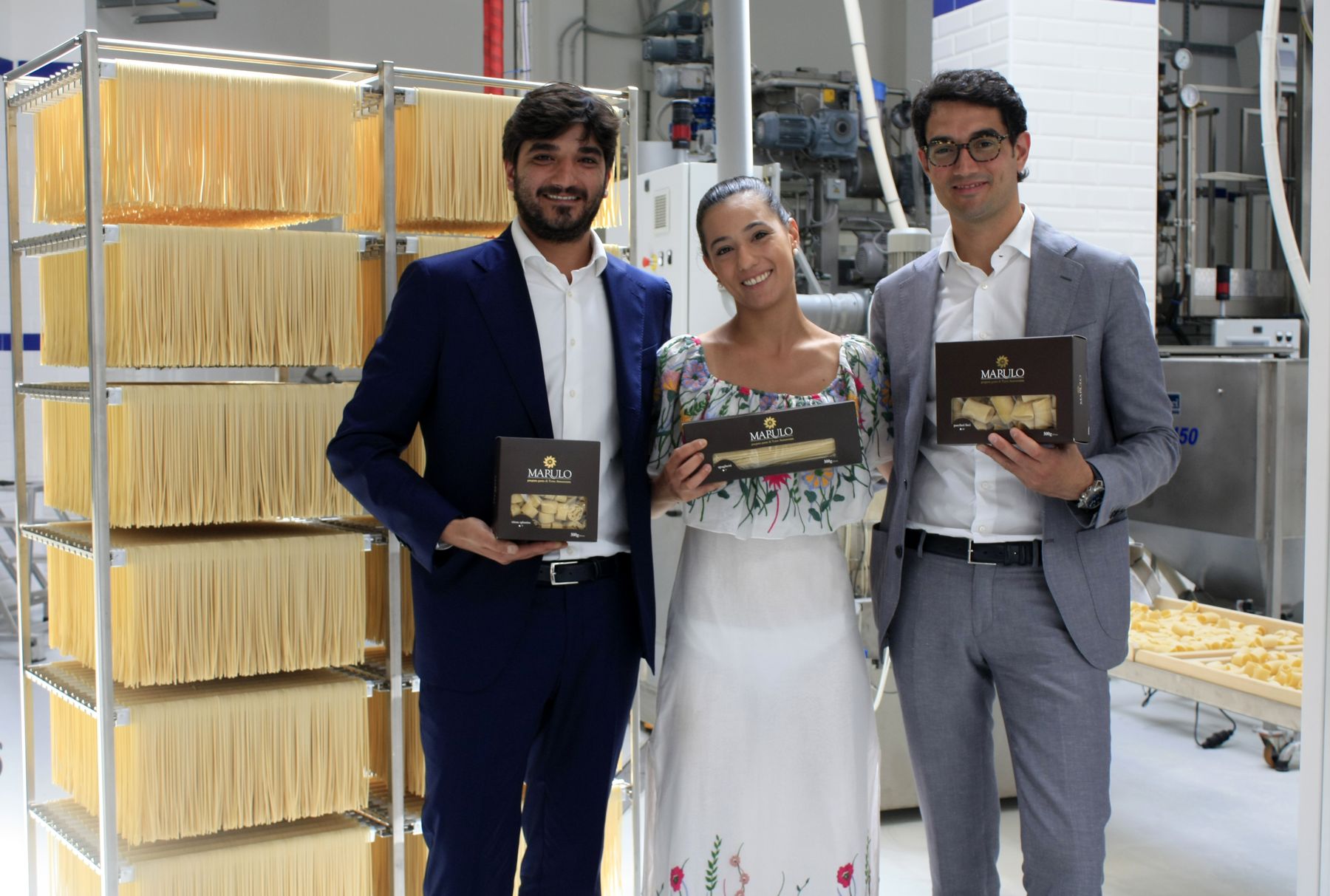
The exciting part: The family doesn’t originally come from the pasta business at all. The grandfather and his brothers were large farmers and traders. They grew and distributed typical Vesuvius products, citrus fruits like mandarins, lemons, and oranges, as well as the local apricot variety “Pellecchielle”, hazelnuts, and walnuts. At the same time, they imported dried fruits from large trading houses and distributed them throughout Southern Europe. This ran from the 1930s to the 70s. The sons then mostly pursued traditional professions, only Luigi’s father continued part of the fruit trade and, as a true entrepreneur, constantly developed new business areas. Most recently, it was health diagnostics, where Luigi and his brother also entered themselves, before they decided to diversify and return to their roots: food.
Because Luigi and his siblings grew up in Torre Annunziata, the capital of “arte bianca”, the white art, as pasta production is called there. With the stories of their grandparents and parents in their ears, of over a hundred pasta factories that once existed in their city. Almost all of them closed down at some point. “We wanted our city to be known again for what it once was: the capital of the white art,” says Luigi. That’s why they invested their knowledge and resources in the very craft that is most deeply rooted in their homeland, and proudly state that they come from Torre Annunziata.
For Luigi, this is more than a business. Torre Annunziata was once the city where wealthy Romans had their villas (even Nero’s wife is said to have owned one), and the capital of the white art. In recent decades, little has remained of that; the city has been associated more with crime than with its actual history. “It’s a challenge: to bring back the identity of our city,” says Luigi. “We believe it’s possible to invest in our country, to produce, to create value, and to bring back the identity of our origin.”
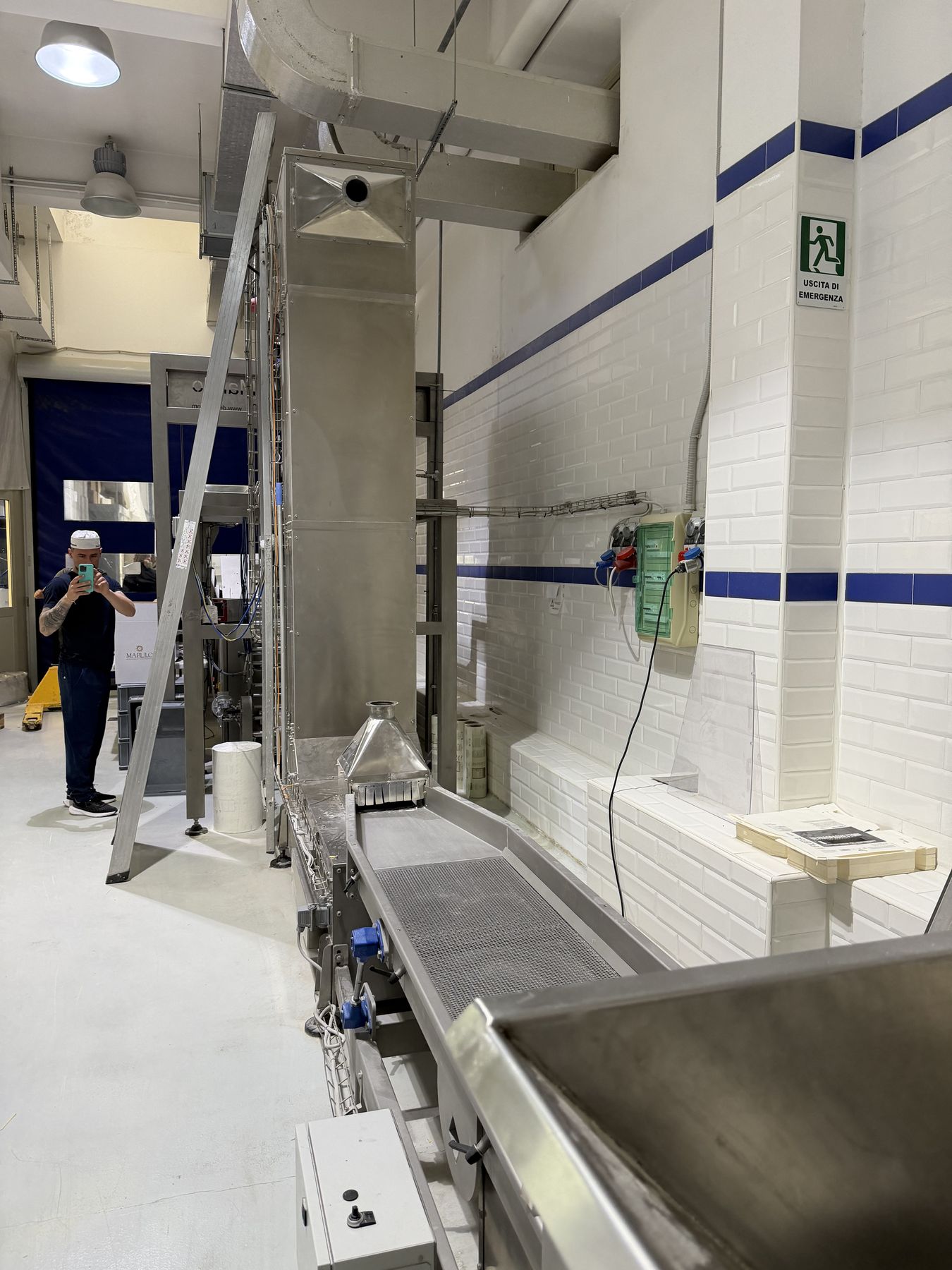
How this pasta is made
You notice the difference between good pasta and supermarket stuff at the latest when cooking and taking the first bite. At Marulo, the difference starts with the raw material: they use exclusively fresh durum wheat semolina made from 100% Italian durum wheat, with a double granulation and a higher protein content. It is sourced from a regional Italian mill that specializes in organic cultivation and milling and is just as careful with conventional semolina as with organic semolina.
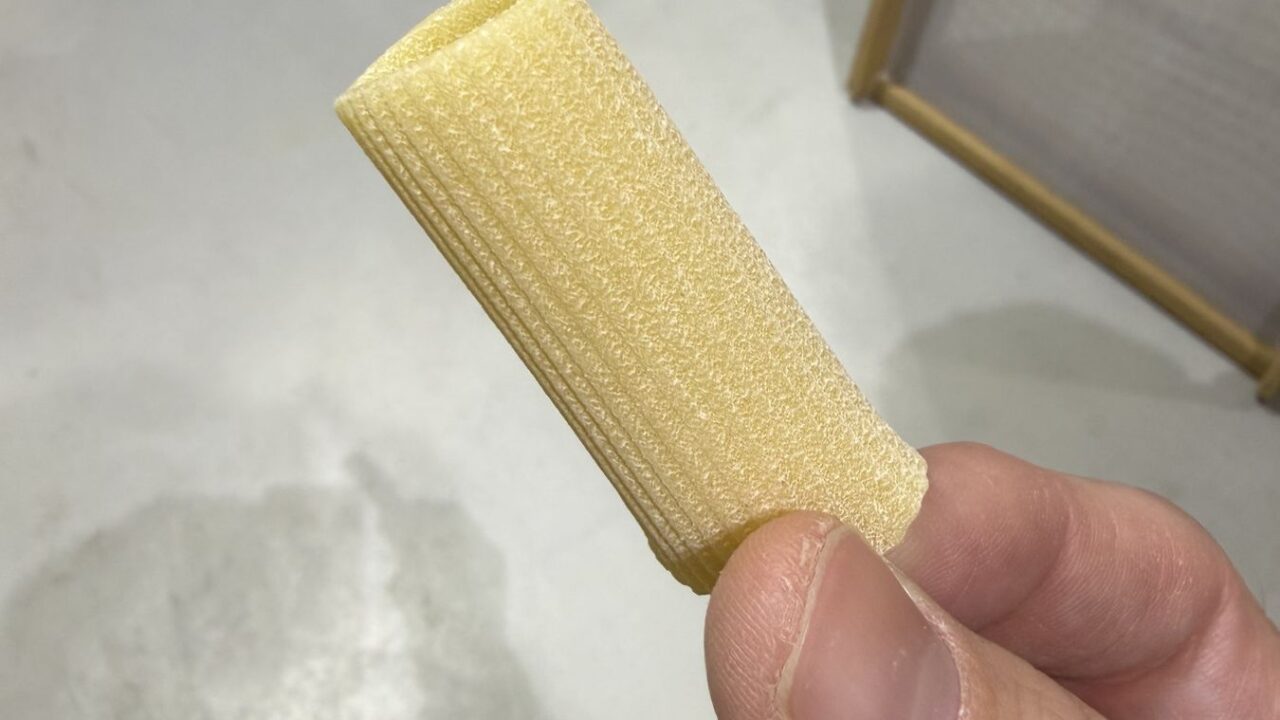
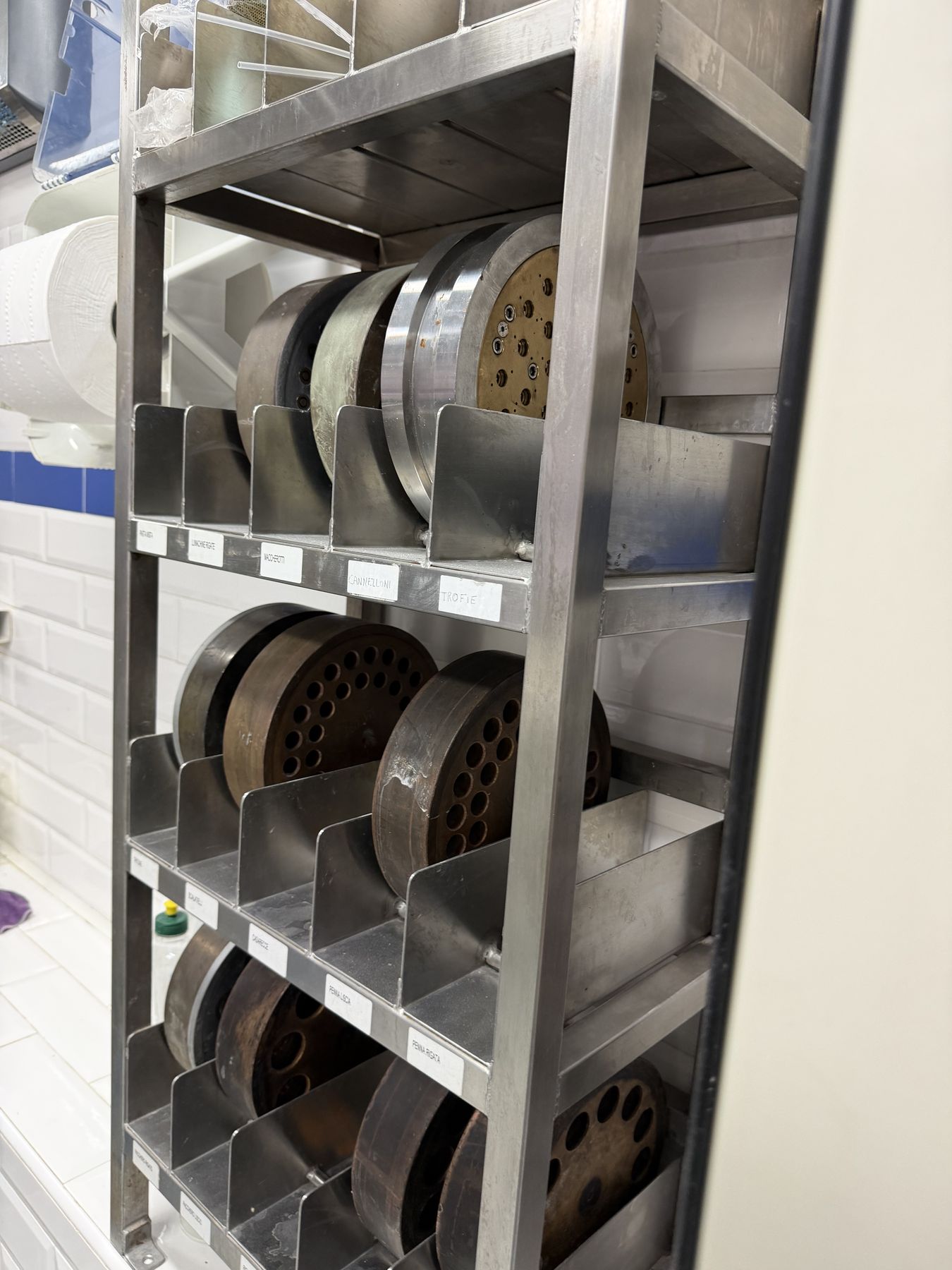
Kneading is done only with cold water. This results in a tougher dough that is harder to press and extrude, but that’s exactly what they want. The pasta is then pressed through bronze dies, which gives the surface its characteristic rough texture, to which the sauce will later adhere.
Then comes the part that takes the most time: drying. At an average of 38°C, with gentle airflow, in static cells, for more than 48 hours. Afterwards, the pasta is stabilized for another ten hours before being hand-packed.
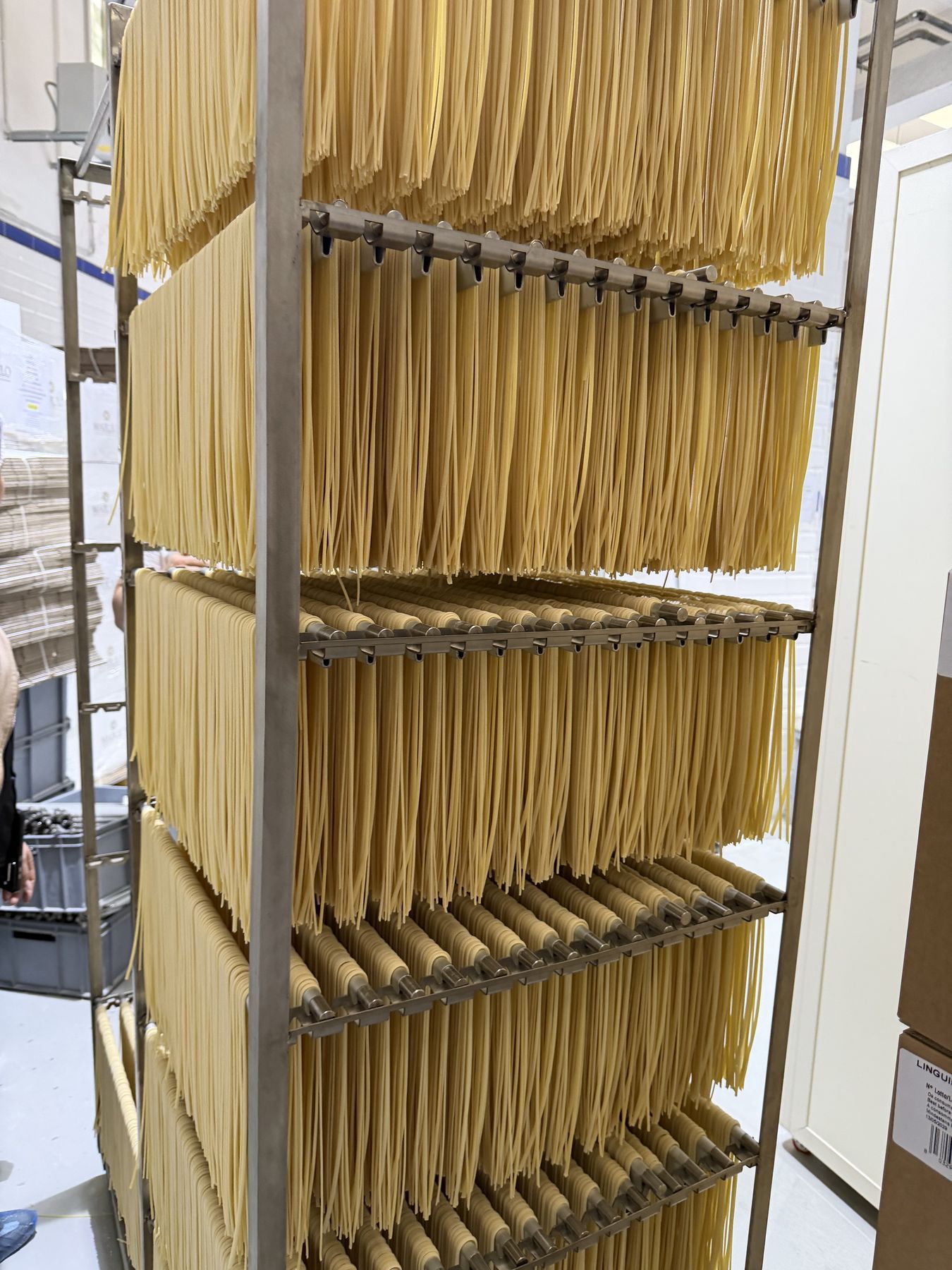
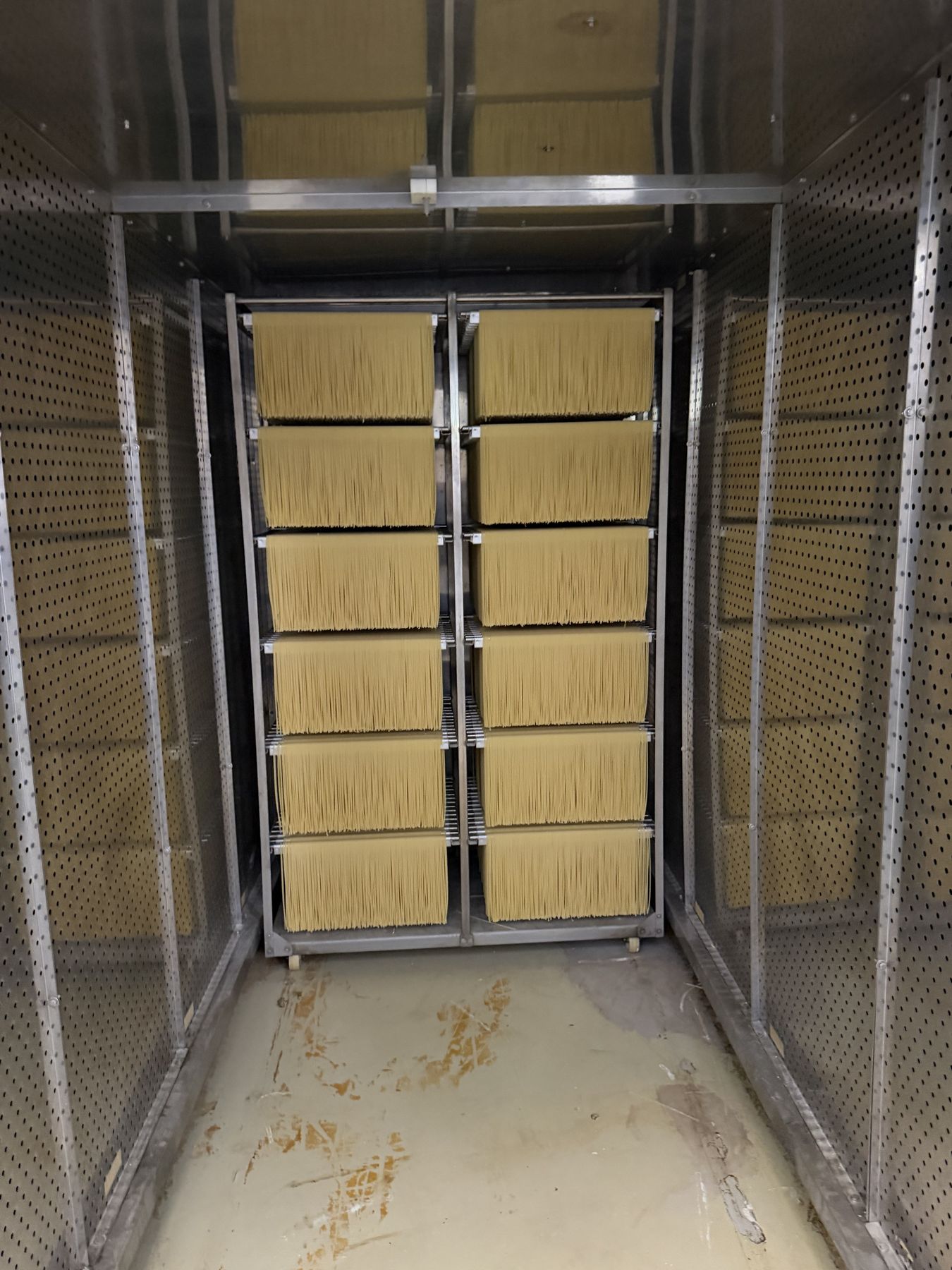
Luigi explained to me what makes the difference in the end: “First, you feel it when you touch it: a rough texture. Then the freshness: leave our pasta in a glass of cold water overnight, and next to it, an industrial pasta in a second glass. The next day, ours has turned back into water and semolina, while the industrial one keeps its shape. This is due to the drying: ours is slow and gentle, the industrial one runs at high temperature and short time, almost like burning.”. And when cooking, the pasta releases a lot of starch due to the coarse granulation and the long, gentle drying, exactly what makes sauce and pasta merge into a creamy unity. Added to this is the smell of durum wheat, before and after cooking, and a bite that is dense, chewable, and completely new for many.
His favorite shape? “Our Paccheri and our Spaghetti Oplontini,” says Luigi. The name Oplontini is, by the way, an allusion to Oplontis, the ancient Roman city that lies under Torre Annunziata today. “When you eat our Paccheri, it’s like eating a steak, you really feel the pasta, a real wow effect. And the Spaghetti Oplontini hold sauce and themselves perfectly together through the natural starch release.”
Tradition meets QR code
And now the part that particularly captivated me as a tech person: On each package, there is a QR code, the pasta’s passport, so to speak. If you scan it, it is automatically translated into 88 languages, and you can see, certified by blockchain, everything about the respective batch: the origin and batch of the durum wheat semolina, the technical data sheet, the supplier, which bronze die was used, even the static cell in which exactly this pasta was dried.
Why all the effort? “Tradition and innovation can be combined,” says Luigi. “For us, tradition means respecting the raw material, the time it takes to transform it into pasta, the slowness that creates quality, and making no compromises. We need innovation to certify this transparency towards the end customer, but also to achieve consistent quality and keep the fluctuations between individual production days as small as possible.”
How far back can this be traced? Back to the cultivation region. The mill selects the best grain variety from it to obtain a very specific semolina recipe, with precisely defined granulation, protein content, and nutritional values.
Ancient craftsmanship from an almost forgotten city and, on top of it, a transparency that many large brands do not offer. It is precisely this combination that convinced me.
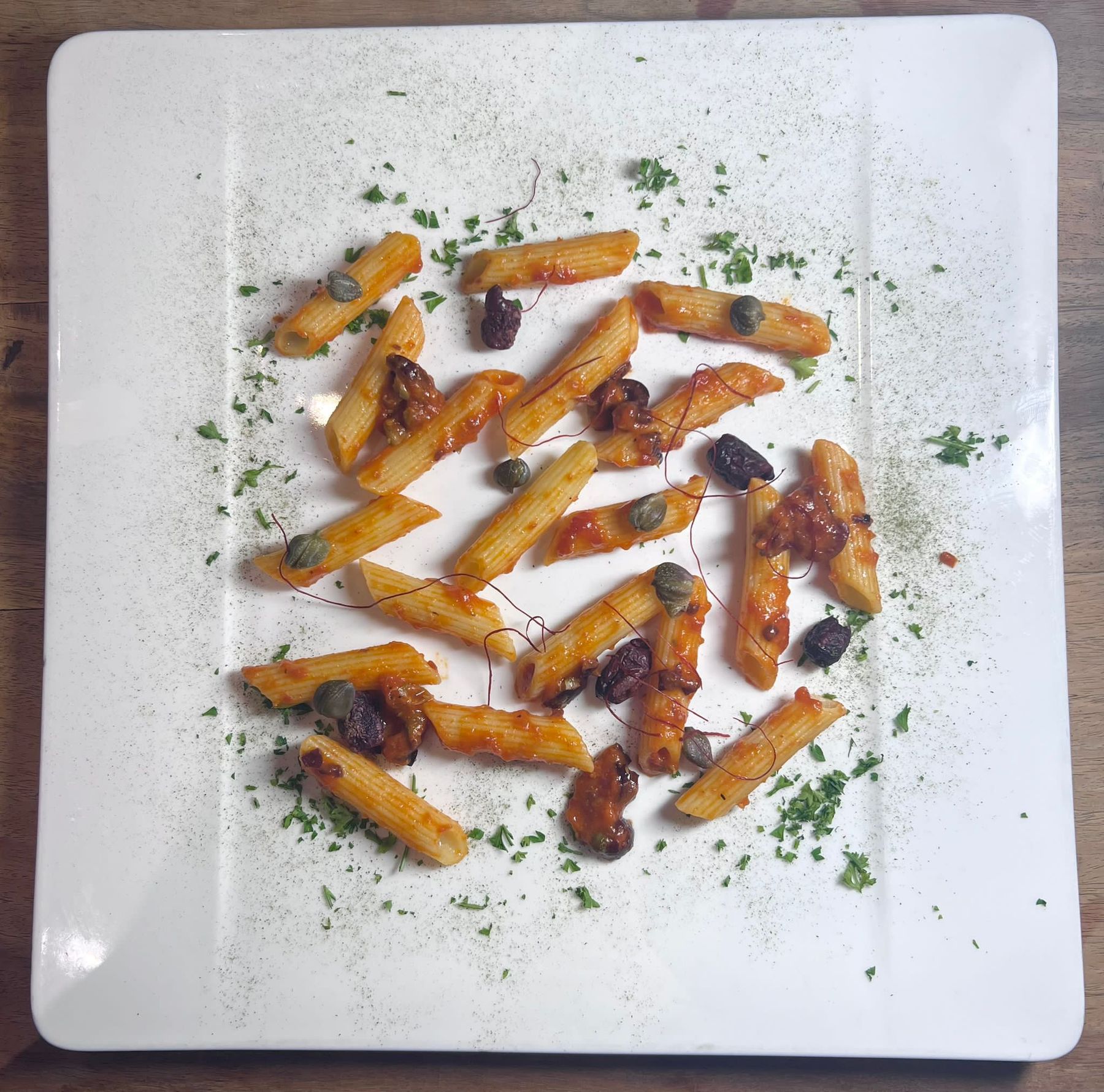
What Luigi is most proud of? “There’s pasta and then there’s pasta. When someone eats ours for the first time, I enjoy the look on their face. People need a moment to understand what they are eating because, in many cases, it’s truly a new experience. I often receive photos of their own creations with our pasta from chefs who are usually much more technically trained than end consumers. Pasta usually makes up 80% of a plate, it’s truly the main ingredient. When a chef creates something new with it, it makes me very proud. One sentence I particularly like to hear: ‘Your pasta is addictive.'”
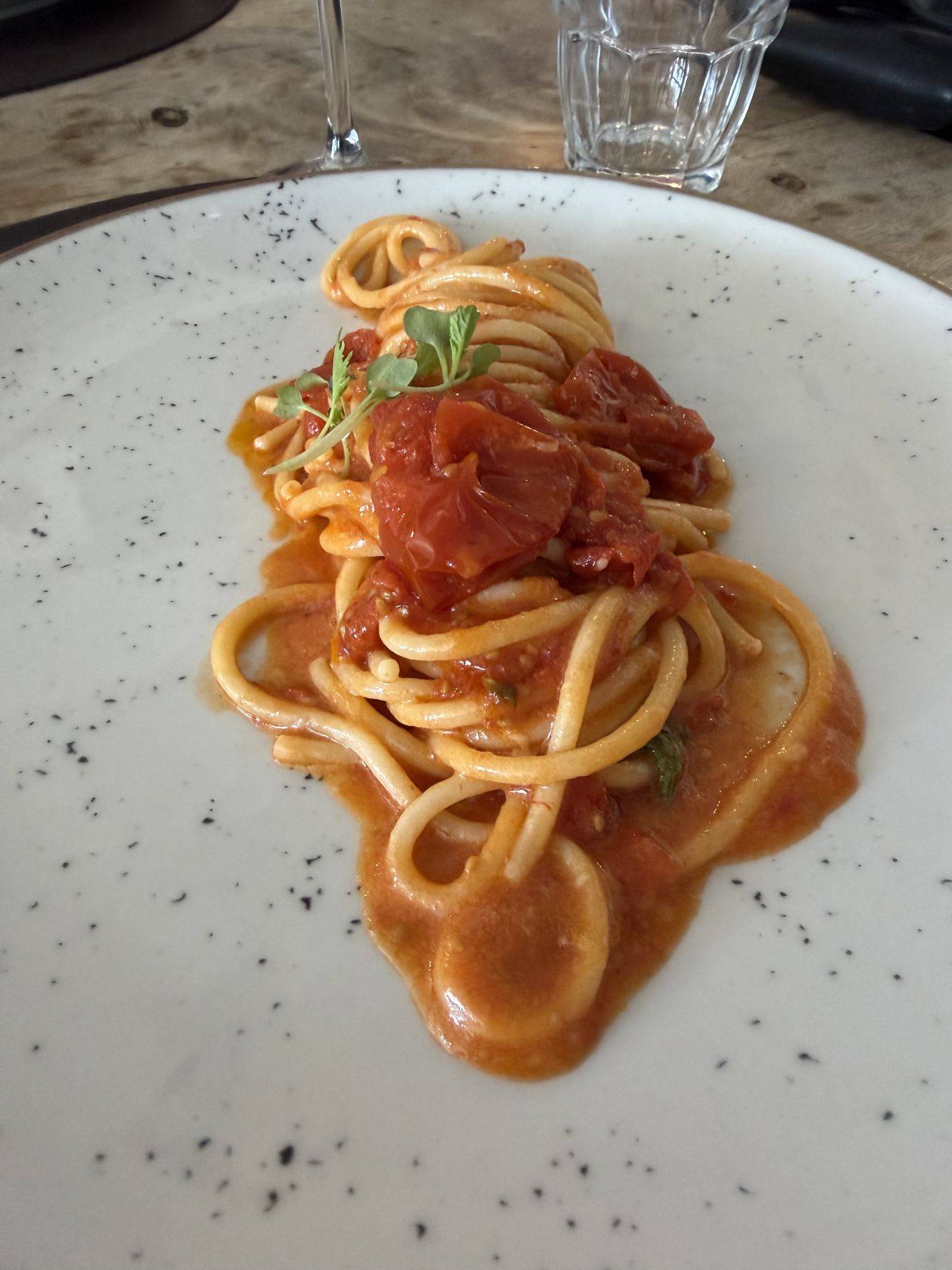
And what Luigi himself likes to cook most? “As simply as possible: pasta with extra virgin olive oil and Parmesan. Or with cherry tomatoes, preferably a mix of red and yellow, olive oil, basil, and Parmesan, so that the taste of the pasta can be enjoyed as much as possible.”
At our home, it’s funny enough no different. My children have long found their favorite, and it comes without any sauce: spaghetti, briefly tossed with a little cooking water and plenty of Parmesan, done. No basil, no oil, no discussion. And that’s exactly the point: Pasta that releases so much starch and tastes so intensely of durum wheat doesn’t need much else. For us, “spaghetti with Parmesan” is now something like the unofficial quality test for dinner. If the children don’t complain, it was good pasta.
Why this fits perfectly with PizzaLaden
You know us: with pizza, we focus on real craftsmanship, tested quality, Neapolitan roots. Marulo is the same philosophy, just on the plate instead of in the oven. Real pasta from the Naples region, from a family that takes its craft seriously and has nothing to hide, literally: you can trace the entire journey from the field to the package.
That’s why we’ve added Marulo to our range. Not “just another pasta”, but one with a story.
Try it yourself
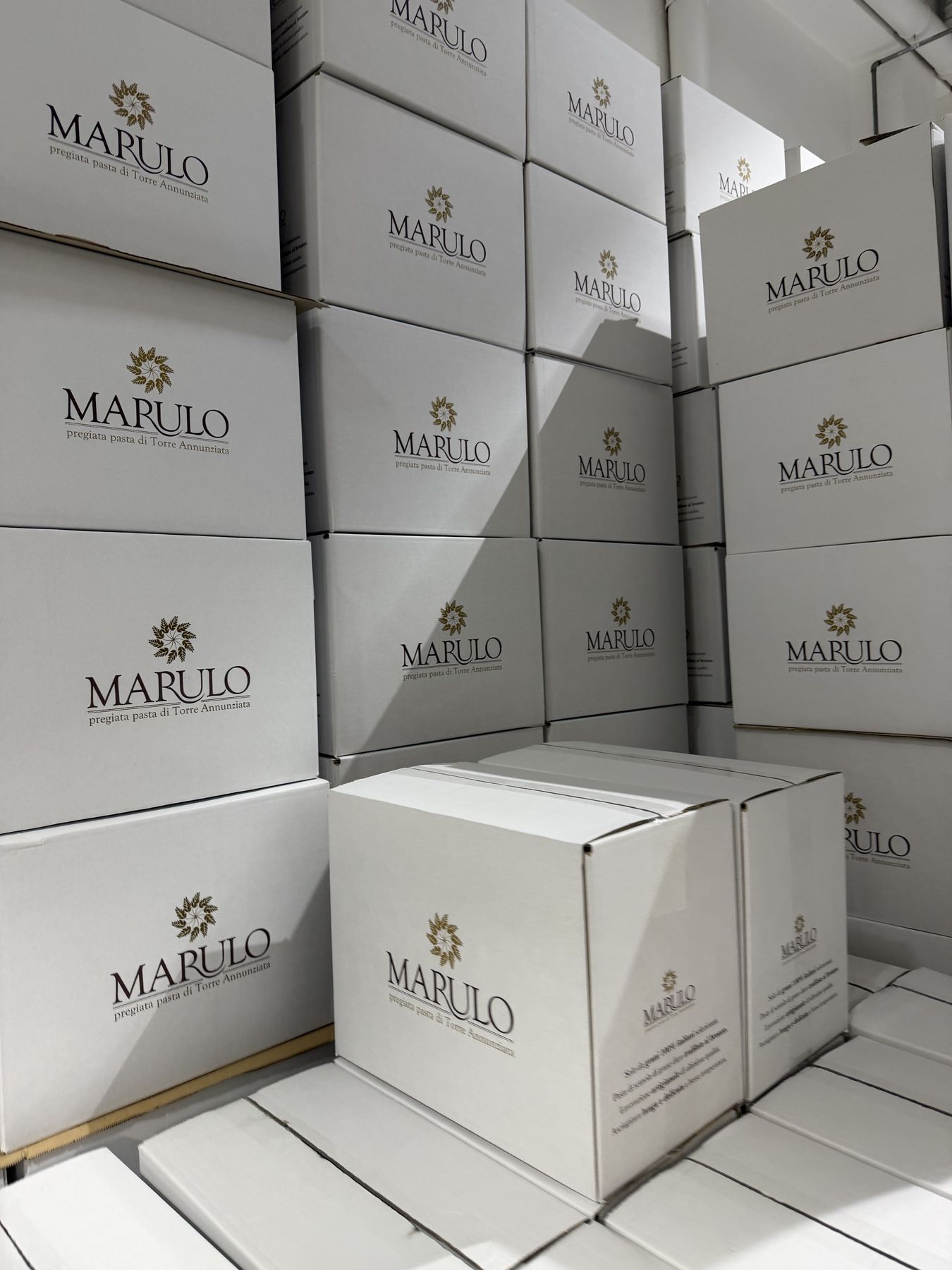
Marulo pasta is now available in our shop. Scan the QR code on the package, cook yourself something good, and taste the difference that an almost forgotten pasta city has to offer.
Have you ever been to Torre Annunziata or Gragnano? And what do you like to cook with really good pasta? Write to me in the comments, I’m curious.
