



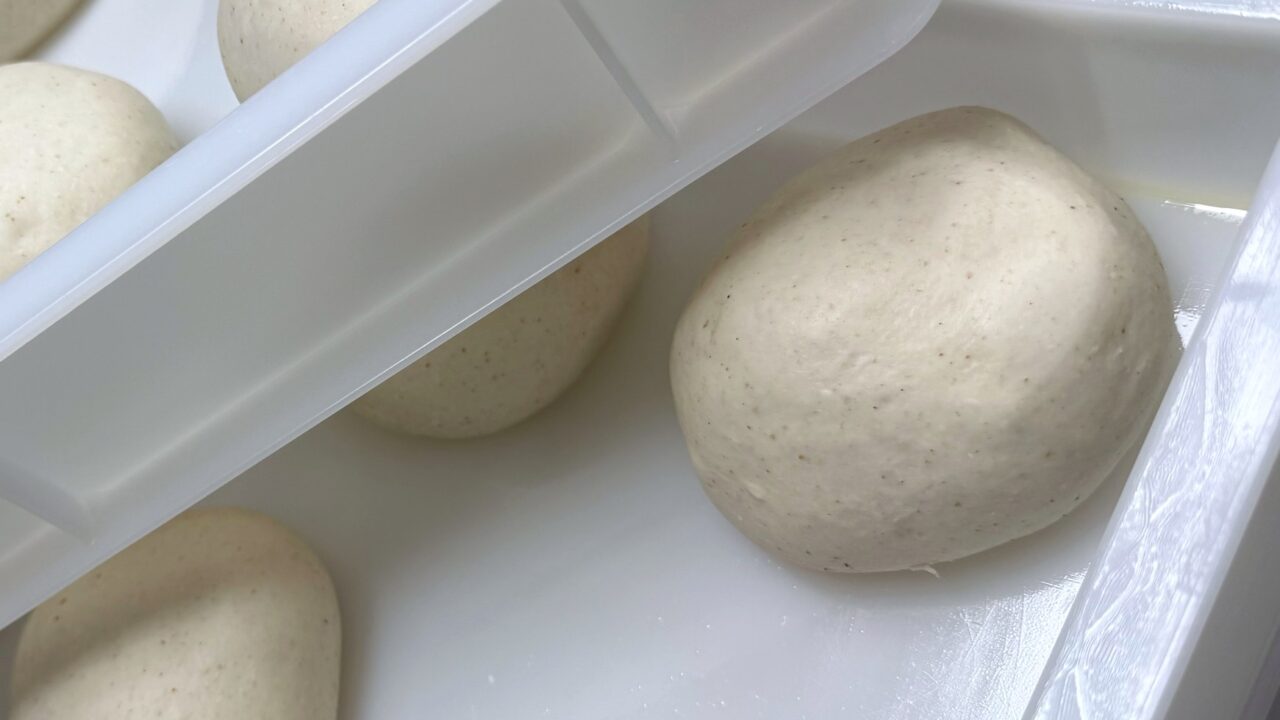
I recently made a dough with a Tipo 0 flour – the bag said “media forza con germe vitale di grano tenero”. After kneading and proofing, I suddenly saw lots of small brown dots on the dough balls. First thought: Did something go wrong? Is the flour bad? Or worse – is it already molding?
A quick reassurance first: In most cases, this is not a mistake, but rather a sign of quality. But let’s take it step by step – because the distinction from real mold is important, and I take that seriously.
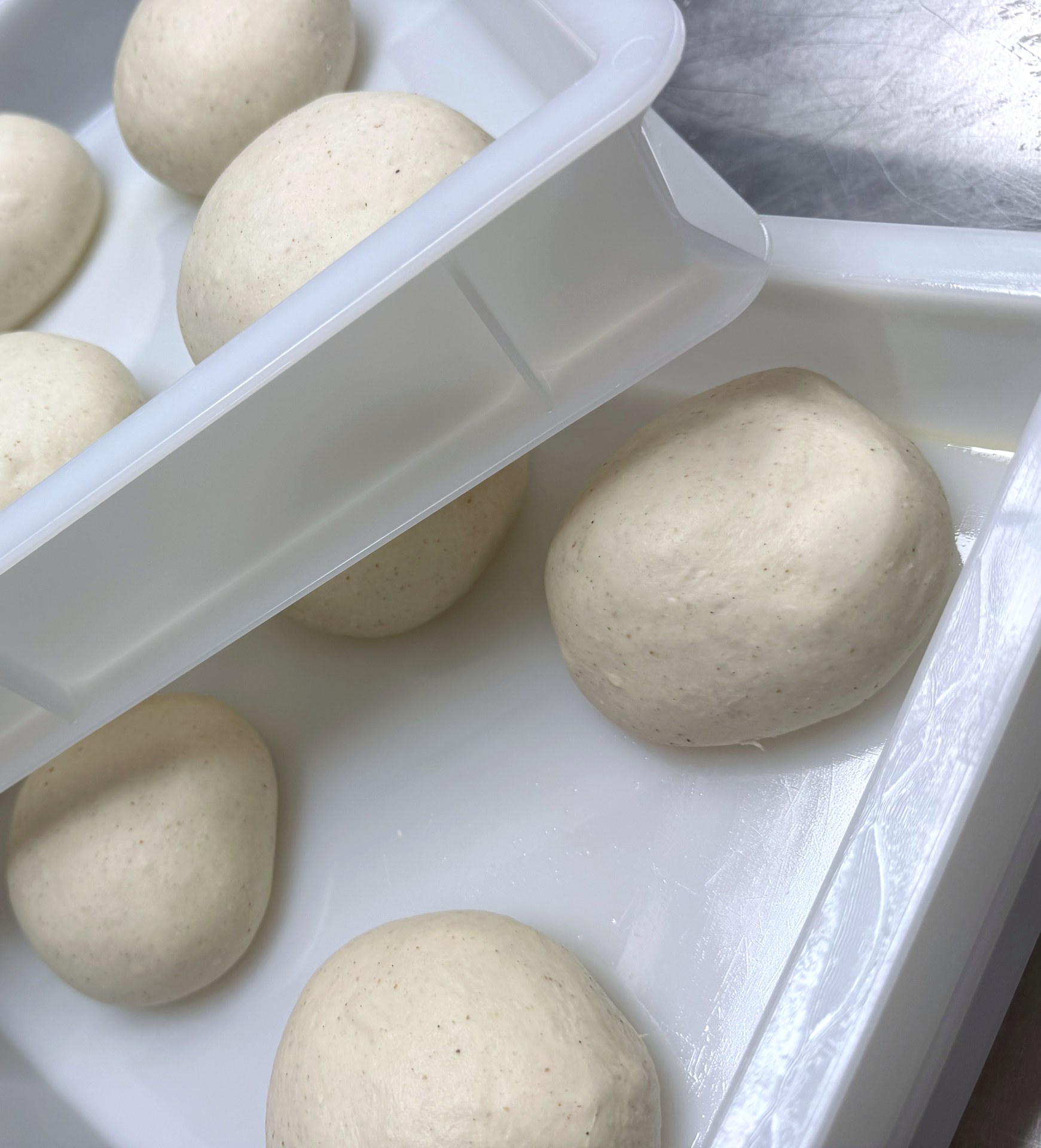
What’s behind it?
With flours like Tipo 0 or Tipo 1 with “germe vitale di grano tenero” (active wheat germ), the culprit is the germ itself. It makes up only about 2-3% of the grain, but contains active enzymes (lipase, protease) as well as polyunsaturated fats. These fats oxidize over time – which gives the flour a slightly creamy color and these small dark dots.
Interesting point: This is precisely why many industrial mills actually sieve out the germ – it reduces shelf life. However, among connoisseurs, a visible germ content is considered a mark of quality, not a defect.
With Tipo 1, which contains bran, you’ll see a similar effect, but the cause is different: Bran particles – the outer layers of the grain – are naturally darker. You can often spot these in the raw flour, not just in the finished dough.
And yes, this can also happen with Tipo 00 – which is normally the most finely milled flour type, without germ or bran content. However, some manufacturers deliberately add active wheat germ back in (“con germe di grano vitale”) and even advertise it as an extra. In that case, the exact same effect as with Tipo 0 occurs: It’s not the type number that causes the dots, but whether and how much active germ is present.
With Tipo 00 flours that don’t have added germ, like the ones I use for my 8-hour dough, you normally won’t see these spots. If you’re looking for the right flour yourself, you’ll find a selection in our flour range.
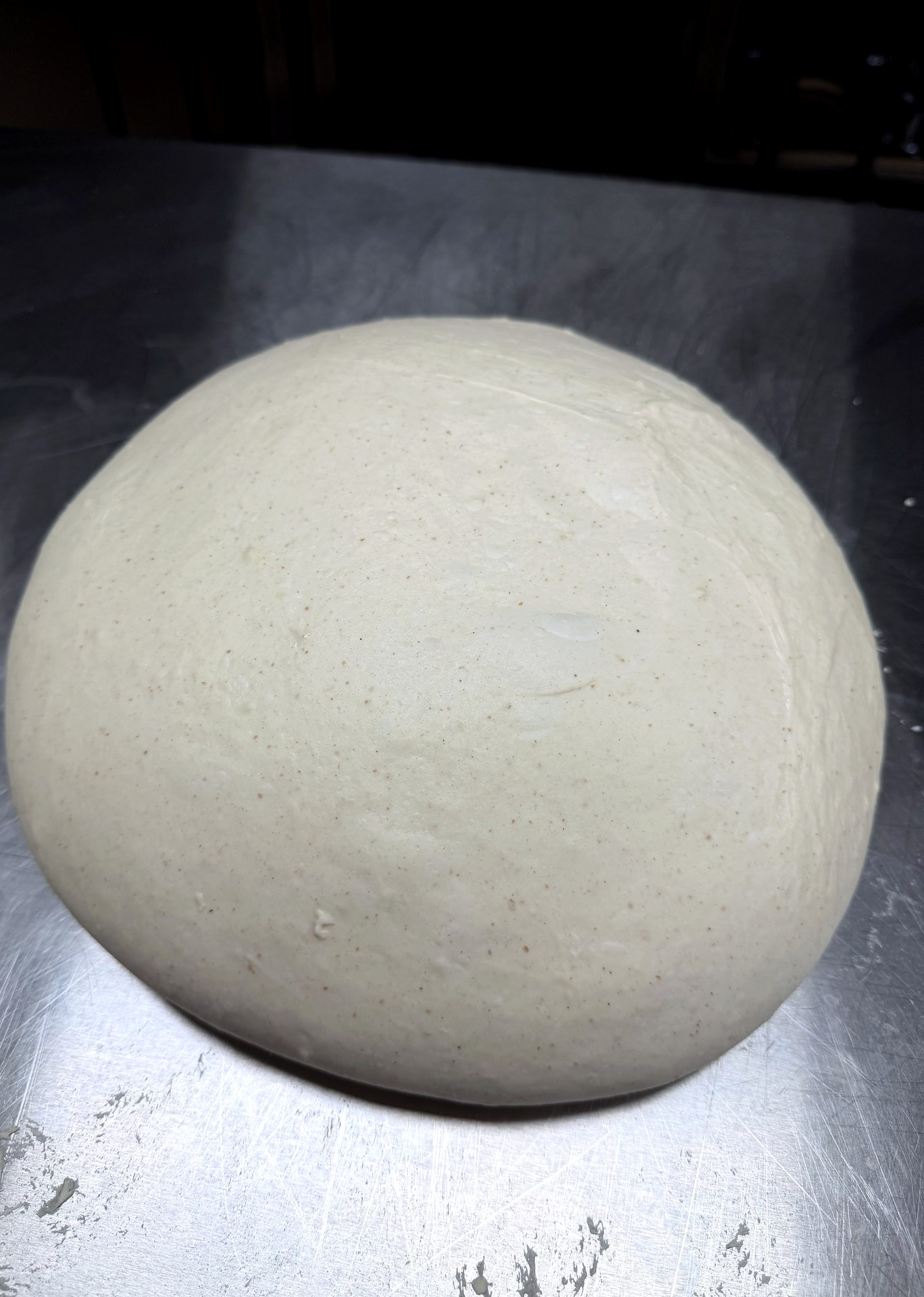
Why do you often only see it after kneading?
Did you look at the flour bag and everything looked pure white? Makes sense. The germ content in raw flour is often distributed in very fine particles – hardly recognizable to the naked eye. Only when water is added, kneading occurs, and enzyme activity during proofing does the oxidation become visible. The dots “appear” practically only in the finished dough.
With long cold fermentation (24-72 hours or more), another effect comes into play: Starch is enzymatically broken down into sugar, which can promote additional slight discoloration – regardless of the germ content.
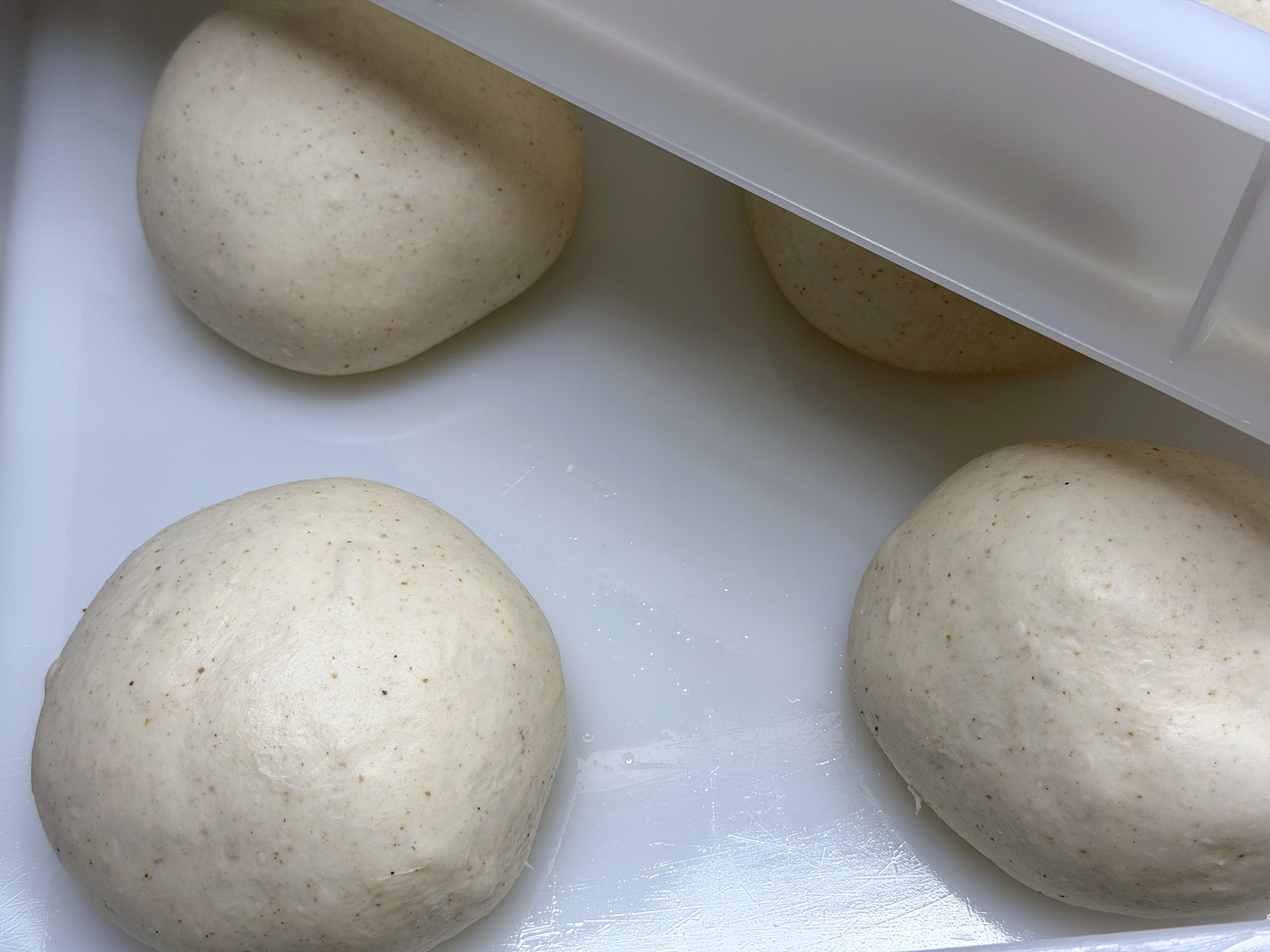
Checklist: Dots or mold?
This is where it gets serious – this is the important part for safety reasons. Look closely before you decide.
You can recognize mold by the following:
- cottony or fuzzy
- visibly sits *on* the surface, not distributed in the dough
- unpleasant, musty smell
- often additionally stringy or slimy
Germ or bran dots, on the other hand:
- fine and evenly distributed throughout the dough, visible even in a cut
- dough smells completely normal
**Rule of thumb:** Does the dough smell unremarkable, and are the dots fine and evenly distributed? Then you can relax and continue. As soon as the smell is strange, you see cottony patches, or discoloration is only on the surface – then discard it. When in doubt, it’s better to discard it once too often than once too little.
*Quick disclaimer before we get to the conclusion: This is my own experience and assessment from practice, not official food safety advice. I can only share how I see it and handle it – the decision and responsibility ultimately lie with you. When in doubt, it’s better to be too cautious and discard the dough than to trust that it will be okay.*
Conclusion
The brown dots in your pizza dough are in most cases not a cause for concern – on the contrary, they are often a sign that your flour still has active, high-quality components, rather than being completely “sieved dead”. I cannot consciously tell you how many dots are “normal” in numbers – it cannot be reliably quantified in such a general way. Stick to the rule of thumb: fine and evenly distributed, plus a neutral smell – it’s fine. Cottony, superficial, or a strange smell – discard the dough.
