



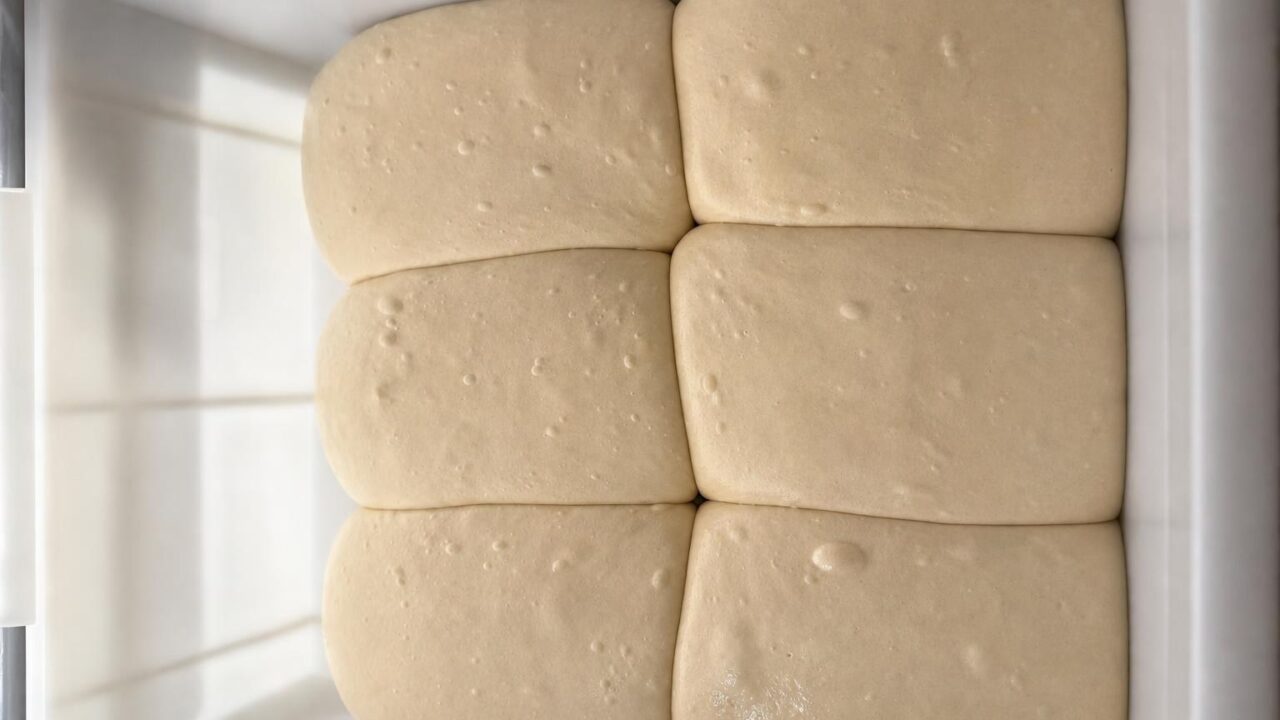
This question actually comes up in all my workshops. Sometimes right at the beginning, sometimes only when the dough is already in the box: “Klausi, can I bake the dough tomorrow?” Or the opposite: “I’ve had my dough in the fridge for four days – is it still good?”
The short answer to both questions is usually yes. The detailed answer is coming now – including the story of the dough I once forgot for 6 days.
What happens to pizza dough in the fridge?
The technical term for this is cold fermentation: the dough slowly ferments at 4–6°C in the refrigerator, instead of quickly at room temperature. This does two things. First: more time for aromas. Second: the gluten network (the protein network in the dough) relaxes and becomes more extensible.
For beginners: Fermentation = the yeast processes the dough, producing CO2 (makes it light) and aromas. In the fridge, this happens very slowly – and that’s exactly what we want. Important to know: Yeast only becomes active at around 4°C. Below that, it practically sleeps – fermentation is stopped.
Pizza dough 24 hours – can I bake it tomorrow?
Yes. Absolutely. 24 hours in the fridge are completely sufficient for a good pizza. This is also the minimum I recommend in my courses.
What you get after 24 hours: a well-risen dough, initial aroma development, and significantly more structure than a quick dough that has only risen for 2–3 hours at room temperature. Not yet a great depth of flavor, but a very decent pizza.
My tip if you’re making dough tonight and want to bake tomorrow: After kneading, let it sit at room temperature for an hour (this is the bulk fermentation – the yeast gets going), then put it in the fridge.
Caution with strong flours: If you use a very strong flour – one with a high protein content and a high W-value – then a short 24-hour fermentation won’t do much for you. The flour simply hasn’t had enough time to develop its potential. For such flours, you need at least 48, preferably 72–96 hours.
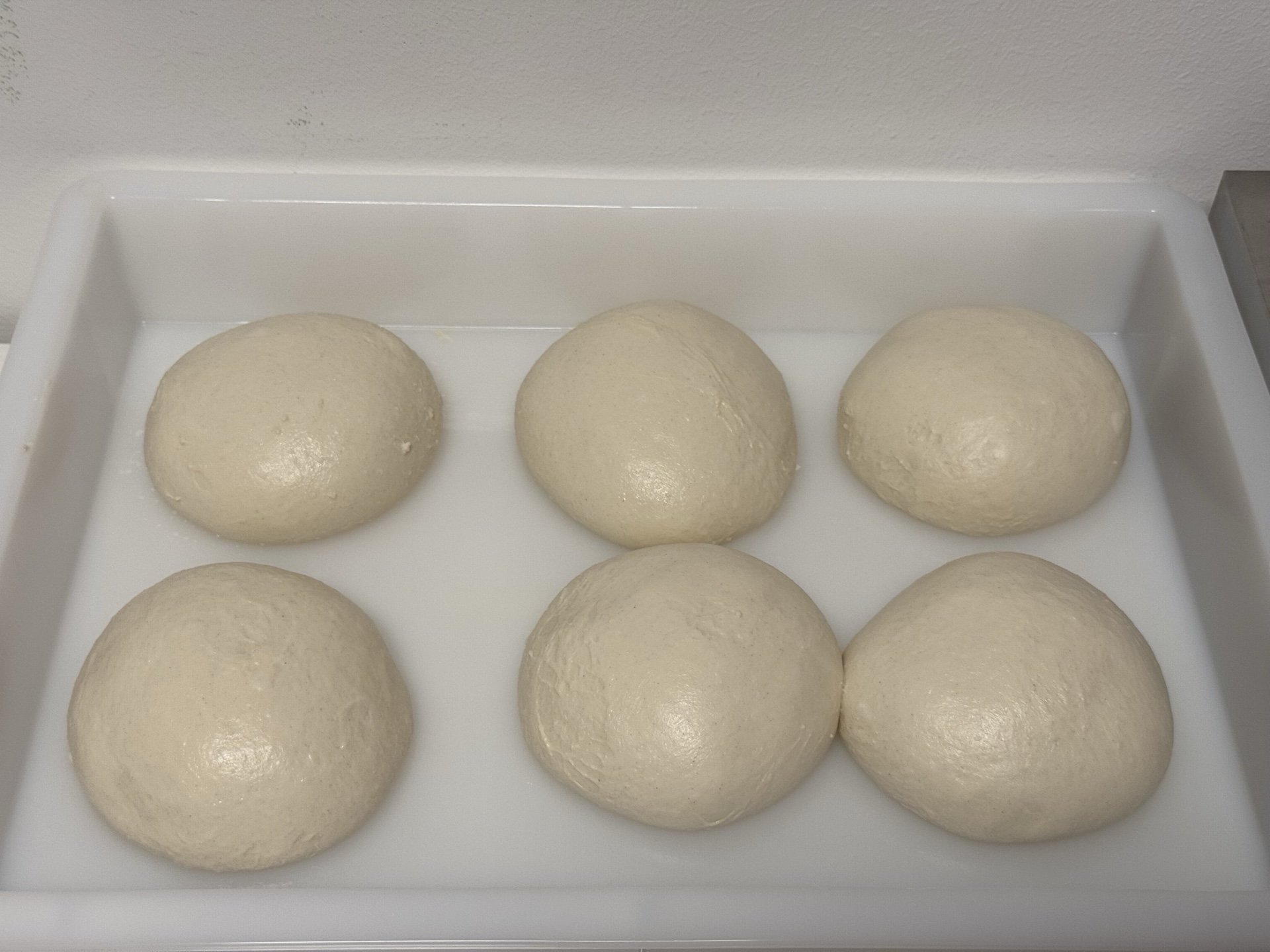
Pizza dough 48 to 72 hours – this is where the magic happens
If I have the choice, I prepare my dough 2 to 3 days in advance. This is the range where I notice with every bite: that was the right decision.
After 48 to 72 hours of cold fermentation, the dough is significantly more relaxed and easier to stretch. The aromas are deeper, somewhat more complex. The cornicione (the edge) becomes airier because the gluten network can hold the gases better. And digestibility increases because the long fermentation processes break down the starch better.
Pro tip: Reduce the amount of yeast at 72 hours. With my standard recipe using La Napoletana from Dallagiovanna, for 72 hours I only use 0.5–1.0g of fresh yeast per kilo of flour (depending on temperature). Too much yeast and the dough over-develops.
For storage: Store the dough balls in dough ball boxes. This way they have space to expand, don’t dry out, and you can see their condition immediately when you open them.
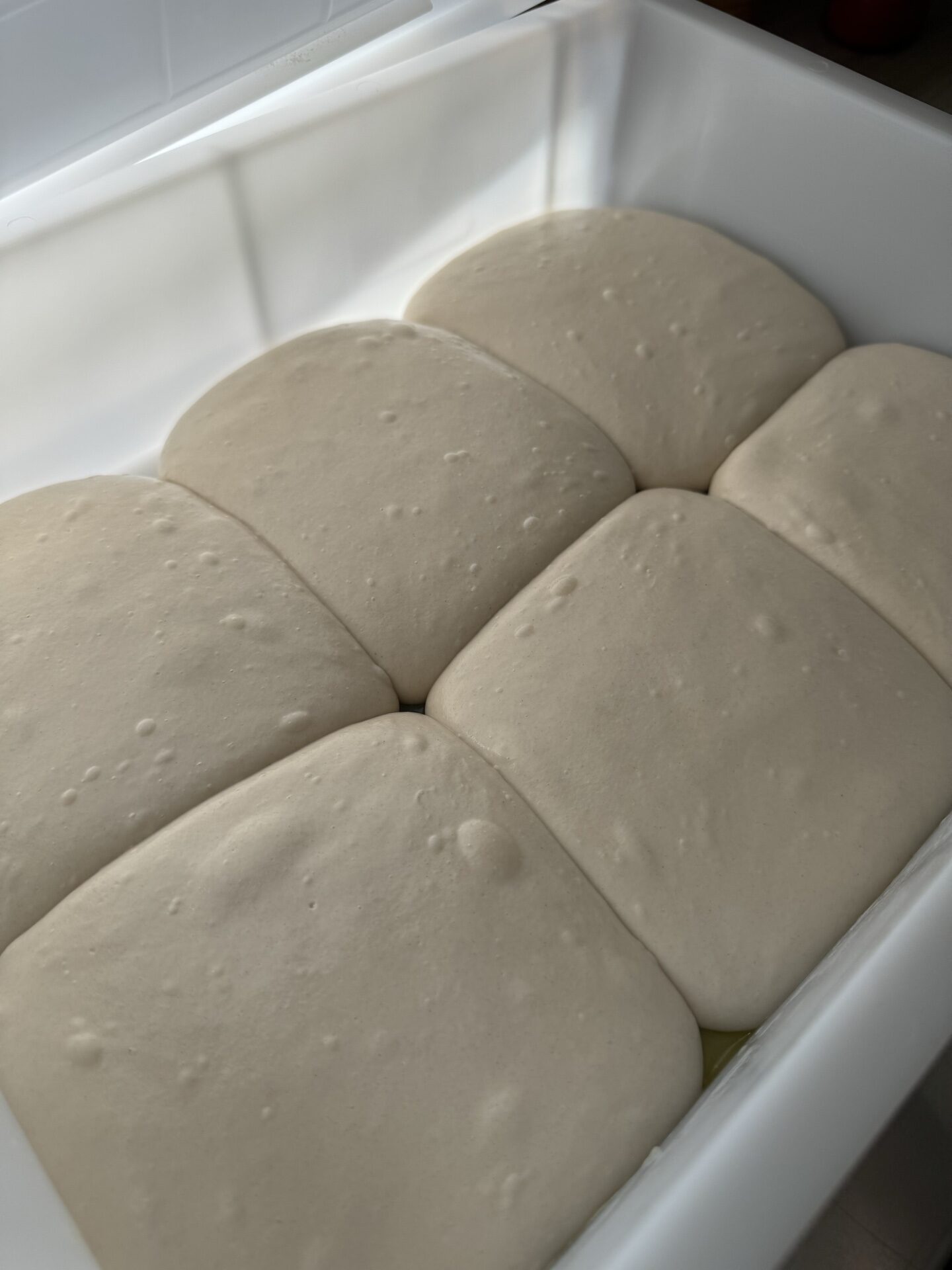
96 hours – is that really possible? Yes, with the right flour
I tried this with the LeDivine Anna from Dallagiovanna – a very strong Tipo 00 with 15% protein, developed specifically for such long fermentation times. We baked and tasted the same dough at 24, 48, 72, and 96 hours of cold fermentation.
The result: 96 hours was the best taste experience for us. The dough was aromatic, had incredible depth, was still very easy to stretch despite the long fermentation, and the cornicione was fantastically airy. A flour with such high strength simply needs this time to truly bloom.
What you need to consider: This only works with cold fermentation in the refrigerator. Warm dough fermentation at room temperature for such long periods would be far too unstable – you have little control over when the dough reaches and exceeds its peak. Long fermentation belongs in the fridge.
And what if the dough has been in the fridge for longer than 72 hours?
This is where it gets interesting. And I’m not talking theoretically.
I once forgot a dough in the fridge for 6 days. Simply forgot it. When I opened the box, it smelled slightly sour. Intense. But not bad. Not like something I had to throw away – more like fresh sourdough.
I baked it.
The result: An extremely aromatic pizza. The taste was intense, complex, a bit like crossing sourdough with Neapolitan pizza. It was still digestible – no stomach upset, no aftertaste. But that was definitely no longer my standard result, and I wouldn’t recommend it as a goal for any course participant.
What happens when the dough ferments too long: So-called over-fermentation sets in. The gluten network weakens, the dough loses structure and tears more easily when stretched. The taste becomes increasingly sour. From about 4–5 days, the dough can also become flat and sticky.
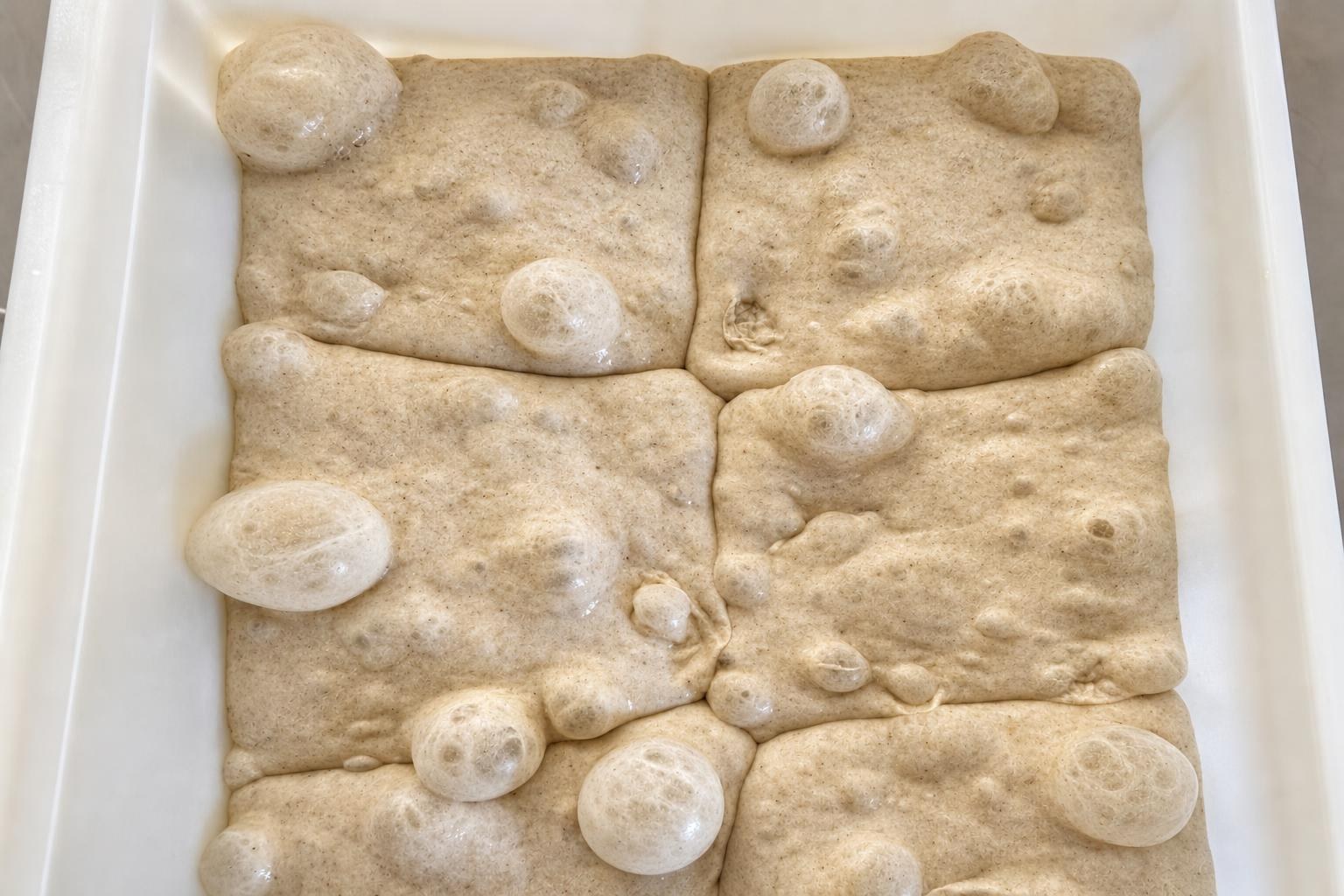
But that doesn’t automatically mean throwing it away.
How do I know if my dough is still good?
The most important lesson I’ve learned from years of pizza making: Trust your instincts. Your nose is the best measuring instrument you have.
Here’s my simple check when I’m unsure:
- Does it smell sour, but still like dough? Bake it. This is normal intense fermentation.
- Does it smell intensely of alcohol? Still okay – better for focaccia than for delicate pizza, but not a reason to throw it away.
- Does it still have structure when you touch it? Well-risen, slightly soft dough? Bake it.
- Does it smell really bad – not “intense” but “something is wrong”? Then throw it away.
- Visible mold? Throw it away immediately, no discussion.
I also know the poke test: Press your finger into the dough. Does it spring back slowly? Well fermented. Does it not spring back at all and the indentation remains? Over-fermented, but often still bakeable. Does it spring back completely immediately? Still too young.
I haven’t seen any course participant poison themselves with dough that was too old. Fermented dough is well protected by its own acids. The real signal to throw it away is always mold or a smell that truly repels you instinctively – not just intensity.
This affects how long your dough lasts
Not all dough lasts the same amount of time – it depends on the following factors:
The flour: Stronger flours (higher W-value, more protein) last longer and even benefit from long fermentation. A weaker flour is better processed after 48 hours. And vice versa: using a very strong flour for a short 24-hour fermentation is a waste – the flour doesn’t get going and can taste like chewing gum.
The amount of yeast: Little yeast = slow fermentation = more leeway. For 72–96 hours, I use significantly less than for 24 hours. This is the easiest lever you have.
The refrigerator temperature: In a domestic household, the fridge is usually set to 5–6°C, in commercial cold rooms to about 4°C. For orientation: yeast only becomes active at around 4°C. This means a colder refrigerator significantly slows down fermentation again. A warmer one (towards 6–7°C) speeds everything up – you need to shorten the times accordingly.
And the hydration: More water in the dough = faster enzymatic processes = slightly shorter maximum fermentation time. A very hydrated dough at 75%+ should be processed earlier than one with 60%. What that 60/70/80% actually changes in handling and result, I go through in detail here.
Warm dough fermentation and long times – they don’t go together: Anyone who ferments their dough at room temperature for many hours has little control. The dough over-develops quickly, becomes unstable, and you never know exactly where it stands. Long fermentation – everything over 24 hours – belongs in the fridge or in a proofing cabinet where I can precisely control the ambient temperature. Period.
Short answers to the most common questions
- Can I leave pizza dough in the fridge for 24 hours? Yes, that’s even my recommended minimum – for normal flours.
- Can pizza dough ferment for 72 hours? Yes, for me that’s the standard sweet spot with the best aroma development.
- Is 96 hours possible? Yes – with a strong flour like LeDivine Anna, it’s even recommended. That was the best result in our comparison test.
- Can I leave dough in the fridge for 5 or 6 days? It can work – trust your nose. No mold and smells good? Try it.
- How long does pizza dough last in the fridge at most? With little yeast, strong flour, and a cool fridge, up to 5–6 days. I’ve done 6 days – it was intense like sourdough, but still okay.
- Can I also ferment long dough at room temperature? No – warm fermentation for many hours is difficult to control and quickly becomes unstable. Long times = always cold fermentation.
If you want to delve deeper – into different fermentation times, flour types, and what that really does to the dough – then check out the Masterclass Pizza Dough. That’s exactly the course where we try it live and taste it.
How long do you usually let your dough ferment? And have you ever had dough that fermented too long – and still baked it? Write it in the comments below, I’m really interested.
