



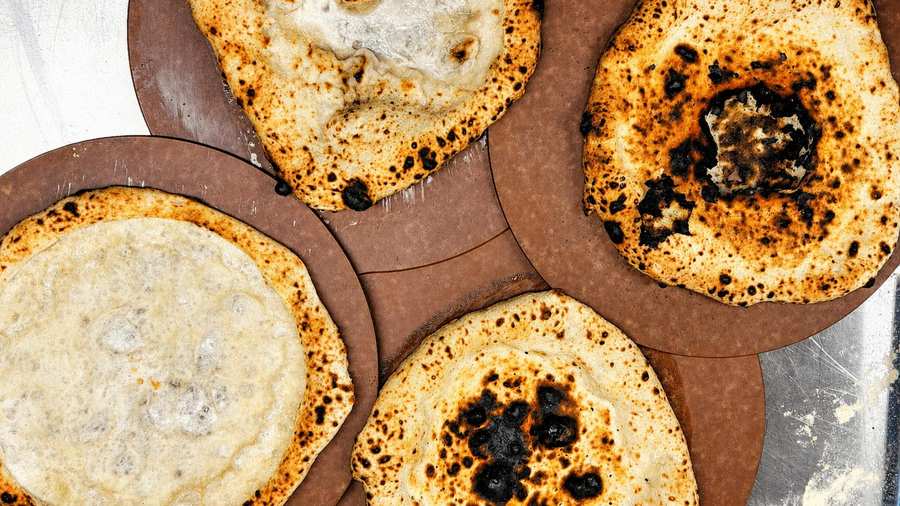
A sweet pizza with Nutella, pistachio cream, or fresh fruit sounds fantastic – but how do you pre-bake the pizza base without it puffing up and burning? That’s exactly what this post is about. I tested 4 methods live (including the classic mistake with no method at all) so you know what really works.
I also captured the whole experiment as a YouTube video – feel free to watch it here:
What does “pre-baking the pizza base” (blind baking) mean?
When you’re making a sweet pizza or a pizza with heat-sensitive toppings, you need to bake the dough first without toppings – this is called “blind baking” or pre-baking the pizza base. For example, Nutella would burn immediately at 400–500 °C if you put it in the oven directly.
The solution: pre-bake the base first, then add toppings. Sounds simple – but there’s a classic problem that arises.
The problem: Why does the pizza base puff up during pre-baking?
A pizza dough without toppings has no weight to hold it down. The heat from below drives steam upwards, and the dough starts to rise – sometimes like a balloon. The top is then closer to the heat source and burns, while the bottom isn’t even fully baked yet.
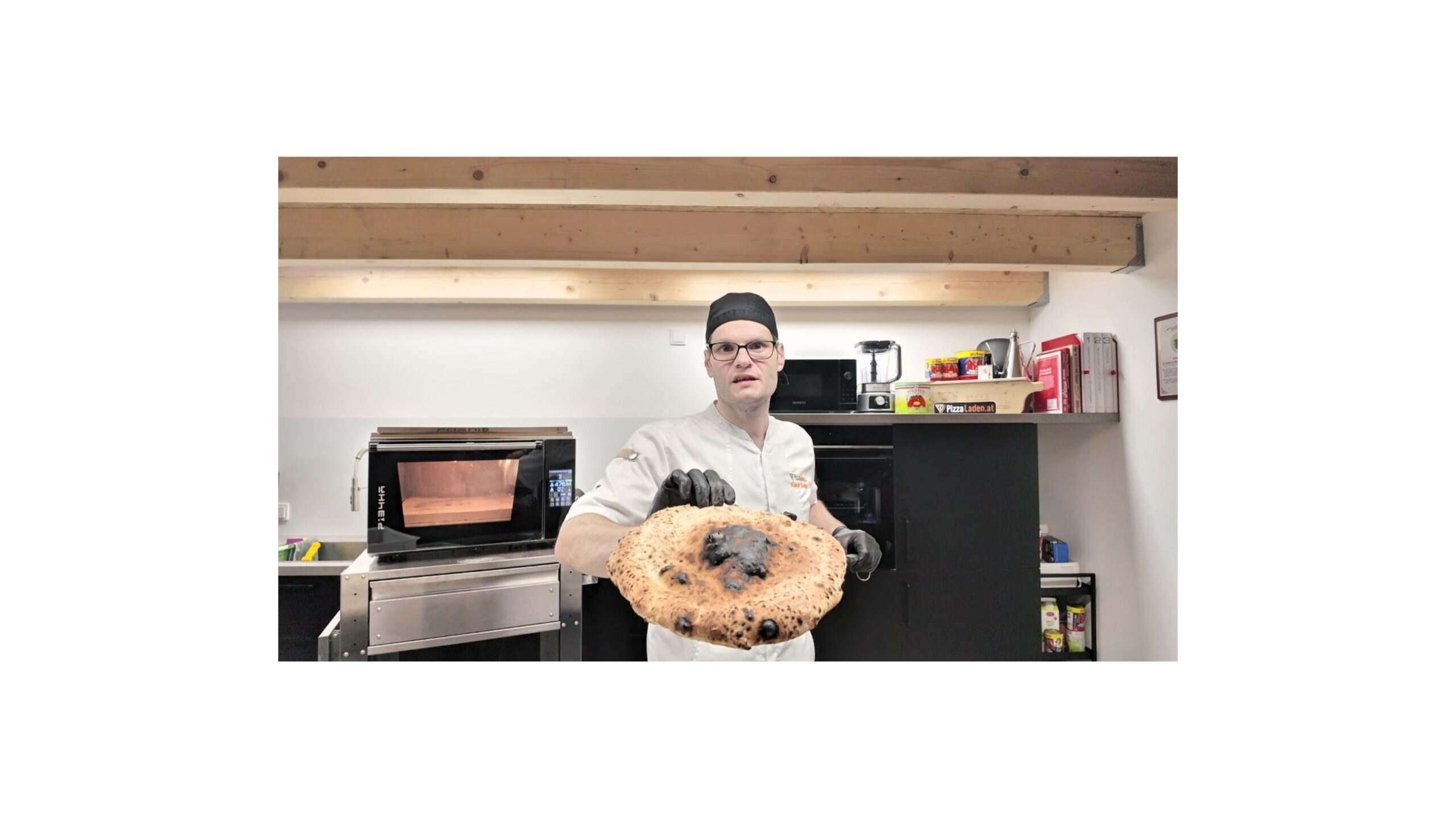
I show exactly this problem in the video – and then come the three solutions.
Method 1: Ice cubes on the pizza base
The idea sounds creative: Place a few ice cubes on the dough to provide weight and simultaneously create steam. In practice, this method didn’t convince me.
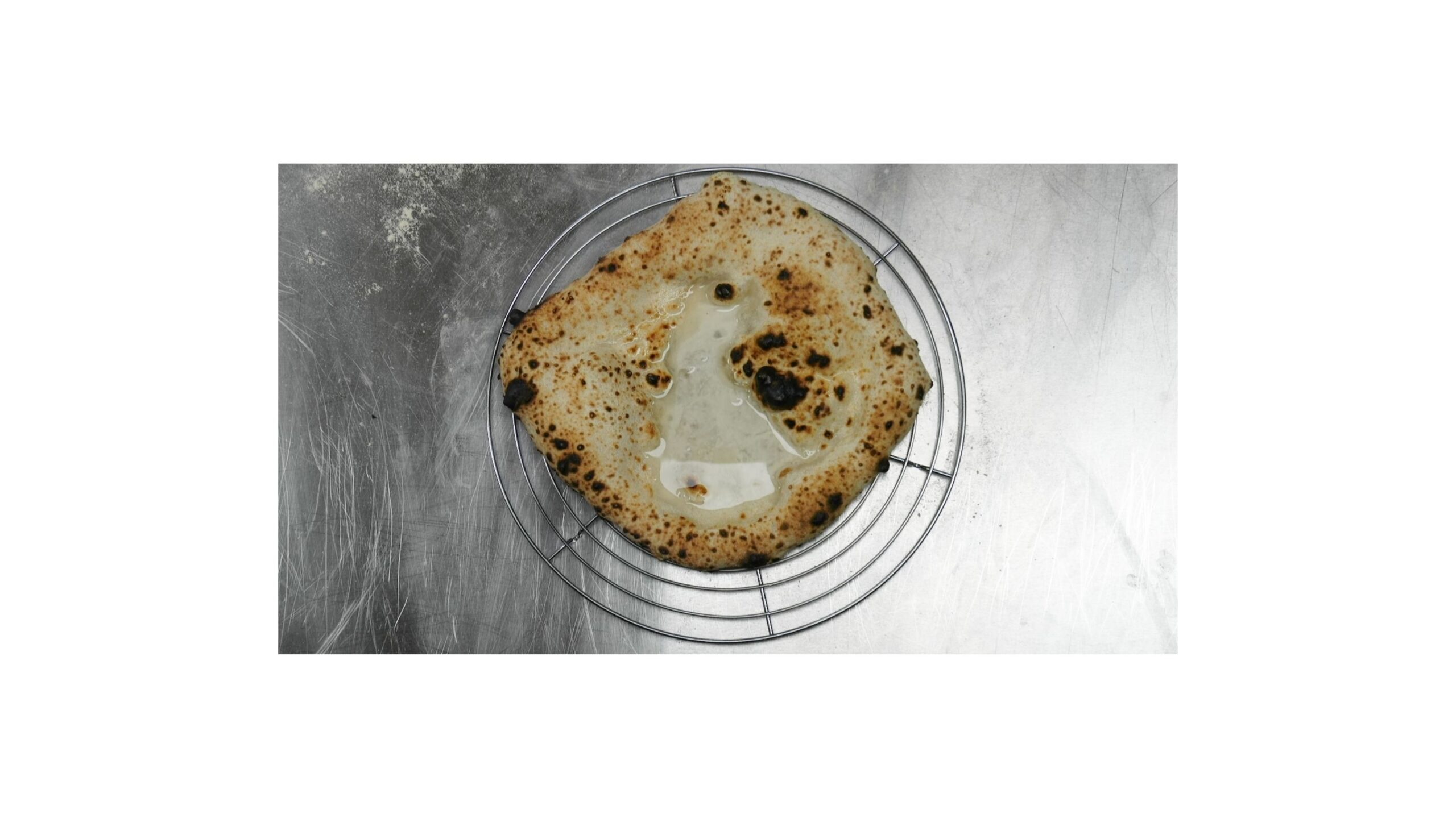
The problem with this:
- The ice cubes shift when sliding into the oven – the base bakes unevenly
- The meltwater stays on the dough and makes it wet
- If you have to turn it with a turning peel, you risk tearing the dough
My conclusion: Works, but with too many pitfalls. Not recommended – especially not for beginners.
Method 2: Weight / Plate method (my favorite!)
With this method, you place a weight – for example, a smaller pizza stone, a heat-resistant plate, or a lid – on the dough so it can’t rise. This delivers the most beautiful, even results.
Important tip: Always oil the weight well with olive oil, on both sides! Otherwise, it will stick to the dough and you won’t be able to get it off cleanly.
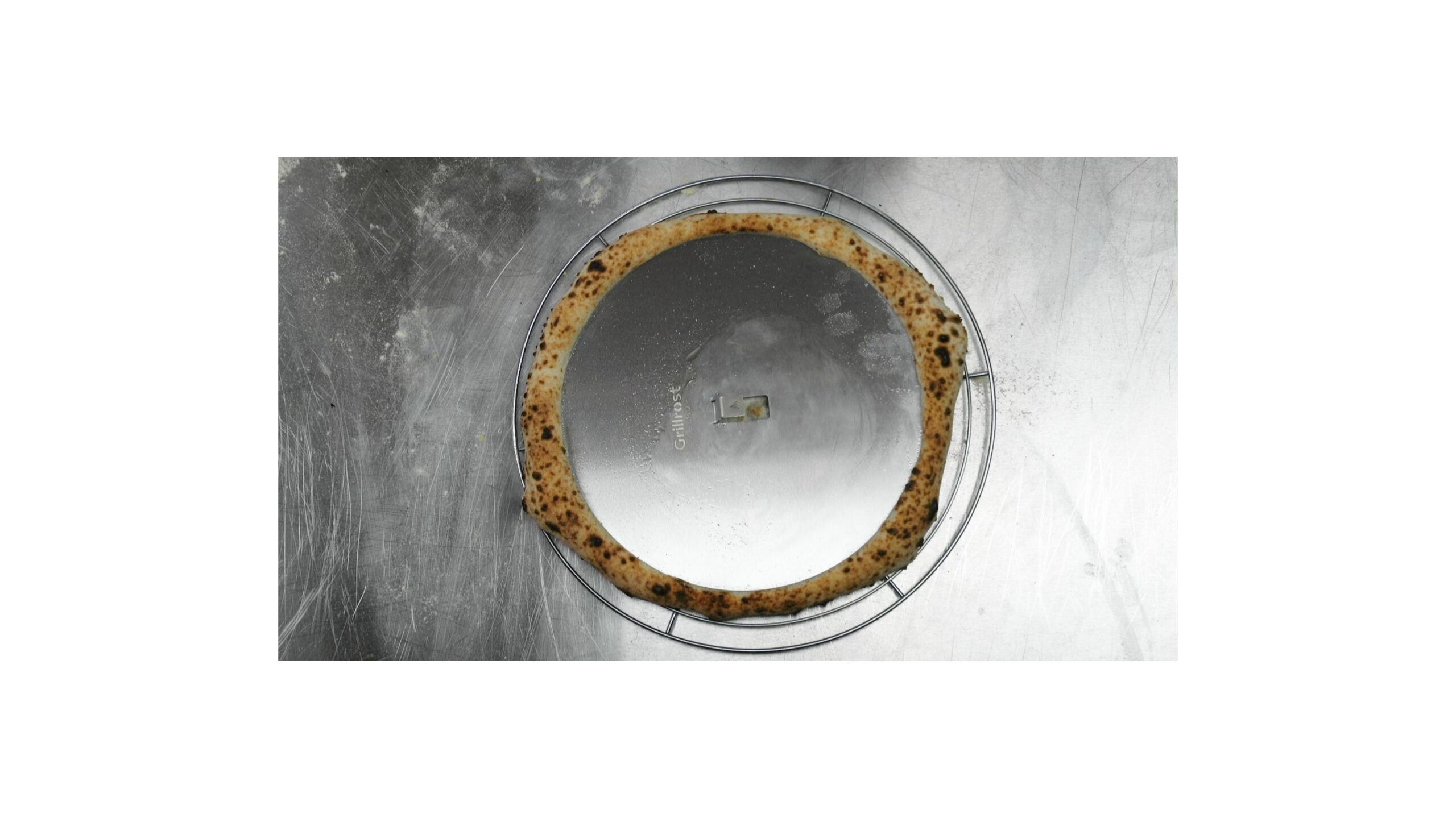
- Even browning, beautiful round cornicione
- No rising, no burning
- Slightly more preparation needed (olive oil!)
My conclusion: Best results, most visually appealing. If you have the accessories – this is the method.
Method 3: Pricking with a fork or spatula (fastest method)
The simplest method: You simply prick the spread-out dough several times with a fork or a stiff spatula before it goes into the oven. No extra accessories, ready to use immediately.
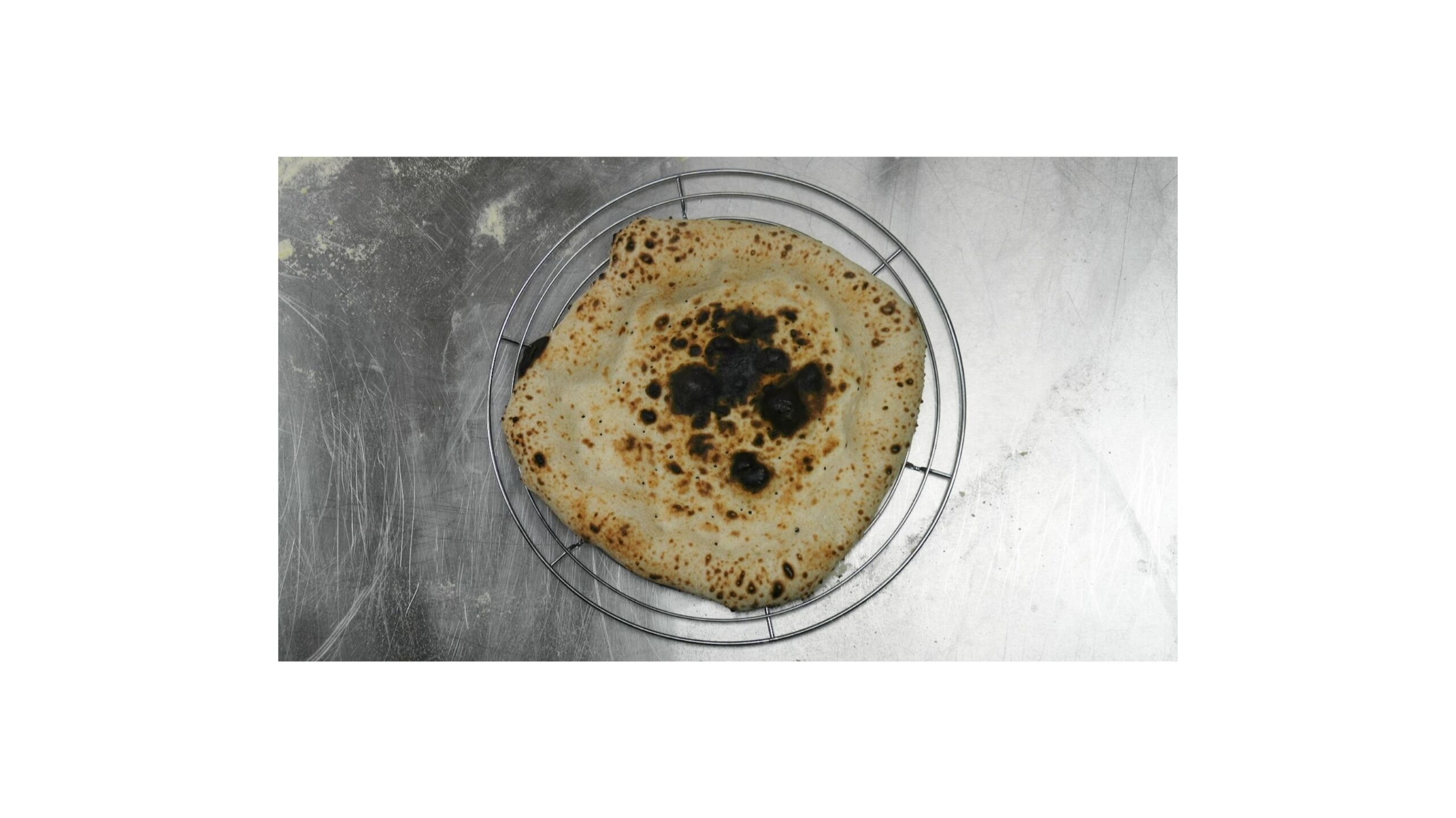
Some will ask: “But if I make holes, won’t the topping leak through?” – Not really! The dough shrinks back slightly during baking. And Nutella isn’t so liquid that it will run through.
- No extra accessories needed
- Very quick preparation
- Good result, but slightly darker than with the weight method
Tip: Use a stiff spatula or a regular dinner fork – flexible spatulas work less well.
My conclusion: The go-to method for everyday use. Anyone can use it immediately.
Comparison of all 4 results
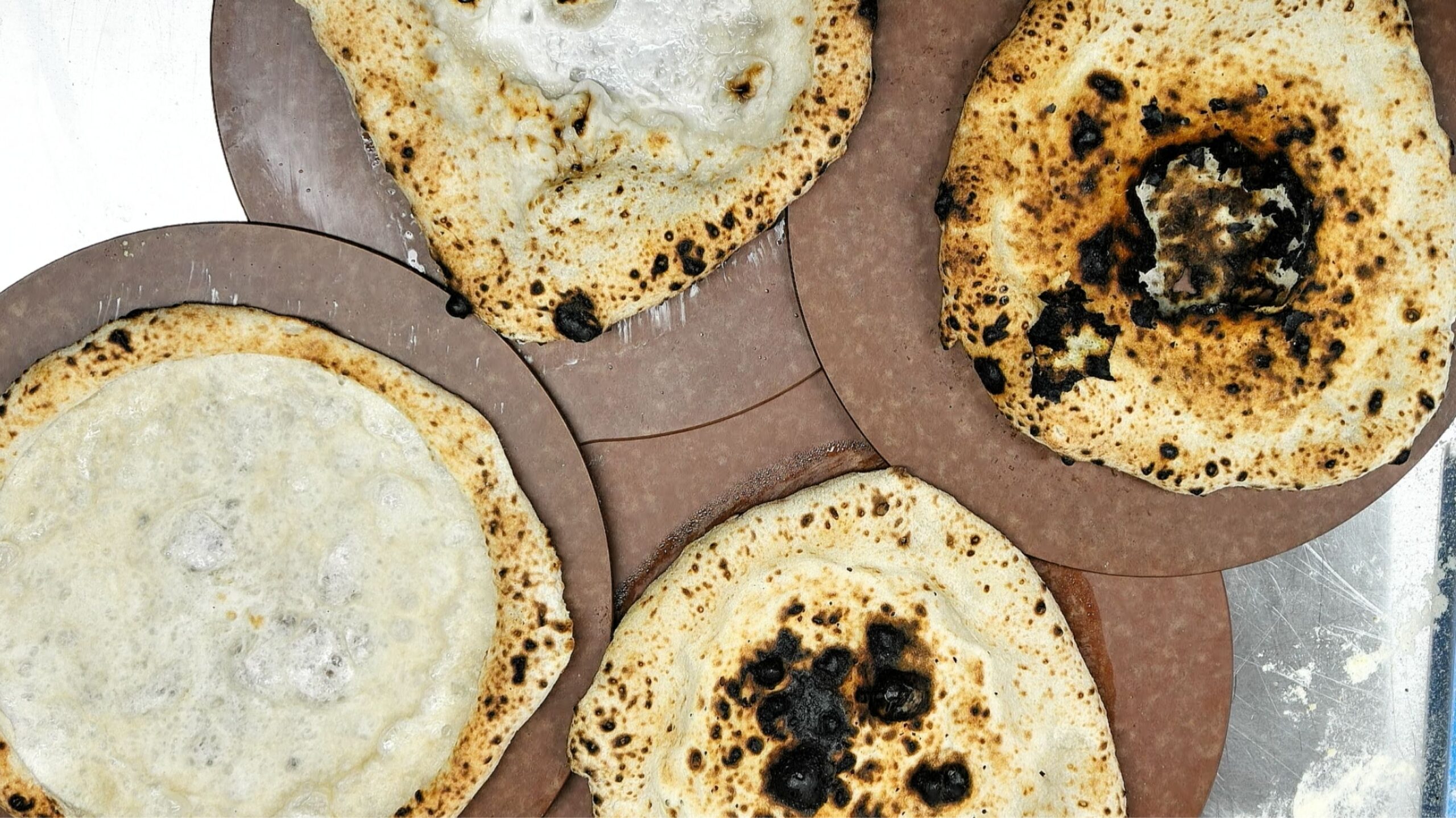
| Method | Result | Effort | Recommendation |
|---|---|---|---|
| ❌ Without method | Dough rises, burns on top | – | Don’t do it |
| ❄️ Ice cubes | Uneven, water on dough | Medium | Not recommended |
| ⚖️ Weight / Plate | Even, beautifully round | Medium (oil it!) | ⭐ Best results |
| 🍴 Fork / Spatula | Good, minimally darker | Low | ⭐ Everyday tip |
For which pizzas do you need this?
Pre-baking the pizza base makes sense whenever the topping is heat-sensitive or applied only after baking:
- 🍫 Nutella or other spreads
- 🌿 Pistachio cream
- 🍓 Fresh fruit (strawberries, figs, berries)
- 🍦 Cream cheese or mascarpone base
- 🍯 Ricotta with honey
In short: Everything you need for sweet pizza or creative topping variations.
Another tip on temperature
When pre-baking the pizza base, I recommend reducing the temperature in the pizza oven slightly – a little more time gives you more control and prevents the bottom from getting too dark too quickly while nothing is happening on top.
Having the right oven for it
For blind baking, it doesn’t matter whether you use a wood-fired oven, gas oven, or electric pizza oven – the methods work everywhere. If you haven’t yet acquired a proper pizza oven, you’ll find a large selection here:
Your favorite?
Have you had any experience with pre-baking pizza bases yourself? Which method do you use – or do you have another trick? Write it in the comments – I’m curious!
And if you’re interested in the topic of sweet pizza: I’m currently working on a whole book about it. Stay up-to-date and subscribe to my newsletter:
