



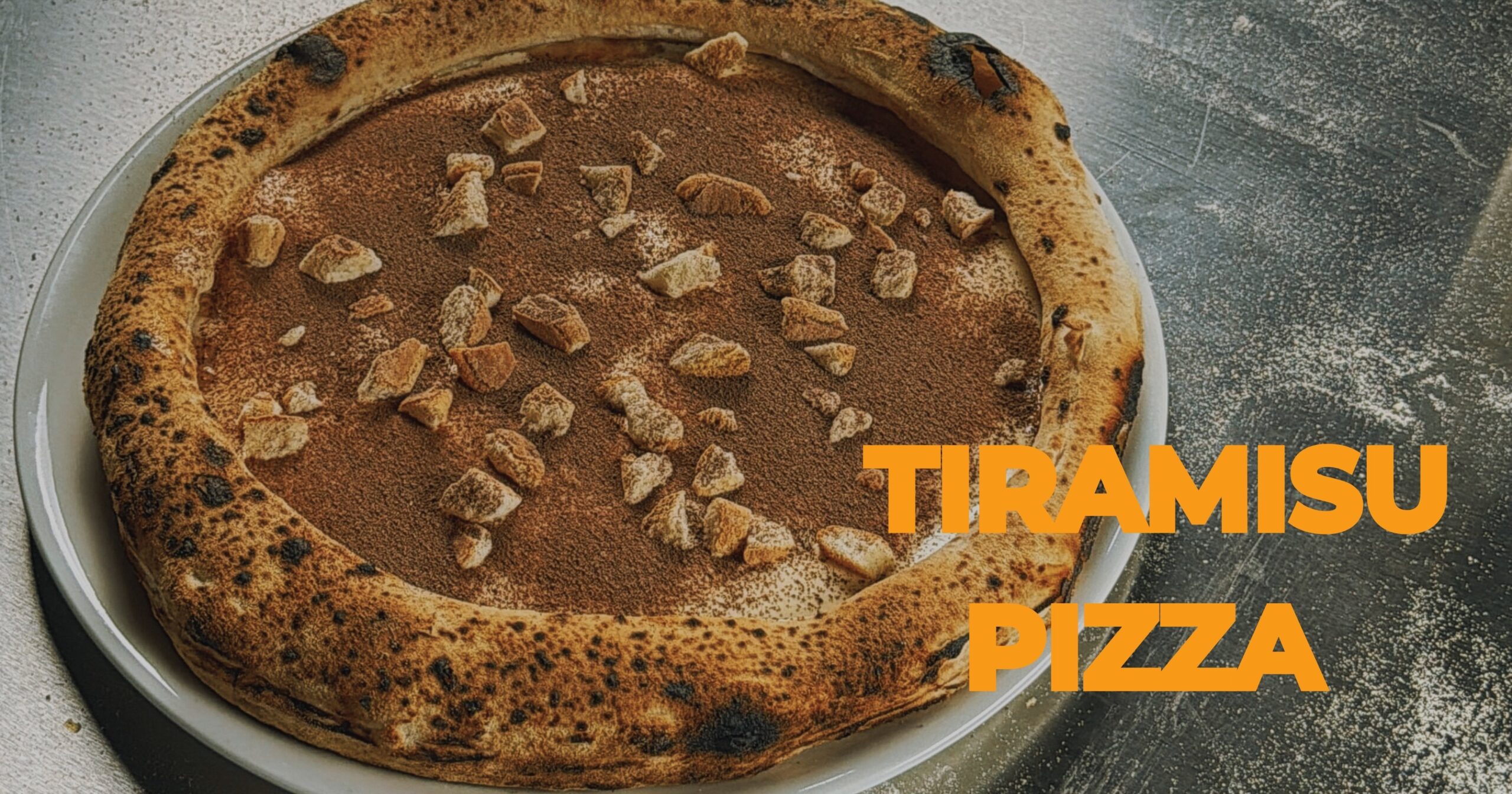
I admit it – the idea sounds strange at first. Tiramisu on pizza? But I just tried it, and since the first test run, I’m convinced: It works. Really well, in fact.
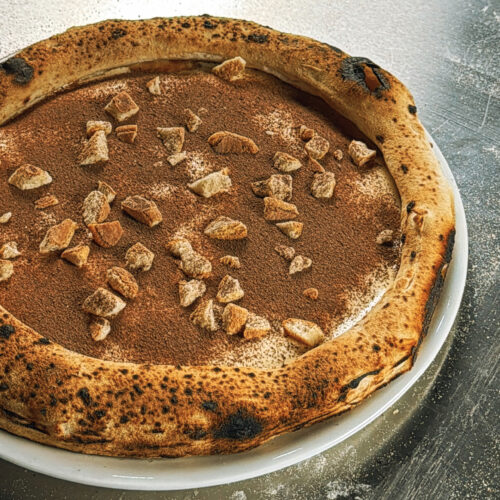
The trick is blind baking. The dough goes into the oven without any topping at full heat, is baked completely – and only then is it topped. Sounds simple, but it makes all the difference. Crispy on the bottom, creamy on top, and in between, the espresso soaks into the still-hot base. Not a gimmick, but a dessert that truly makes sense.
Why I blind bake – and no other way works
My first thought was: just put everything in the oven together. Cream, ladyfingers, cocoa – done. That was a mistake. At 400 °C, the mascarpone cream is destroyed in seconds, the ladyfingers burn, and nothing is left of the tiramisu except a caramelized catastrophe.
So: bake the base alone first. Full heat, bake completely, then top. This way, the dough gets its true character – leopard spotting, a beautiful cornicione, a crispy bottom – and the cream remains stable.
My setup: Stainless steel pan against rising dough
The only problem with blind baking: the dough wants to rise. Without any topping, it has free rein and forms huge bubbles. I placed a round stainless steel pan directly on the spread-out dough before it goes into the oven. This keeps it nice and flat and distributes the heat evenly.
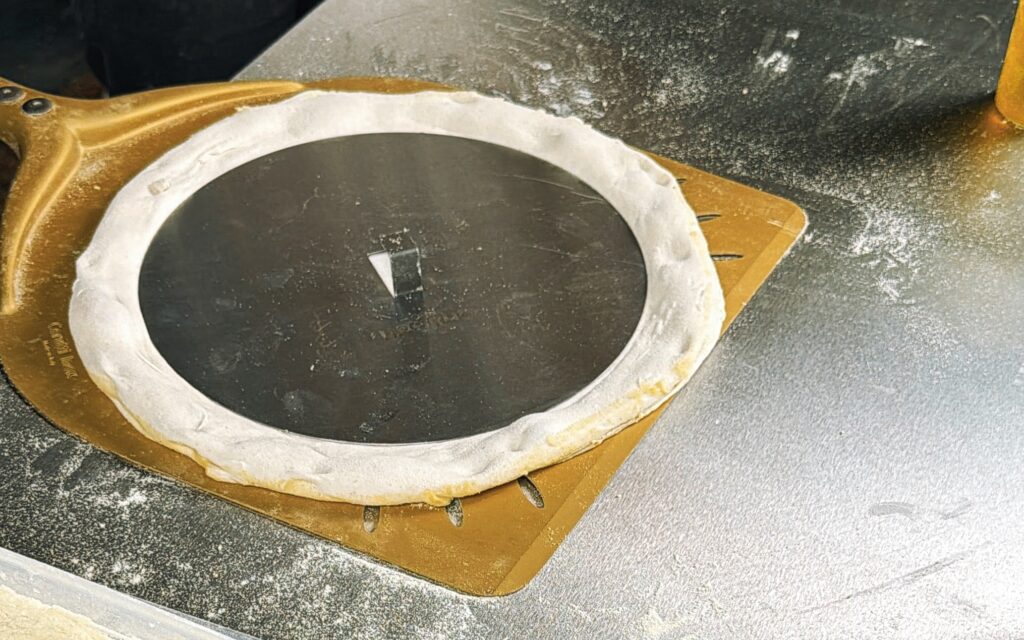
If you don’t have a suitable pan, you can also proceed differently – both methods work just as well:
- Fork Docking: Prick the dough multiple times with a fork before baking – steam can escape, the dough rises more controllably. Simplest method, requires no extra equipment.
- Ice Cube Method: Place a few ice cubes directly on the dough. They create moisture and slow down the rising. Sounds strange, I was skeptical myself – but it works.
The Recipe
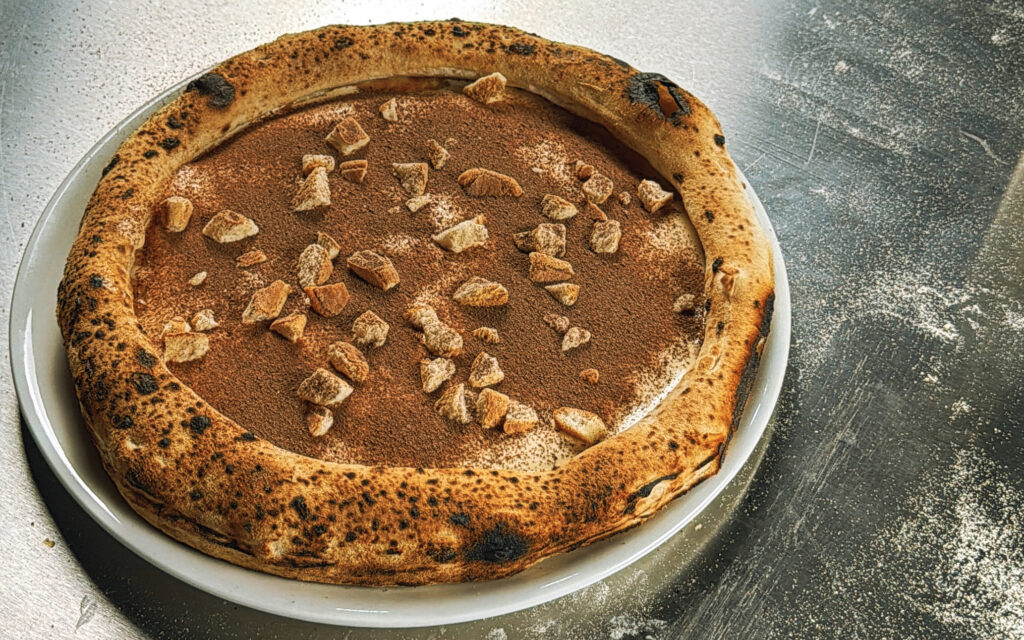
Ingredients (for 1 pizza)
- 1 dough ball (approx. 280 g), stretched to approx. 30–32 cm
- 1–2 espressos, freshly brewed and completely cooled
- approx. 150–200 g mascarpone cream (classic: mascarpone, egg yolk, sugar – optional a dash of Marsala)
- 6–8 ladyfingers (savoiardi), roughly broken
- Cocoa powder for dusting
How I did it
1. Preparation
Brew espresso and let it cool completely – this is really important. Warm espresso will make the base soggy too quickly. In the meantime, prepare the mascarpone cream: beat egg yolk with sugar until creamy, fold in mascarpone, and chill.
2. Stretch the dough
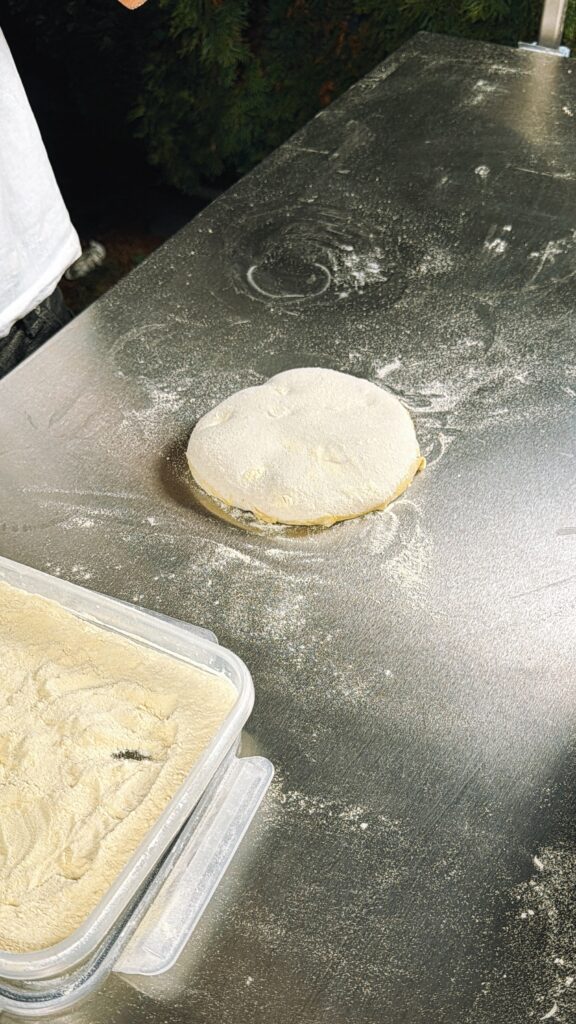
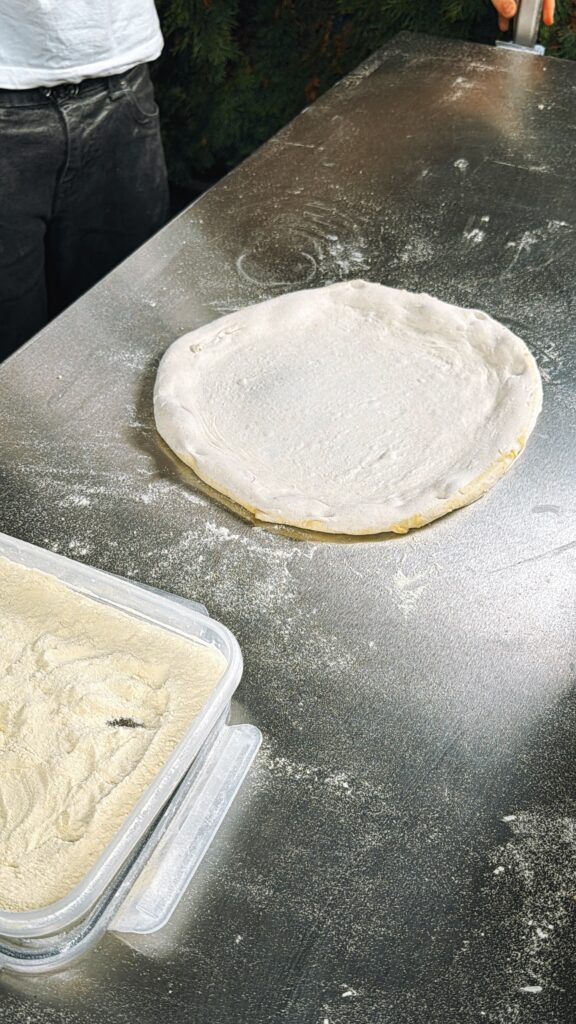
Stretch the dough ball on flour, place it on the pizza peel. Choose and prepare your method – place the pan on top, prick it, or have ice cubes ready.
3. Blind bake
Bake at 400–450 °C until the base is golden brown and truly baked through. In a high-temperature oven, this takes between 90 seconds and 3 minutes, depending on the oven. Important: don’t take it out too early – the base must be stable enough to support the cream.
For these temperatures, you need a proper pizza oven – you can find suitable appliances at PizzaLaden.
4. Soak with espresso
Immediately after baking, evenly drizzle the still-hot base with the cooled espresso. Use a spoon and slowly spread it over the surface – the base should absorb the coffee aroma, but not become soggy. Better to use a little twice than too much at once.
5. Add mascarpone cream
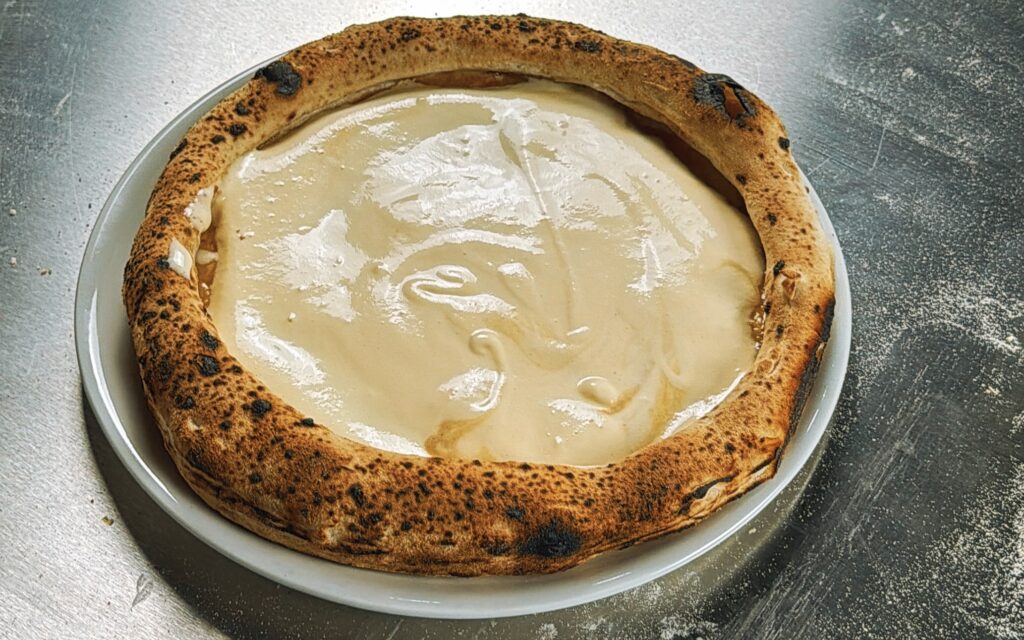
Spread the cream evenly. Not too thick – otherwise, eating becomes a challenge. A moderate layer is perfectly sufficient so that every bite has base and cream together.
6. Ladyfingers and cocoa
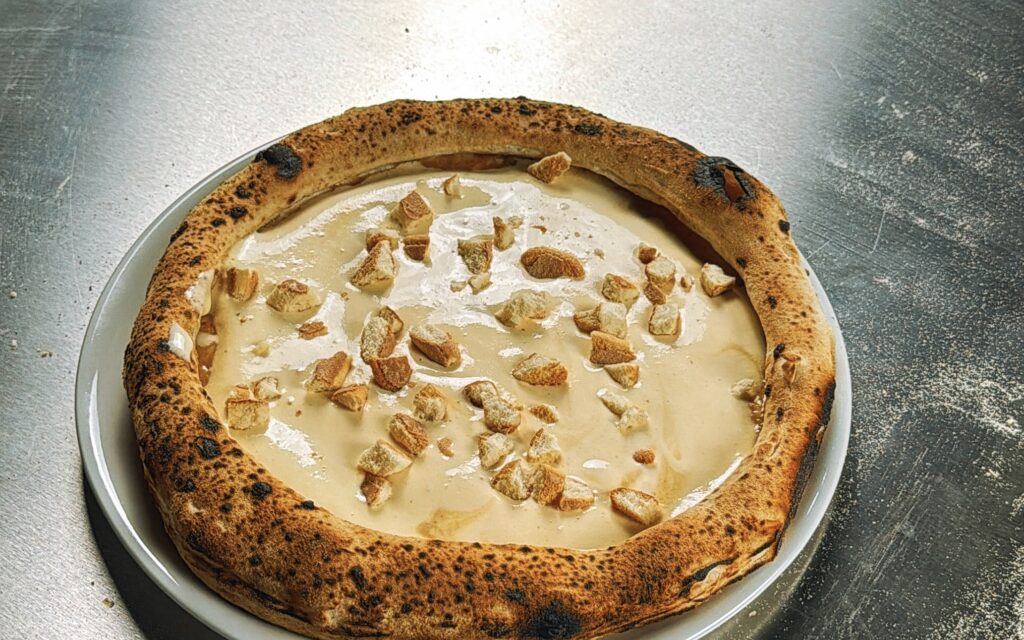
Roughly break the ladyfingers into pieces and scatter them over the cream. Then dust with cocoa powder – preferably through a fine sieve so it’s even and doesn’t clump.
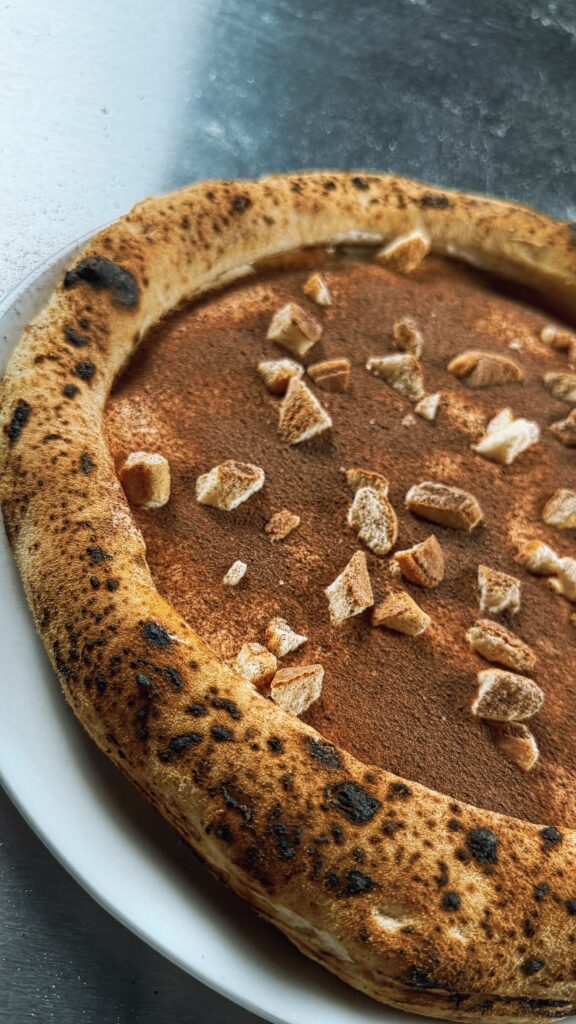
What I would do differently next time
On the first attempt, I applied the espresso while it was still too warm – the base warped a bit and the cream ran in one spot. Let the espresso cool down completely, that’s the point that’s most easily underestimated.
Also: add the cream only shortly before serving. The longer it sits, the more it soaks in – which still tastes good, but the texture suffers. So it’s best to prepare everything and only assemble when plating.
- Let the espresso cool down completely – not lukewarm, really cold.
- Apply the cream only shortly before serving – ladyfingers as the very last layer.
- Really bring the oven up to temperature – if you don’t have a high-temperature oven, you’ll get significantly better results with a baking steel in a normal oven than with a regular baking sheet.
Conclusion
I’m glad I just tried it. The Tiramisu Pizza is no longer a joke or an experiment for me – it’s a real recipe that I would make again. The base provides crispness and roasted aroma, the espresso binds everything, the cream provides melt, the ladyfingers provide bite.
If you try this – show me the result! I’m curious to see what your versions look like. 🙌
Tiramisu Pizza
Ingredients
- 1 Teigling ca. 280 g
- 1-2 Espressi frisch aufgebrüht und vollständig abgekühlt
- 150-200 g Mascarpone
- 2 Eigelb
- 2 EL Zucker
- 6-8 Biskotten Löffelbiskuit
- Kakao zum Bestäuben
- Optional: 1 Schuss Marsala
Instructions
- Espresso aufbrühen und vollständig auskühlen lassen.
- Eigelb mit Zucker cremig schlagen, Mascarpone unterheben und kalt stellen.
- Teigling auf Semola ausbreiten (ca. 30–32 cm).
- Teig flach halten: Edelstahlblech drauflegen oder mit Gabel einstechen oder Eiswürfel drauflegen.
- Bei 400–450 °C blind backen bis der Boden goldbraun und durchgebacken ist.
- Noch heißen Boden gleichmäßig mit dem abgekühlten Espresso tränken.
- Mascarponecreme gleichmäßig verstreichen.
- Biskotten grob zerbrechen und über die Creme verteilen.
- Mit Kakao bestäuben und sofort servieren.
