



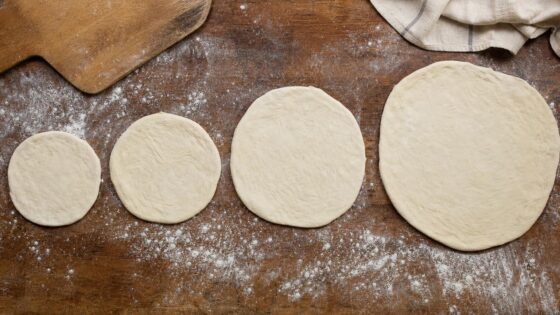

Servus! Last week we talked about why, when it comes to topping pizza the right way, less is often more. Today we’re taking it one step further into practice, because there’s one topic that gets massively underestimated: pizza topping cooking time.
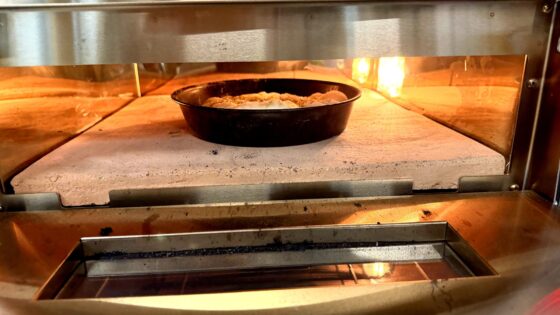
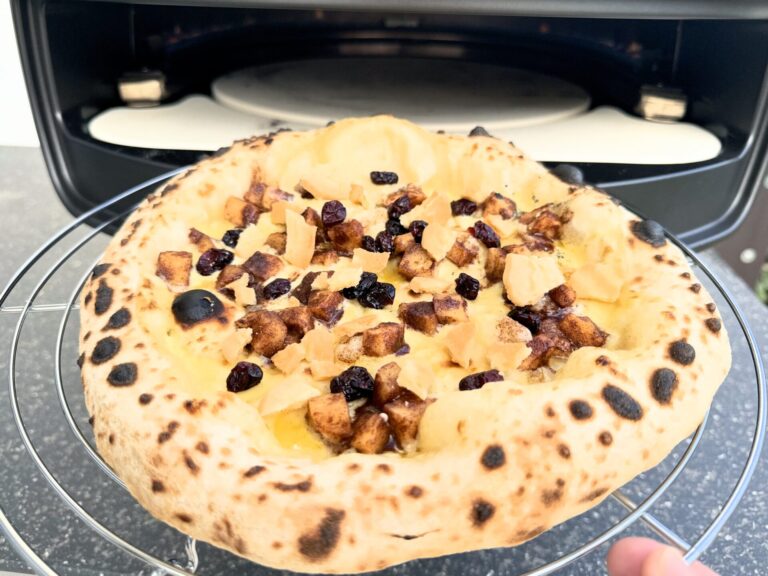
Anyone switching from classic home-oven pizza (with 8 to 10 minutes of baking time) to a real pizza oven is often in for a surprise: the dough is perfectly baked after 90 seconds – crispy outside, fluffy inside – but the toppings? Sometimes they’re still a work in progress.
Let’s be straight about it: do the toppings even cook in such a short time?
The 90-second rule: why time can be your enemy ⏱️
At 400 to 450 degrees in a pizza oven, everything happens in a flash. That’s brilliant for the cornicione (the rim), but a challenge for everything sitting on top.
My basic rule for the perfect pizza topping cooking time: everything that goes on your pizza must either be edible raw or safely cook through within 60 to 90 seconds.
Meat & seafood: no experiments! 🍗🦐
Be careful here. Raw meat has no business on a Neapolitan pizza, unless it’s sliced paper-thin and suitable for eating raw (like a carpaccio).
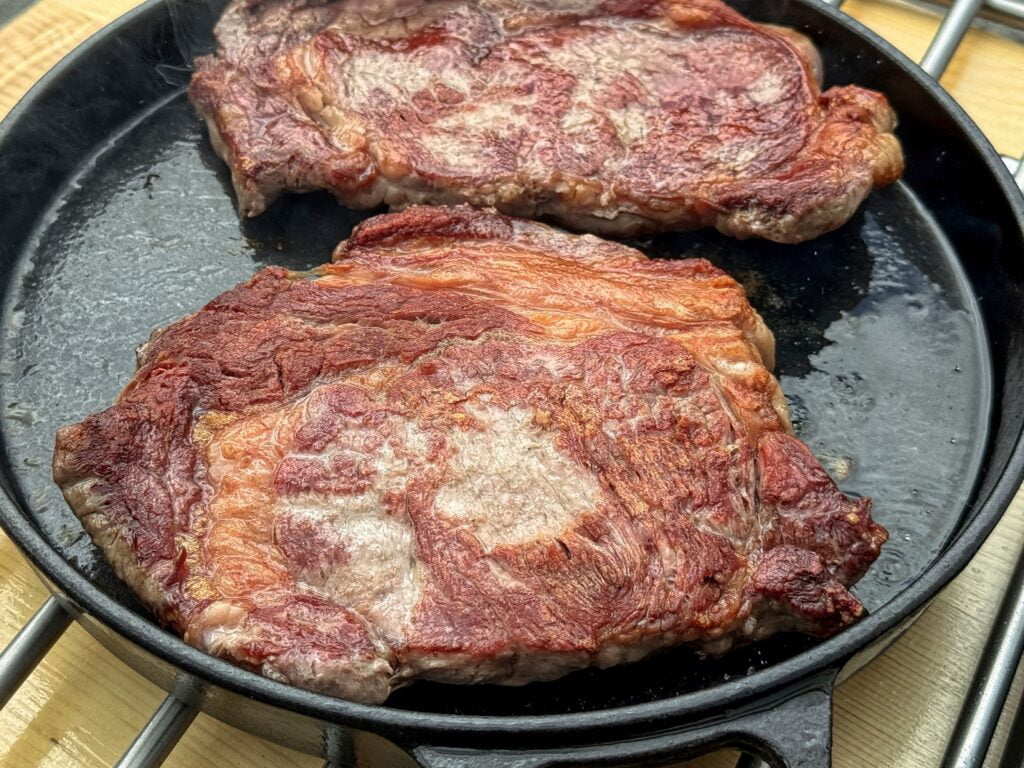
- Chicken: an absolute no-go when raw! In that short time the heat doesn’t reach the centre. My tip: always cook it completely in a pan first and only then put it on the pizza.
- Seafood: shrimps or mussels often get tough if they stay in the oven too long, or they stay cold inside. I like to use a small cast iron pan for this. Briefly sweat the seafood in the pizza oven (or on the stove) until just translucent, and only then put it on the dough for the finale. The flavour is unbeatable!
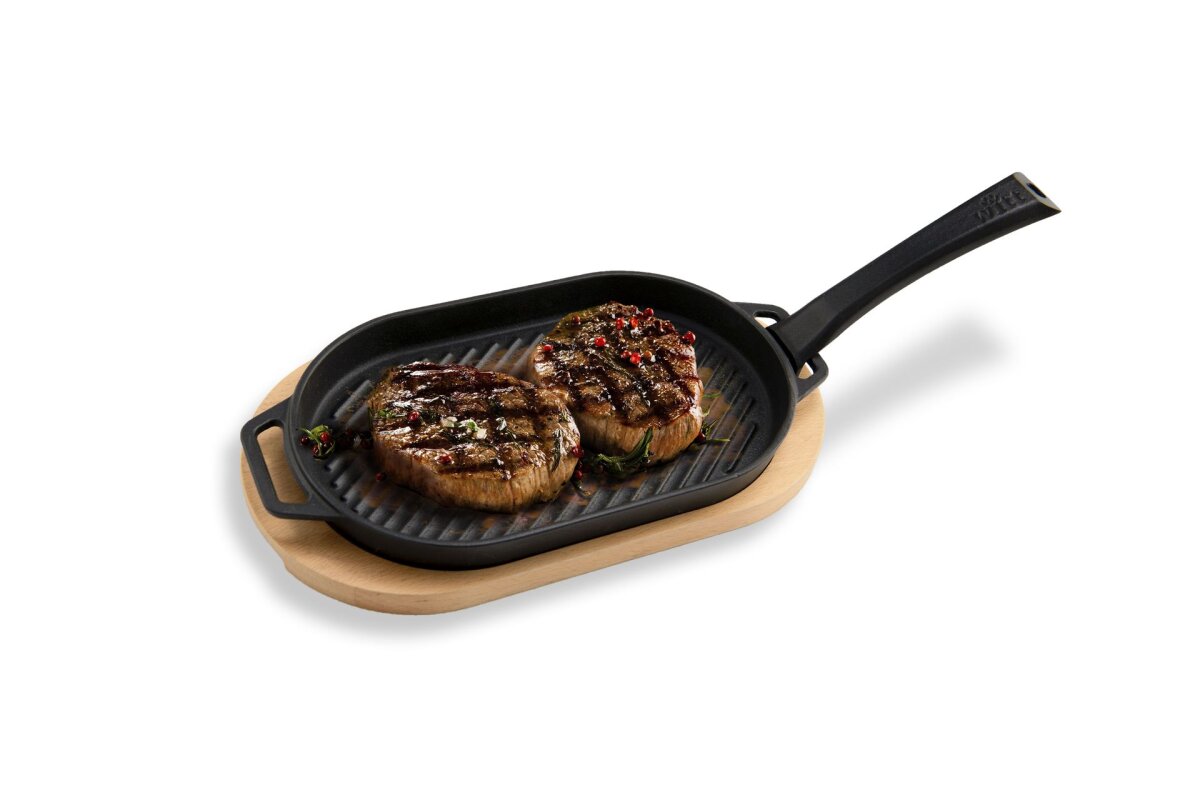 Witt grill pan, oval, ridged, incl. wooden board*view at PizzaLaden ↗
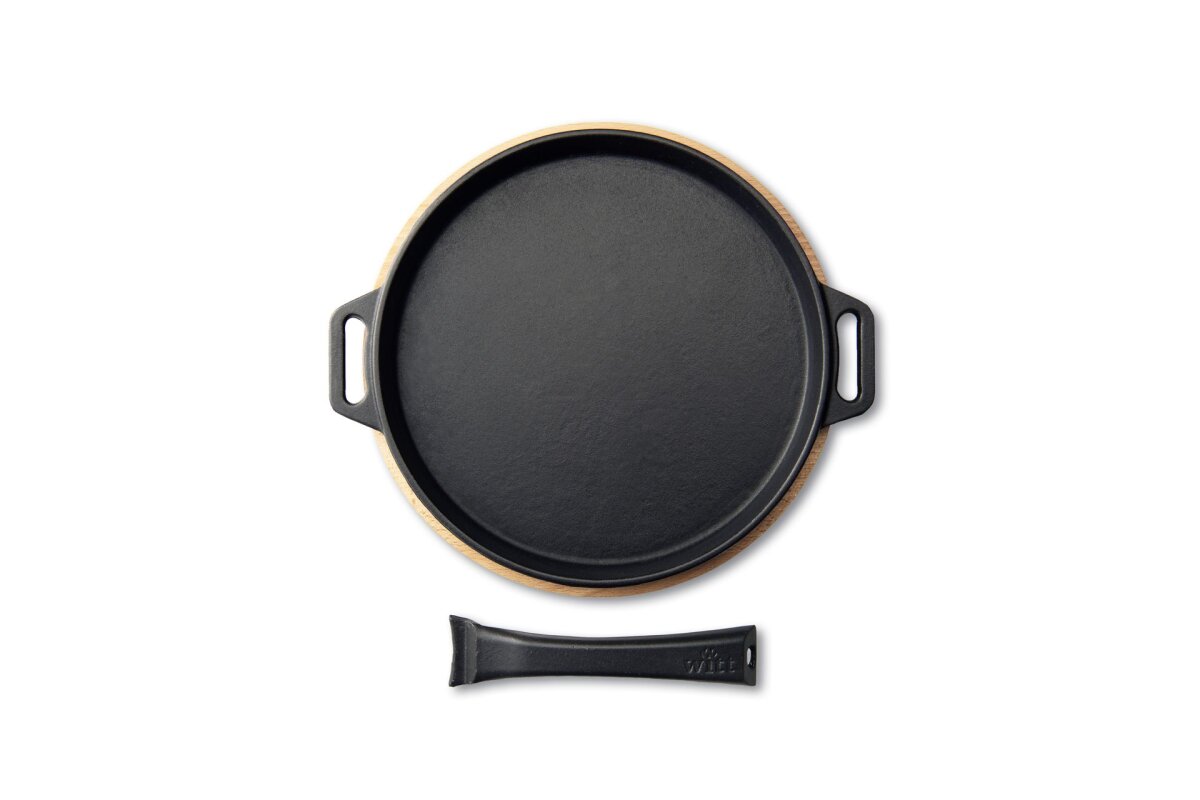 Witt frying pan, round, 24cm, smooth, incl. wooden board*view at PizzaLaden ↗
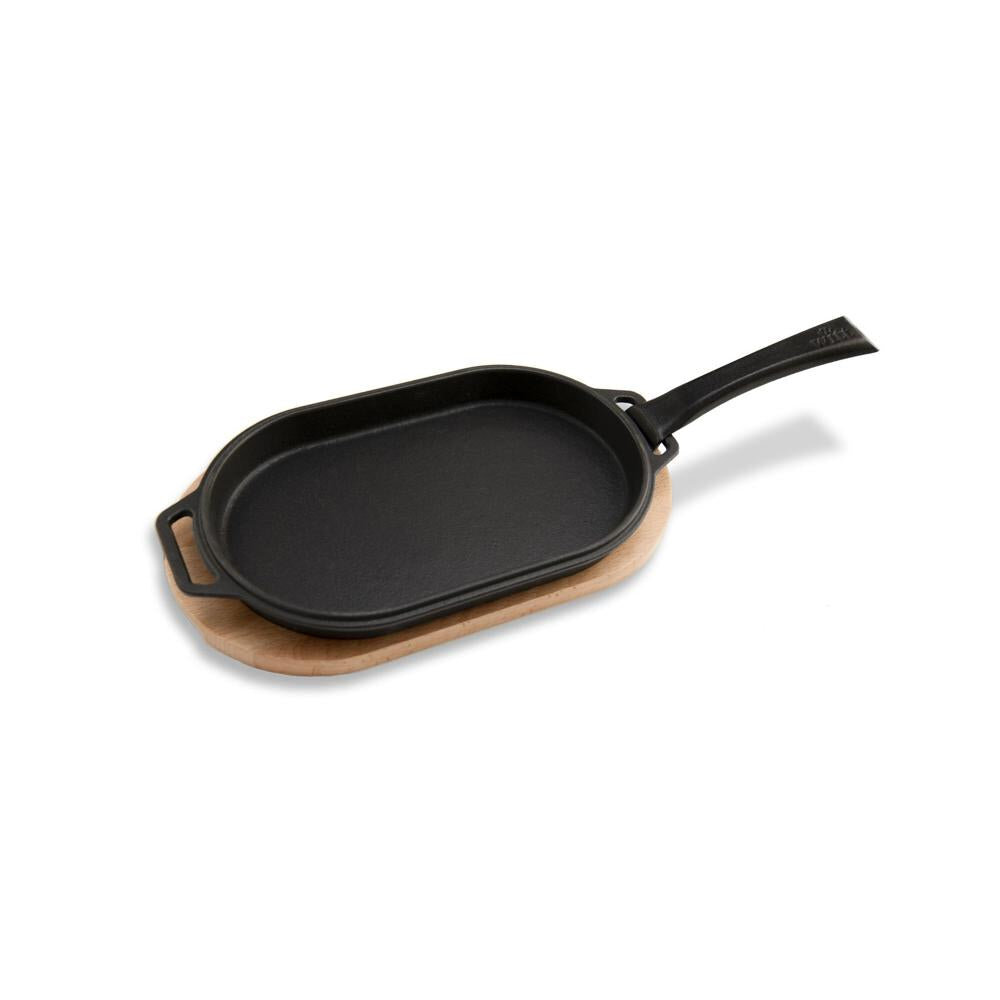 Witt frying pan, oval, smooth, incl. wooden board*view at PizzaLaden ↗
Prepping ingredients properly: the vegetable secret 🔪🥒
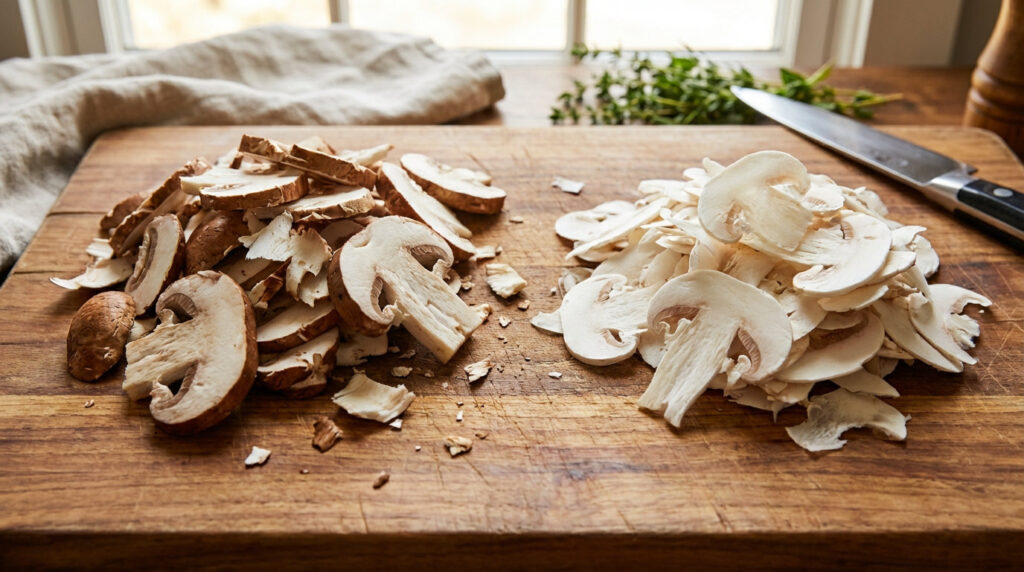
Even though you can eat vegetables like peppers, zucchini or mushrooms raw without any problem, the mouthfeel is what matters. A thick chunk of raw pepper on a soft pizza often feels “unfinished” – hot outside, still crunchy and cold inside. That just doesn’t go with the delicate texture of a Neapolitan pizza.
The solution: use a mandoline!
If you slice the vegetables paper-thin, you cut the cooking time they need dramatically. In the oven they instantly bond with the cheese and give you a harmonious mouthfeel.
The fried egg dilemma: how to do it without the slime 🍳
Cracking a raw egg straight onto the pizza is almost impossible to time in a 450-degree oven. By the time the egg white has set, the rim of your pizza has usually burnt.
The pro trick: cook the fried egg almost all the way in a small pan. As soon as the white is firm, put it on the pizza. That way the yolk stays runny, the white is safely cooked through and the pizza comes out of the oven in time.
Everything that only goes on AFTERWARDS (post-bake) 🥗
Don’t forget that many of the best ingredients can’t handle heat at all. Fine products often lose their aroma in the oven or turn tough. These things only go on the pizza once it has left the oven:
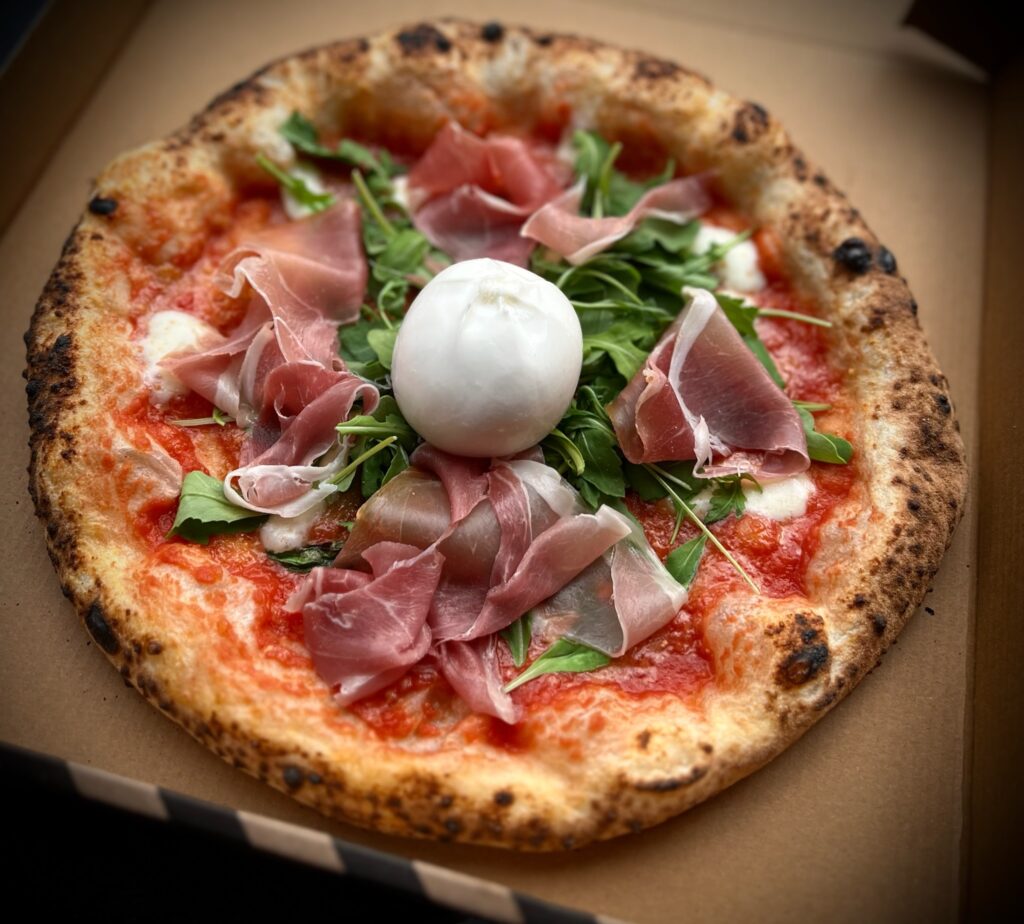
- Prosciutto crudo (cured ham)
- Burrata or buffalo mozzarella (if you like the cold centre)
- Fresh rocket
- High-quality olive oil or truffle oil
Bottom line: preparation decides the pizza topping cooking time
Preparation – the so-called mise en place – is half the battle with Neapolitan pizza. When the pizza goes into the oven, the toppings have to be “ready”.
What was your biggest topping fail? Has anything ever stayed completely raw on you? Tell me in the comments – I’m curious to hear about your experiences!
Until next time on “Let’s Talk Pizza”!
Servus and see you soon,
your Klausi 🍕👋