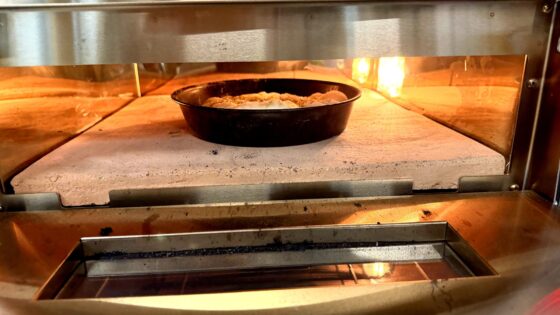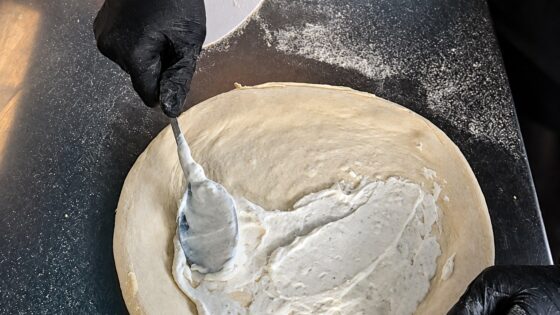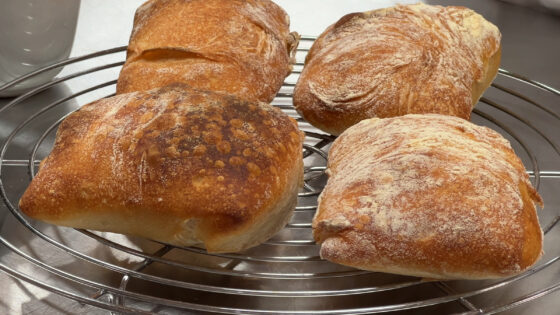




It's a December evening, you're standing on the patio in your jacket, and the pizza oven has been running for an hour. Yet the stone still isn't properly hot, and the flame is noticeably smaller than it was on your last pizza night in summer. Your dough balls are waiting indoors while you're outside wondering what's going on.
❄️ Your pizza oven in winter: what changes in the cold
In winter, a few things affect your gas pizza oven at once: the gas doesn't vaporise as readily, the wind cools the oven, and the stone takes longer to heat up. Meanwhile, your dough rises more slowly in a cold kitchen.
If you do everything just as you would in summer, the timings often stop lining up. The dough isn't ready, neither is the stone, but the toppings are already waiting. That's why I allow more time in winter and keep a closer eye on things. For the hot-weather version, have a look at Pizza at 35 °C.
🧊 Gas bottle icing up: what happens and what helps
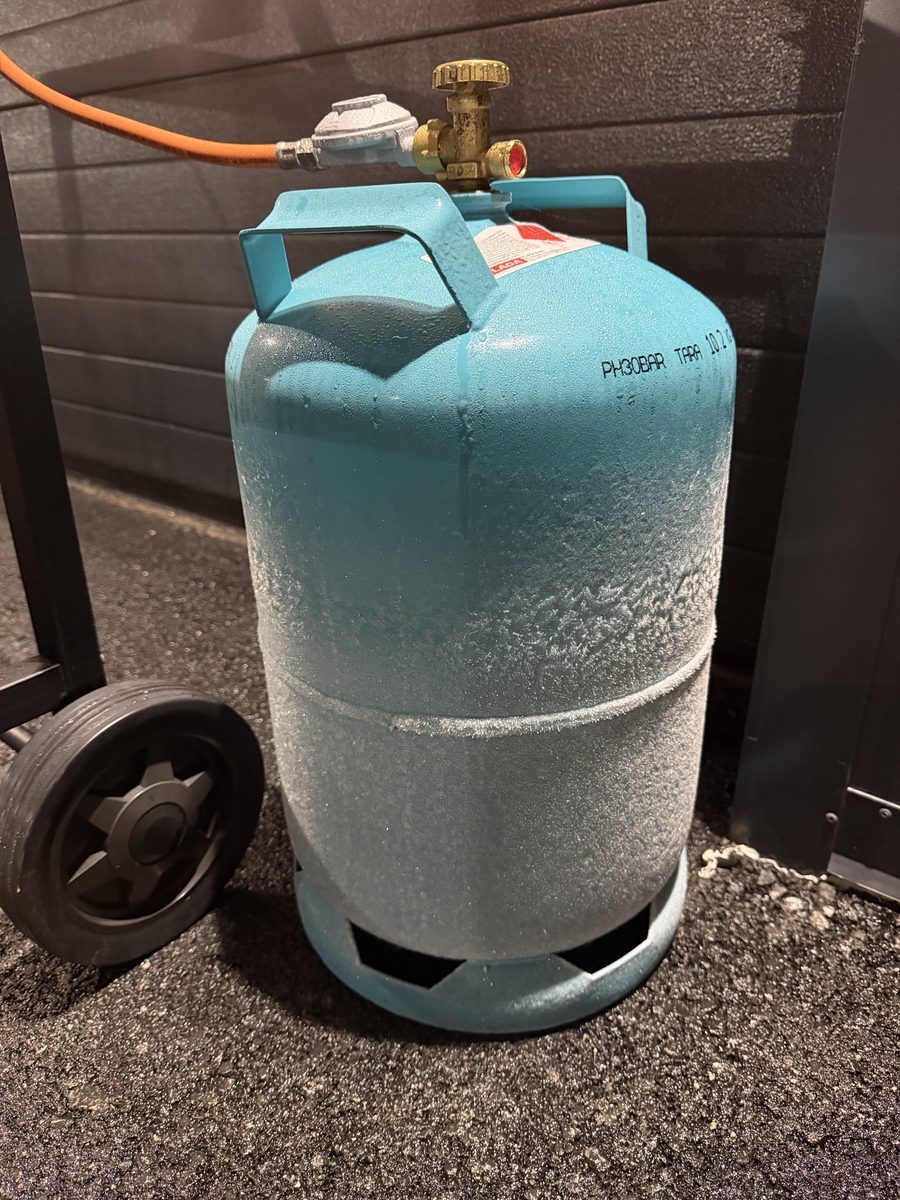
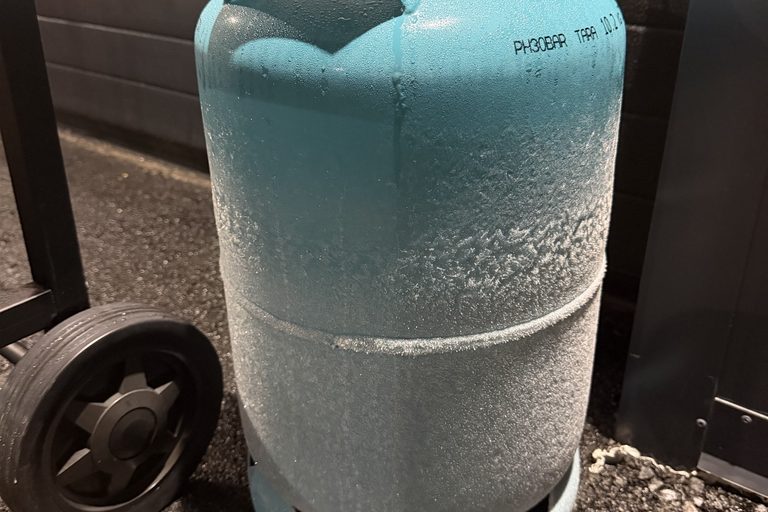
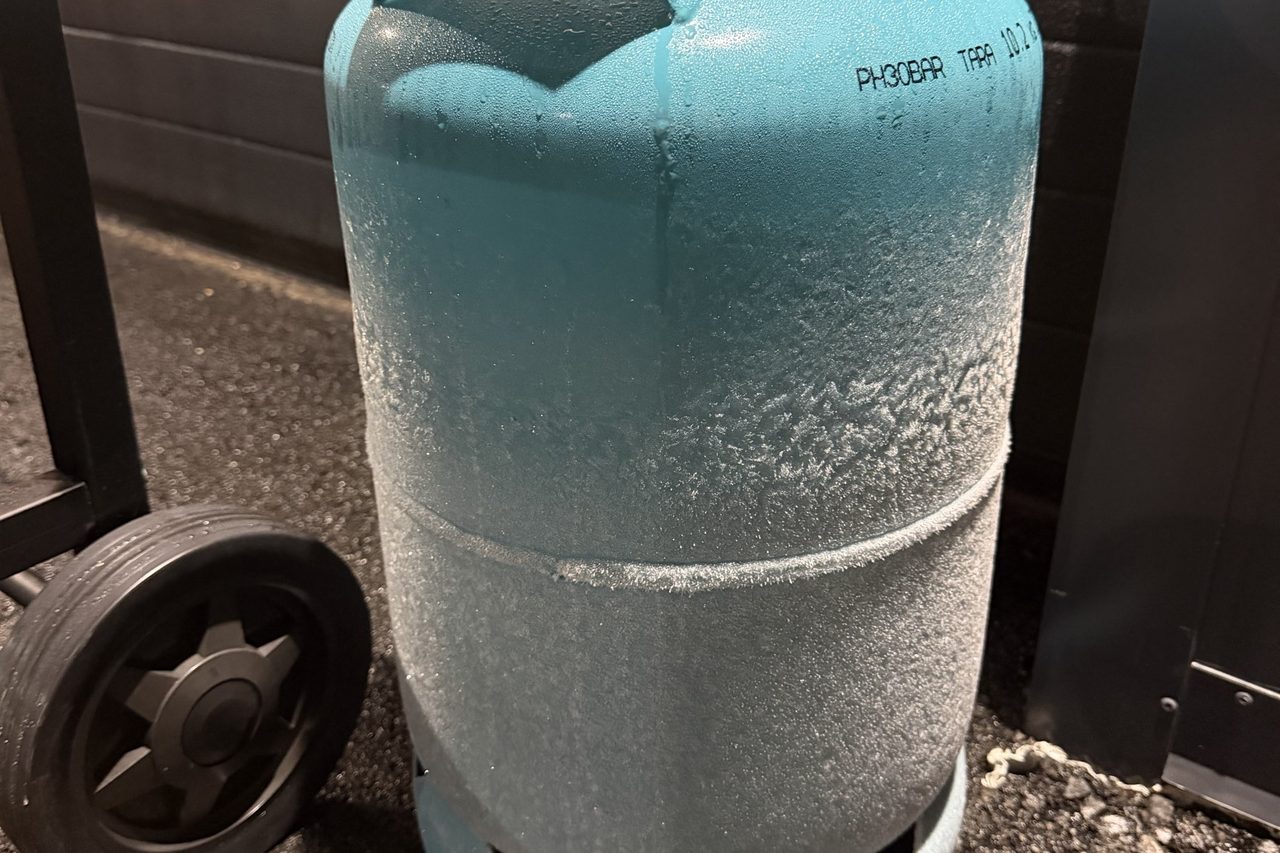
In cold weather, condensation or frost can form on the outside of the bottle. Liquid gas needs heat to vaporise and draws it from the bottle. In cold weather, running a high flame for a long time makes the bottle colder and colder. Eventually, the gas vaporises too slowly, the pressure drops, and your oven loses power. The gas itself doesn't freeze.
This has happened to me several times, and the photo above shows one of my own bottles. That's why I usually have two bottles at workshops, so I can swap them quickly if one ices up and the heat output drops. When a whole group is waiting for pizza, you're very glad you've got that second bottle.
It often helps to preheat with a lower flame and give the oven more time, rather than turning it right up from the start. If the heat output still drops, the second bottle is your backup.
🚫Safety first
Never try to warm up a gas bottle: no hairdryer, no fan heater, no hot water, and don't bring it indoors to warm it up. Only use your gas oven outdoors, never in a garage or under an enclosed canopy.
🌬️ Preheating and wind
I always allow an extra 15 minutes for preheating in winter. That gives the stone more time, but it doesn't replace checking: if the flame is weak or the wind is blowing into the oven, the clock alone won't tell you much.
I position the oven with its opening facing away from the wind so the flame can't be blown out. Check the spot before you light the oven, rather than waiting until you've got a pizza ready on the peel.
I measure the stone temperature with an infrared thermometer, such as the Witt Infrared Temperature Gun or the Gozney Infrared Thermometer. That tells you whether you're ready to bake or need to wait a little longer.
⏱️My winter rule of thumb
Allow 15 minutes more preheating time than usual. The thermometer tells you whether the stone is ready, not the clock.
🍕 Dough in winter
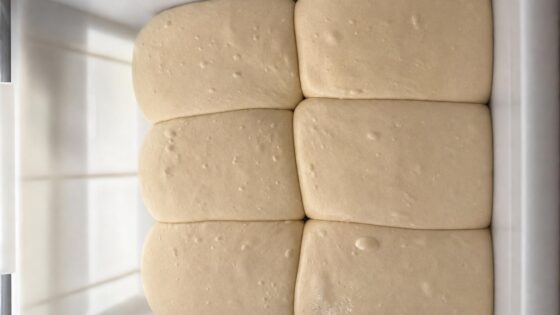
Your dough rises more slowly in a cold kitchen. If you follow the same schedule as in summer, the dough balls often won't be ready when you'd planned to start baking. That doesn't mean there's anything wrong with your recipe.
Leave your dough balls at room temperature for longer before baking than you would in summer. There's no set number of hours for this, because room temperature in your kitchen might be different from mine. You'll find more on this in Cold Fermentation vs. Room Temperature.
My dough balls stay indoors until it's time to bake. I don't put the whole dough box out on the cold patio beside the oven; I only bring the dough balls out when I'm ready to work with them. I also take the toppings out of the fridge in good time.
For hydration, meaning the amount of water as a percentage of the flour's weight, my sweet spot is 68 to 72%. In summer, I tend to stick to 68 to 70%, while in winter I go up to 72%. With 1 kg of flour, going from 70 to 72% means exactly 20 g more water, or a shot glass (2 cl).
🏠 Too cold? Bake indoors instead
If you'd rather bake in the kitchen during winter, an electric pizza oven is an alternative, such as the Tentazione MAX GT4 or an Effeuno. I've compared them to help you find the better fit in GT4 Max vs. Effeuno.
If your gas oven stays outside over winter, a cover protects it from wet weather, such as the Witt Cover for the Piccolo or the Gozney Arc Lite Cover.
Frequently asked questions
Can I bake with gas in freezing temperatures?
Yes, it works below freezing too. Allow more preheating time and keep an eye on the wind and how well the gas bottle is supplying the oven.
Why is my gas bottle icing up?
As the liquid gas vaporises, it draws heat from the bottle. In cold weather, running a high flame for a long time causes frost to form on the outside, the pressure drops, and the oven's heat output falls.
How much longer should I preheat in winter?
I allow an extra 15 minutes. What matters, though, is the measured stone temperature, so I check it with an infrared thermometer.
For me, there's something special about making pizza outdoors in winter, even with a woolly hat on at the oven. Allow more time, keep the dough balls indoors and have a second gas bottle ready, and a cold December evening is fine by me.