



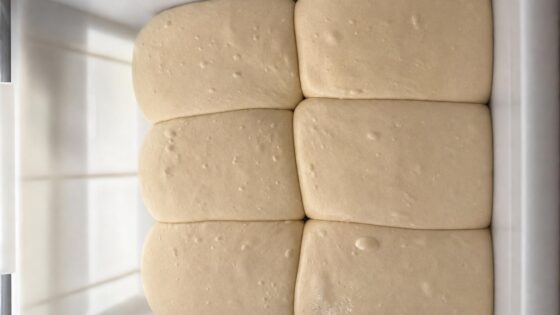
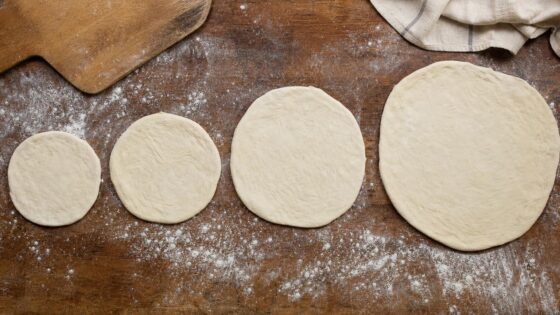

I still remember my first attempts with pizza dough. I had a recipe from the internet, the ingredients were ready, and I was sure: this is going to be great. Spoiler – it wasn't great. The dough stuck to everything, the base was pale and rubbery, and the rim had the texture of cardboard. I ate it all anyway, because I was too proud to admit it.
The problem wasn't the recipe. The problem was that I had no idea how a good dough is supposed to feel. What does "smooth" mean? What does "well risen" look like? When is the dough kneaded enough? No recipe in the world answers those questions for you – at least not in a way you understand the first time.
Since then I've baked hundreds of pizzas, read dozens of books, watched what feels like a thousand YouTube videos and given workshops myself. And one thing has become clear to me: every way of learning has its place – but they work differently well depending on where you're at right now.
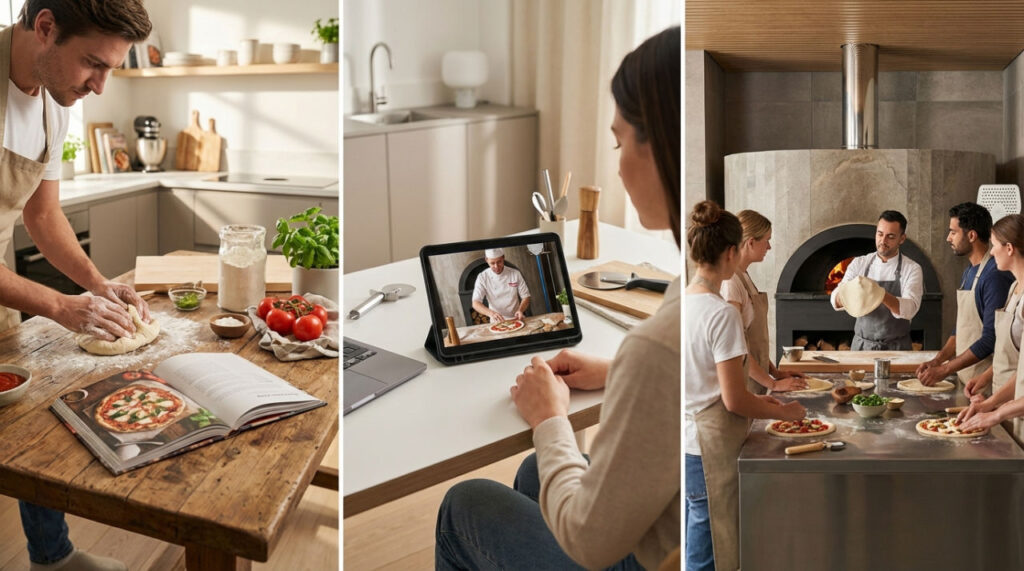
In this post I compare the three most common ways to learn how to make pizza: books, YouTube and workshops. Honestly, with all their strengths and weaknesses. So you can find the way that suits you.
Way 1: Books & recipe collections
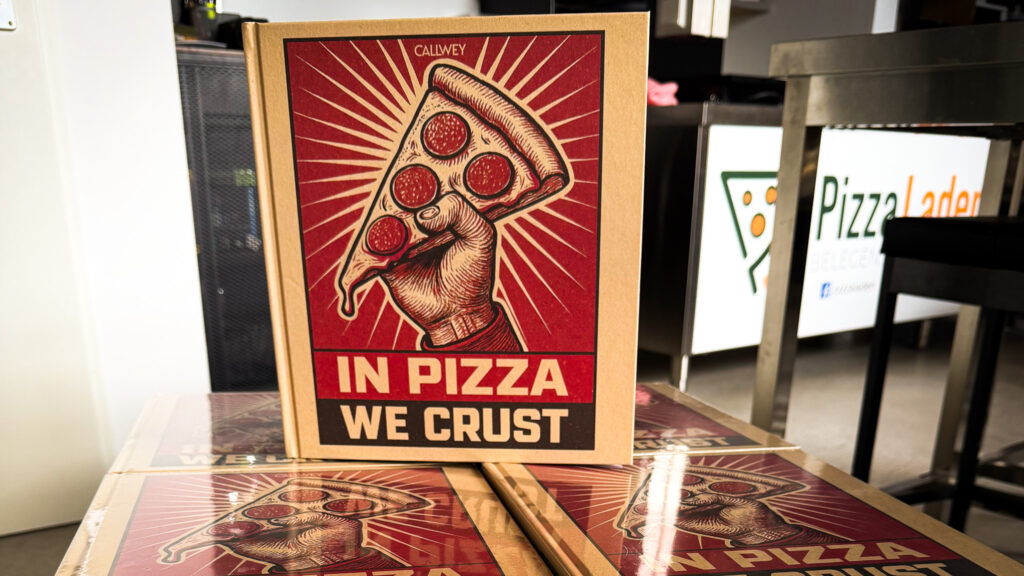
A good pizza book is like an old friend you keep coming back to with questions. The big classics often explain dough schedules, flour types and baking techniques in incredible detail – including background knowledge that sometimes gets completely lost online.
I have a small collection myself and regularly go back to it when I'm developing a new recipe or want to read up on how things fit together. Books are great when you want to understand why something works.
What books do well
Solid knowledge at a glance: A good book explains how things connect – why a dough made with biga tastes different from a direct dough, what hydration really means and what role dough temperature plays. That's knowledge you won't get from any 10-minute video.
Structure: Books usually take you from simple to complex. You start with the Margherita and work your way up step by step. No algorithm decides what you learn next.
Offline & always available: No algorithm, no ads, no autoplay. Just open it, read, do. In the kitchen, on the terrace, in the evening on the couch.
Where books hit their limits
No feedback: You see a photo of the finished dough, but does yours look the same? No idea. Especially with dough – how it should feel, when it's kneaded enough, what the right consistency looks like – the sensory part is completely missing. A book can't tell you: "Stop, that's too much flour."
Outdated or contradictory info: Not every book is up to date, and some contradict each other. One book recommends 58 % hydration, the next says 65 % is the minimum. As a beginner you're left standing there not knowing who to believe.
Nothing personal: What do you do if your dough doesn't rise despite following the recipe? If it's sticky even though you did everything right? The book won't answer. It just lies there and stares at you.
Who books are ideal for
Books work well as an add-on – when you already have a basic feel for dough and want to dig deeper into the theory. As your only way of learning, they're pretty hard going for most beginners, because the practical part is missing. But combined with other ways of learning? Worth their weight in gold.
Way 2: YouTube & online tutorials
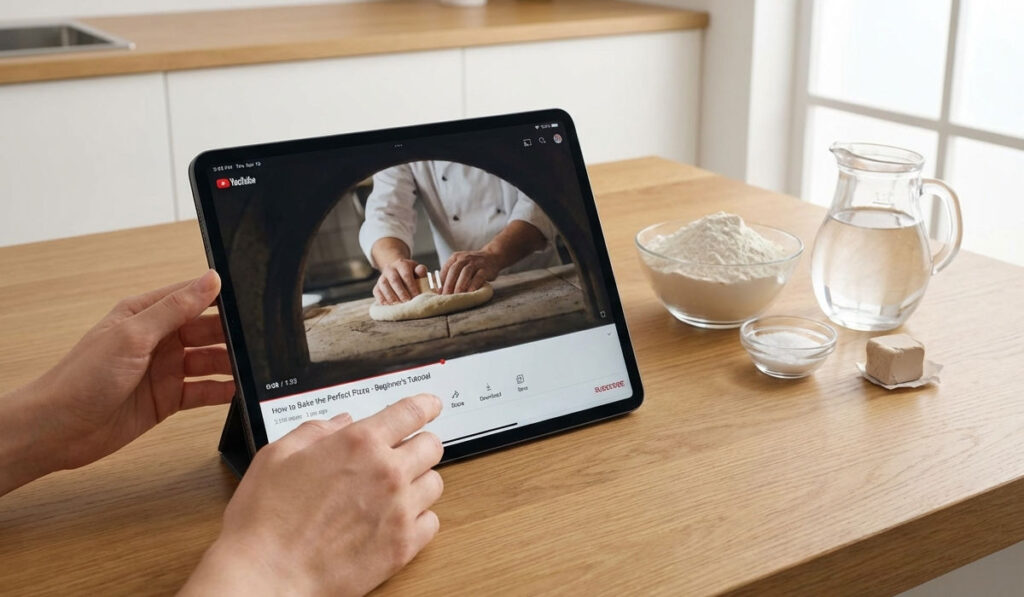
YouTube is probably the first stop for most people who want to make pizza themselves. And I get why: it's free, instantly available and visual. You see with your own eyes how someone kneads the dough, stretches it, tops it and slides it into the oven.
In the beginning I spent whole evenings on YouTube videos myself. One video led to the next, and suddenly it was half past one in the morning and I still hadn't made any dough – but I did have three new ovens on my wish list. Sound familiar?
What YouTube does well
Visual & easy to follow: You see what the dough should look like, how it moves, how someone shapes it. That's incredibly helpful, especially at the start – much better than any written description.
Huge choice: From Neapolitan pizza to Detroit style to focaccia and pinsa – there's a video on almost every topic. Often several, from different perspectives and skill levels.
Free & instantly available: All you need is a phone or a laptop. You can start learning at midnight if you feel like it. No waiting, no sign-up, no appointment.
Where YouTube hits its limits
Quality varies hugely: Alongside real pros, there's also a lot of half-knowledge on YouTube. The tricky part: as a beginner you often can't tell the difference. A video with a million views isn't automatically correct. I've seen videos that grate the mozzarella instead of tearing it, or blend the tomato sauce instead of crushing it – all with hundreds of thousands of views.
Passive learning: You watch, but you don't take part. And even if you work along at the same time – the video doesn't wait for you, doesn't answer questions and doesn't correct you when you make a mistake.
No senses involved: This is the biggest point. No video in the world can show you how a dough with 65 % hydration should feel. Or how it smells when the pizza in the oven has just reached the perfect moment to turn it. You only learn those things by experiencing them yourself.
Distraction & rabbit holes: You wanted to follow a recipe, and three hours later you're still watching videos about ovens you're never going to buy. The YouTube algorithm isn't a pizza teacher – it's an entertainment machine.
Who YouTube is ideal for
YouTube is perfect for getting inspired and taking your first steps. For specific questions too – "How do I shape the Neapolitan rim?" or "When is my oven hot enough?" – you'll find quick, visual answers. But as your only way of learning, it lacks direct feedback and the chance to fix mistakes in the moment.
Way 3: Workshops & classes
Then there's the way where you really get your hands in the dough – with someone looking over your shoulder who tells you straight away whether you're on the right track.
These days I regularly give pizza workshops myself, and the moment I love most is always the same: when someone holds a dough in their hands for the first time and suddenly understands how it's supposed to feel. That "Aaaah, THAT's what you mean!" – no book and no video can pull that off.
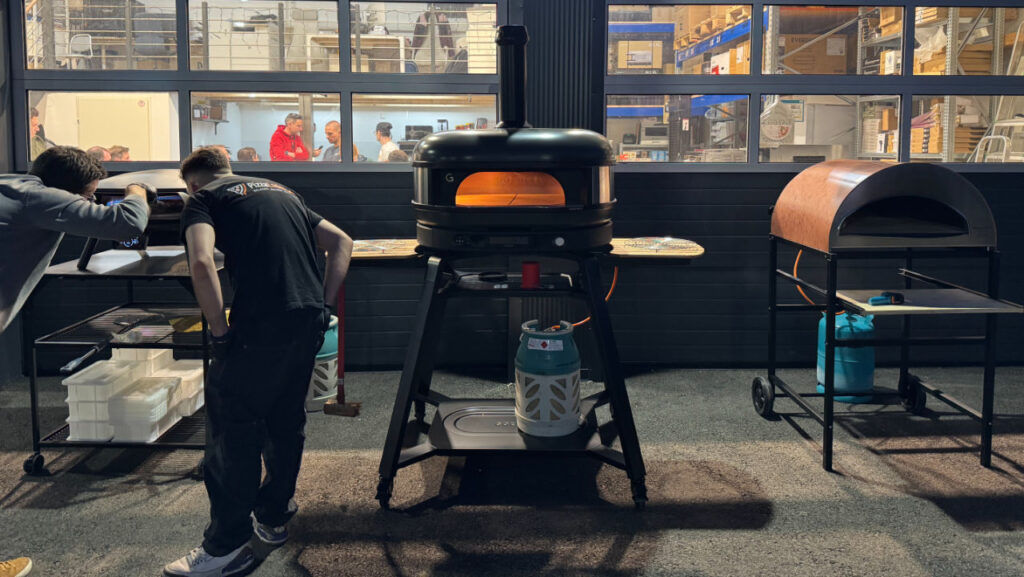
Last time I had a participant who'd been baking pizza at home for two years and was never happy with his dough. Within ten minutes we found the problem: he was adding the salt too early, which made the dough too firm. A detail that wasn't in his recipe – and one you can't see in a video, because it's all about timing while kneading.
What a workshop does well
Instant feedback: Someone looks at your dough, grabs it and says: "Too firm, add a bit more water" or "Perfect, that's exactly how it should feel." That one moment when it clicks can't be replaced by any video or book. It's the difference between knowing and being able to do it.
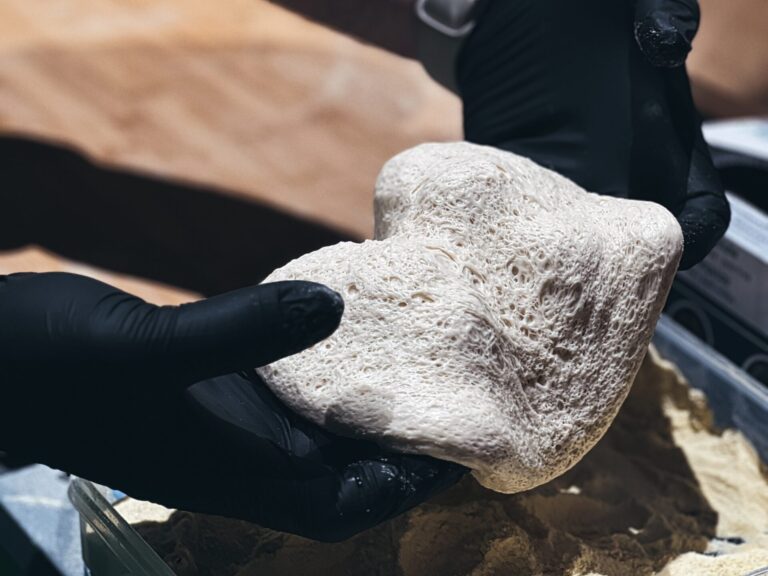
Learning with your senses: You feel, smell and see the dough at different stages. You notice the difference between an under- and an over-fermented dough – not because you read about it, but because you've had both in your hands. And you see how a pizza changes in 60–90 seconds in a 450 °C oven.
Ask questions – and get answers right away: Why is my dough always sticky? Why does it tear when I stretch it? What do I do if the ball proofing went on too long? Questions like that get sorted in seconds at a workshop. At home you google for hours and get five different answers.
Community & motivation: Pizza is a social food. Learning is simply more fun in a group of like-minded people – and you usually take away more than you expected. I've even had participants set up a WhatsApp group after the workshop to send each other their pizzas.
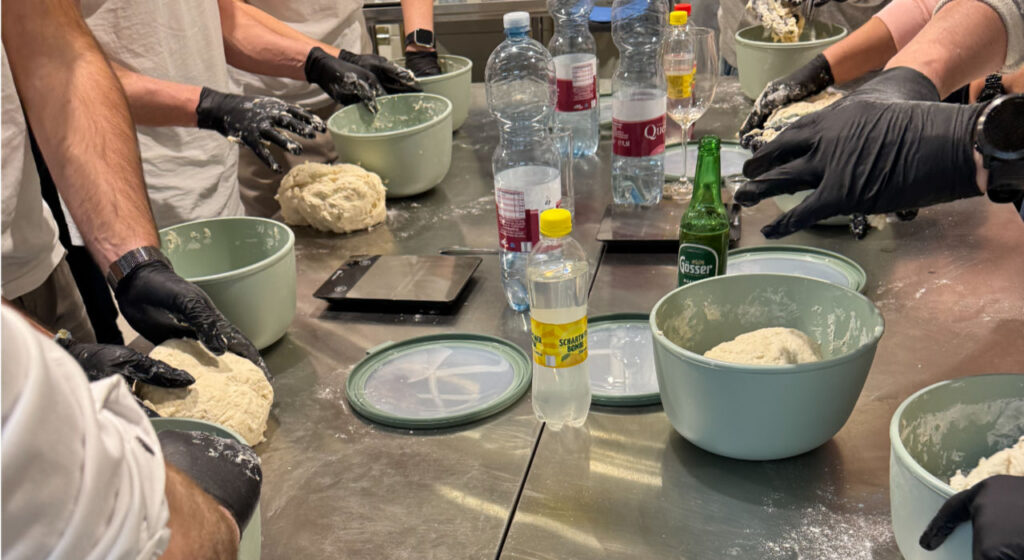
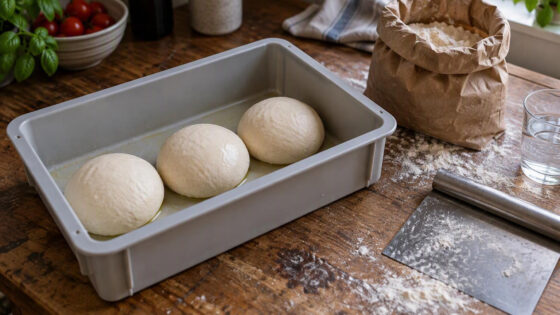
You take something tangible home: At most workshops you don't just get knowledge, but also materials: recipes, dough containers, your own dough to take away. You don't just leave smarter – you leave with everything you need to carry on at home straight away.
Where a workshop has its limits
Fixed time & place: You have to get there, keep a date free and you're usually busy for half a day. That's not easy for everyone to organise – especially if you have small kids or live outside the usual workshop regions.
Cost: A workshop costs money – depending on scope and length, usually somewhere between 50 and 190 euros. But in return you get high-quality ingredients, drinks (yes, beer and wine are usually included), equipment to take home and personal guidance. Add it all up and the value for money is often better than you'd expect.
One-off boost: A workshop isn't an ongoing course. You get an intense dose of input, but the fine-tuning and practice happen at home afterwards. That's a strength (a compact learning boost) and a weakness (you need to take the initiative afterwards) at the same time.
Who workshops are ideal for
For everyone who doesn't just want to know, but also wants to be able to do it. Beginners in particular benefit hugely, because many typical beginner mistakes get corrected right there on the spot – before they become habits. But more experienced bakers who are stuck on a specific topic (like hydration or preferments) often get the decisive push at a workshop that they'd been missing at home for weeks.
The honest comparison at a glance
| Books | YouTube | Workshop | |
|---|---|---|---|
| Cost | 20–40 € | free | 50–190 € |
| Instantly available | after delivery | right away | after booking a date |
| Visual learning | limited | very good | best (live) |
| Sensory learning | no | no | yes |
| Direct feedback | no | no | yes, in real time |
| Background knowledge | very good | varies | good to very good |
| Adaptable to you | yes (your own pace) | yes (pause) | partly |
| Community | low | low | high |
It's the combination that counts – but where do you start?
The truth is: you'll get furthest with a combination of all three. But if I had to choose one starting point, it would be hands-on – so a workshop or class.
Not because the other ways are bad. But because at the start, practice is the biggest lever. Once you've experienced how a good dough feels, what the right oven heat looks like and how you bake a pizza in 90 seconds, you'll understand the books and videos on a completely different level afterwards. Suddenly everything you read or watched before makes sense.
I like to compare it to riding a bike: you can watch a hundred videos about how to keep your balance. But you only really get it the first time you ride without stabilisers.
My concrete suggestion for your learning path
Step 1: Start with a workshop where you really get hands-on yourself. If you've never made pizza before, a short taster class is enough to start with, where you focus on topping and baking – no dough stress, with ready-made dough, two pizzas and drinks. If you want to go deeper right from the start, a full class focused on the dough is better – there you make your own dough, shape dough balls and take everything home, including recipes and dough containers.
Step 2: Then practise at home – and use YouTube for specific questions. "How do I shape the Neapolitan rim?" or "What do I do if the dough is too wet?" – short, targeted videos are perfect for that. After the workshop you know what to look out for and can judge the videos much better.
Step 3: If you want to dive deeper, get yourself a good book for the theory and maybe an advanced workshop on hydration and preferments. That's where it gets into biga, poolish and the question of why your dough is sometimes perfect and sometimes not. From that point on, you know enough to experiment on your own and find your own style.
The most important thing to finish
The beauty of pizza is: it's one of the few dishes where you get really good results fairly quickly with fairly little effort. You don't have to be a pro, you don't need an expensive oven, and you don't have to take a class to get started either.
But – and this is the key point – if you want to make the jump from "pretty okay" to "really good", it helps enormously if someone shows you once what really matters. Whether that's a workshop, a good friend who already has experience, or a really detailed book – the main thing is that at some point you get your hands in the dough and learn how it's supposed to feel.
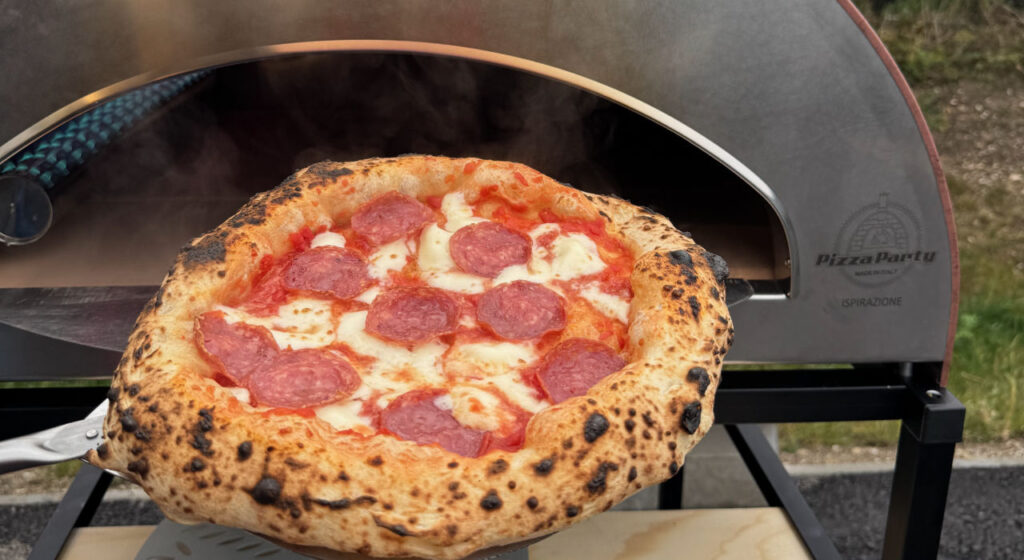
So: read less, watch less, bake more. You'll never forget your first homemade pizza that really tastes good. And I promise you: it'll come sooner than you think.
Got questions about this or want to know which way of learning suits you best? Write to me – I'm happy to help.