



Once you get into pizza, sooner or later you stumble across a word that suddenly pops up everywhere: pizza dough hydration.
70 %.
75 %.
80 %.
Sometimes even more 😅
On Instagram and TikTok it often looks spectacular:
very soft dough, big air bubbles, lots of movement.
But then comes the moment at home in the kitchen – and suddenly everything sticks 🙈
Time to talk calmly and honestly about hydration.
💧 What does hydration actually mean?
Hydration describes how much liquid is in the dough, relative to the amount of flour.
Important:
Liquid means not just water, but anything liquid – for example water, ice or a liquid preferment.
Example:
600 g water to 1 kg flour = 60 % hydration
That simple.
And that's exactly why people often make it needlessly complicated 😉
🍕 Pizza is actually simple
Pizza doesn't get difficult because it's complex.
It usually gets difficult when we want too much at once.
More water.
A different flour.
A new technique.
And ideally all at the same time.
High hydration plus the wrong flour
plus little experience
almost always leads to one result:
👉 an extremely sticky dough.
And that's no fun.
But that's exactly what pizza should be: fun 🍕🙂
🇮🇹 A quick look at Naples
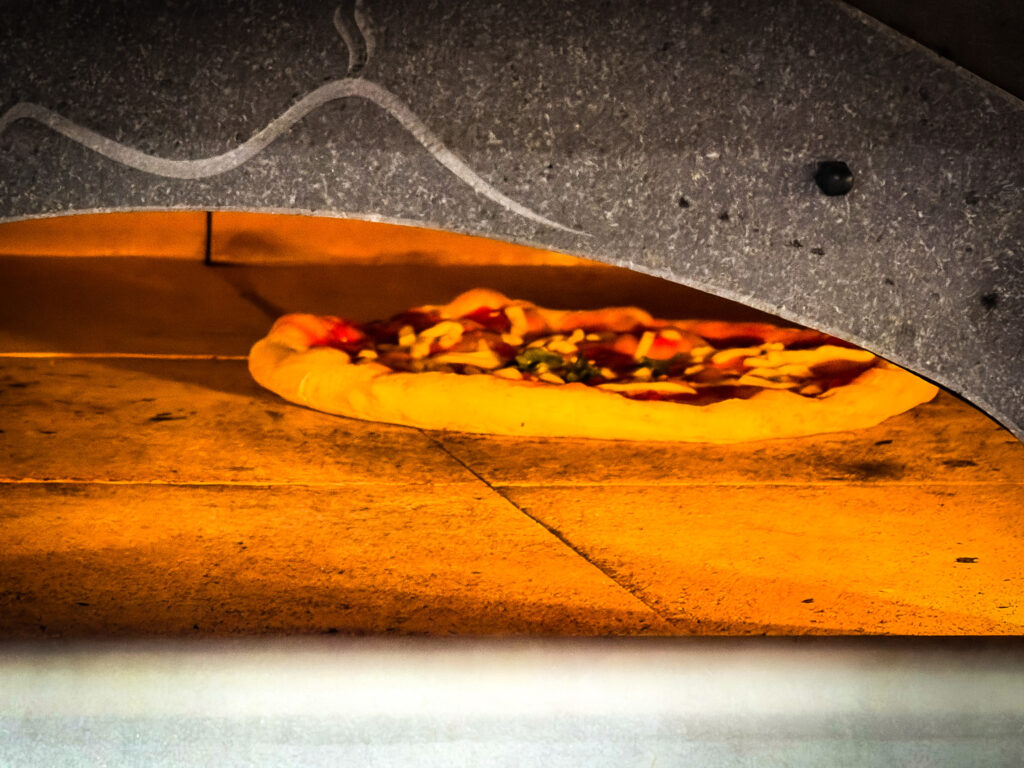
If we look at Naples – where pizza comes from –
the classic hydration is between 55 and 62 %.
That's also in line with the AVPN standard
(the rulebook for true Neapolitan pizza).
And here's the exciting part:
👉 Great pizzas have been made there with exactly these hydration levels for decades.
That shows very clearly:
Good pizza doesn't need extremely high numbers.
😬 Why high hydration is often frustrating at first
High hydration isn't wrong.
But it's more demanding.
Especially at the beginning, that often means:
- the dough is much stickier
- it's less forgiving of mistakes
- stretching it out gets harder
- handling it takes more feel
And if you then add a flour that can't absorb the water well, "exciting" very quickly turns into frustrating.
This is exactly where a lot of people give up –
and that would be a real shame.
🧠 My personal approach to hydration
These days my personal sweet spot is
at about 68–70 % hydration.
But – and this matters to me –
that's not something you have to be able to do or want to do right away.
It came with:
- practice
- a feel for dough
- an understanding of flour
- and lots of pizzas that weren't perfect 😉
And that's exactly how pizza is allowed to be.
✅ Less water, more control
Especially at the beginning, I deliberately recommend:
- a bit less hydration
- a dough that's easier to control
- clearer routines
- more moments of success
Because motivation doesn't come from extremes,
but from pizza that turns out well 🍕
You can always step it up later – if you feel like it.
🧾 My verdict
You don't need extreme hydration
to make really good pizza.
On the contrary:
Especially at the beginning, less water is often more fun.
Pizza is a hobby.
Pizza should taste good.
Pizza should bring joy.
👉 Let's talk honestly about pizza.
💬 Now it's your turn
What hydration are you working with right now?
Did you build up slowly or start high straight away?
👉 Feel free to write it in the comments –
swapping experiences often helps more than any recipe 🙂
If you like honest pizza topics like this,
feel free to sign up for our newsletter 🍕
You'll regularly get tips, thoughts from practice
and new posts straight to your inbox.
❓ FAQ about pizza dough hydration
How much hydration is ideal for pizza?
That depends on experience, flour and what you're going for.
For beginners, 55–62 % hydration is usually ideal because the dough is easy to control.
As you gain experience, higher hydration can make sense too.
Is high hydration better for pizza?
Not automatically.
High hydration can give you an airy crumb, but it makes the dough much more demanding to handle.
Especially at the beginning, a bit less water often gives better results.
Why is my pizza dough sticky at high hydration?
Usually it's a combination of:
- very high hydration
- a flour that can't absorb the water well
- lack of experience handling it
A sticky dough isn't a mistake – it's often a sign that too many factors are coming together at once.
Can I make pizza with low hydration?
Yes, absolutely.
Many classic pizzas – Neapolitan ones in particular – are made with 55–62 % hydration and have worked reliably for decades.
What hydration do you recommend for pizza beginners?
For beginners I recommend starting at the lower end,
for example at 58–62 % hydration.
The dough is easier to shape, less sticky and simply more fun.
When does it make sense to increase the hydration?
When you:
- have developed a good feel for dough
- know how your flour behaves
- and get repeatable results
Then you can raise the hydration gradually – e.g. in small steps of 2 %.
Does only water count towards hydration?
No.
Every liquid in the dough counts towards hydration,
including liquid preferment, ice or other liquid ingredients.
What role does the flour play in hydration?
A very big one.
Not every flour can absorb a lot of water.
The higher the hydration, the more important a flour with a stable structure and consistent quality becomes.
Do I need high hydration to bake good pizza?
No.
Good pizza comes from:
- solid basics
- consistent routines
- and practice
High hydration is one option, but not a requirement.
How can I slowly increase my hydration?
Start with a hydration that works well and raise it gradually by 1–2 %.
That way you learn how the dough changes without overwhelming yourself or the dough.