





Servus and welcome to round three of our series “Let's talk pizza”! 🍕🔥
Last week we took a deep dive into hydration. Today we go one step further: once the dough is kneaded, there's the all-important question:
Can it go in the fridge or does it have to stay out?
In the pizza world, this topic often makes the sparks fly. Some swear by tradition, others by technique. So let's talk straight about RT (room temperature) and CT (cold/fridge temperature).
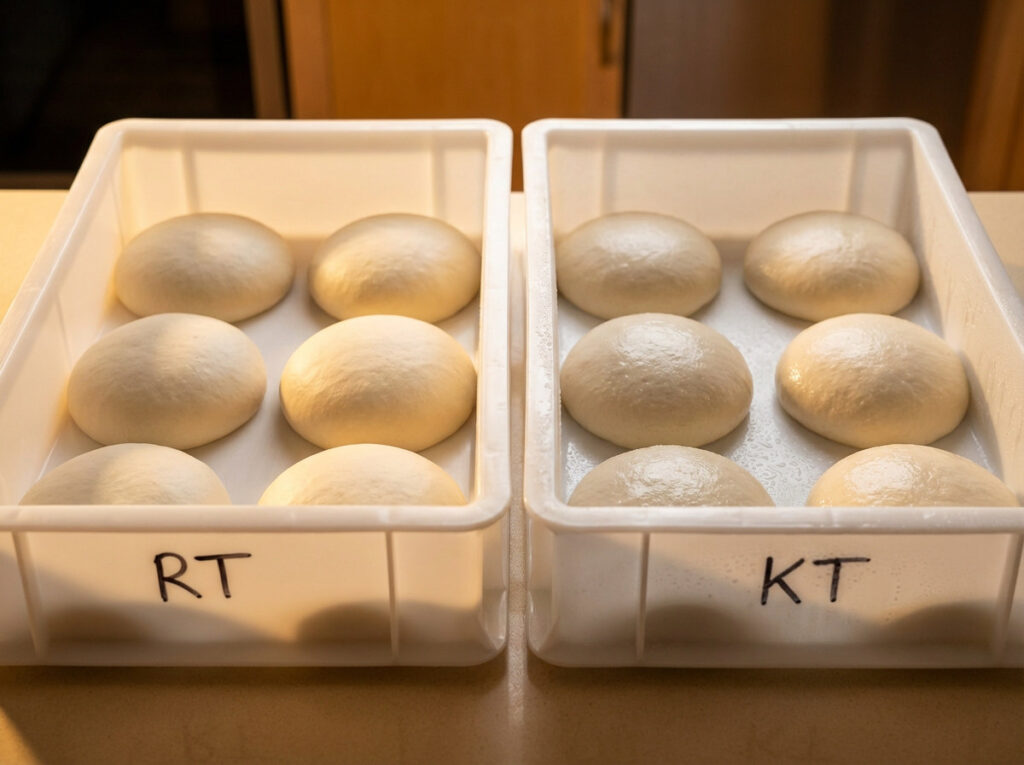
RT and CT – what does that even mean? 🧐
Before we dive in, a quick bit of vocabulary so we're all talking about the same thing:
- RT (Room Temperature): The dough matures at normal room temperature. That's the classic way, as prescribed by the AVPN (the guardians of true Pizza Napoletana).
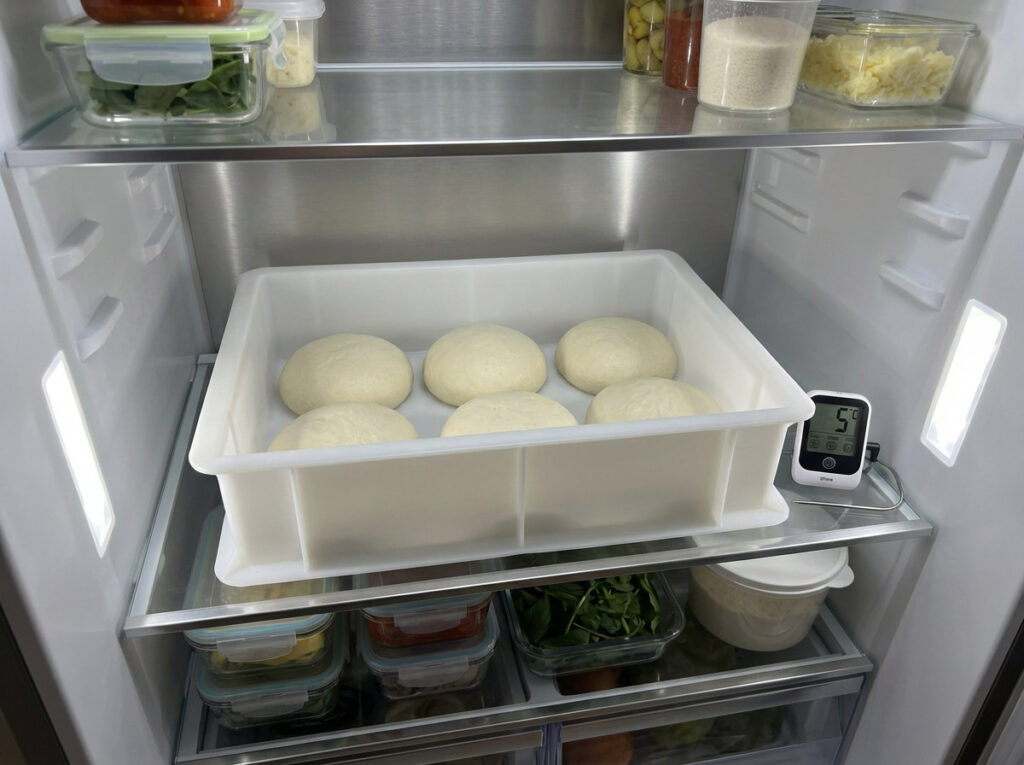
- CT (Cold/fridge temperature): The dough goes into the fridge (usually at approx. 4–6 °C).
The catch with room temperature: why RT is sometimes a pain
The AVPN is very clear: a real Neapolitan pizza matures at room temperature. Period. But let's be honest: we don't all live in an air-conditioned bakery in Naples. 🇮🇹
In theory RT sounds great, but in practice at home it's often a gamble:
- The heating: In winter you might have 22 °C in the kitchen during the day. At night the heating turns down (night setback) and suddenly you only have 18 °C. ❄️
- Summer: When it's 30 °C outside, the dough takes off on you like a Ferrari.
The problem: Yeast is a living thing. The warmer it is, the faster it works. If the temperature fluctuates, your result is different every time. You'd constantly have to adjust the amount of yeast so the dough doesn’t go “over” (overproofing) and end up tearing.
Why we love cold fermentation (CT) 🧊
I'll be totally honest: at our place, cold fermentation is almost always the preferred choice. Why? Because we're all about consistency.
- Reliability: Your fridge is (hopefully) always at a constant 5 or 6 degrees. That means: if you make your recipe today and again tomorrow, the result will be identical. You have full control over your yeast.
- Time management: With CT, you decide when to bake. You can park the dough for 48 hours and take it out when the guests arrive.
- Flavour & digestibility: In the cold the yeast works extremely slowly, but the enzymes stay busy. They break the starch down into sugar. That gives you great browning in the oven and makes the dough really easy to digest.
💡 Quick guide: getting the yeast amount right
For your dough to rise perfectly, you need to adjust the amount of yeast. Here's a rough rule of thumb per kilo of flour:
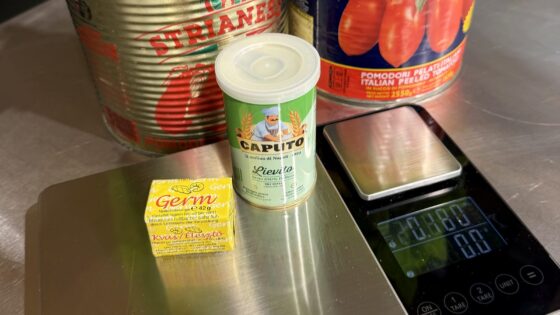
- RT (24h at approx. 18-20 °C): approx. 0.8 to 1.2 grams of fresh yeast.
- CT (48h in the fridge): approx. 2 to 3 grams of fresh yeast (because the cold slows down the rising power).
- Tip: Always use a precision scale, because with pizza, milligrams decide between success and “flatbread”.
The “insider tip” for pros: the wine fridge 🍷
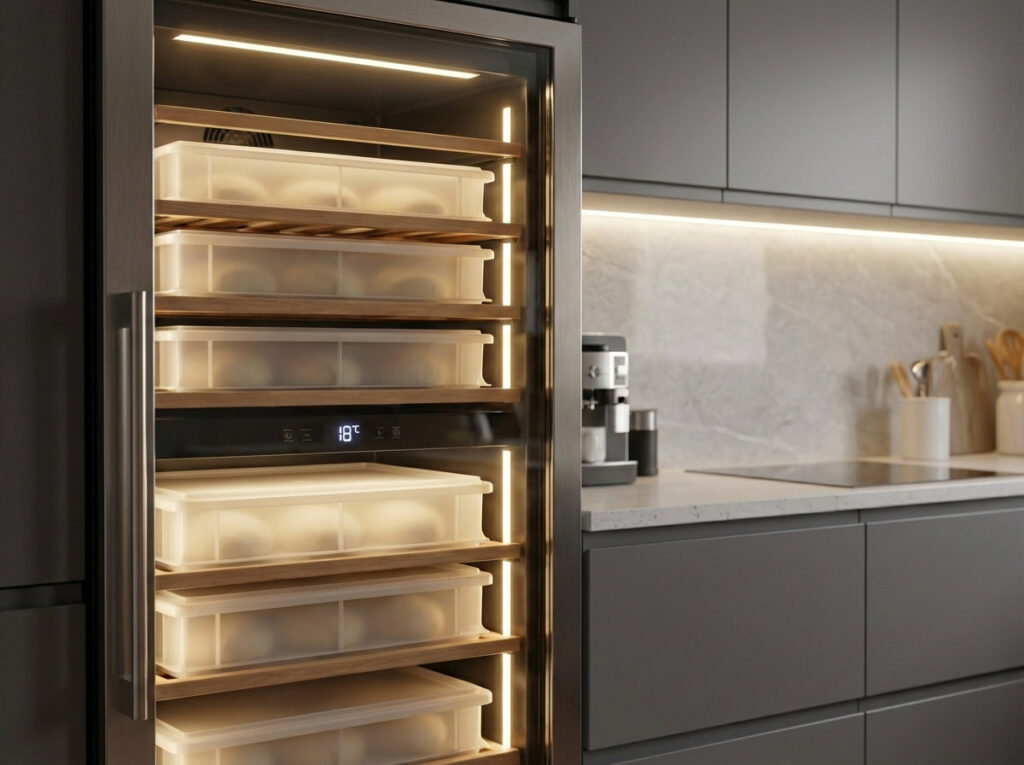
Lately I've heard from more and more pizza nerds who use a brilliant middle ground: the wine fridge.
If you have one, you can often set it to a constant 18 °C. That's basically the “perfect room temperature”. The advantage: the dough matures faster than in a real fridge, but much more controlled than in the kitchen. At a constant 18 °C you can also ferment the dough beautifully over several days without the yeast going crazy. A real luxury solution for anyone who wants to get the maximum flavour out!
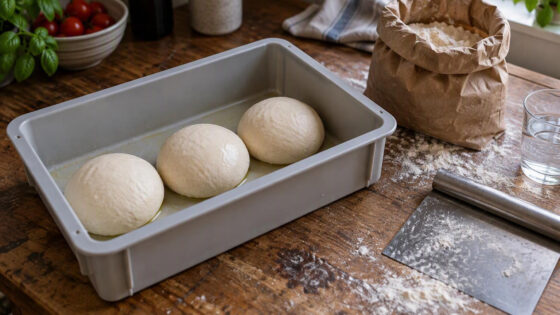
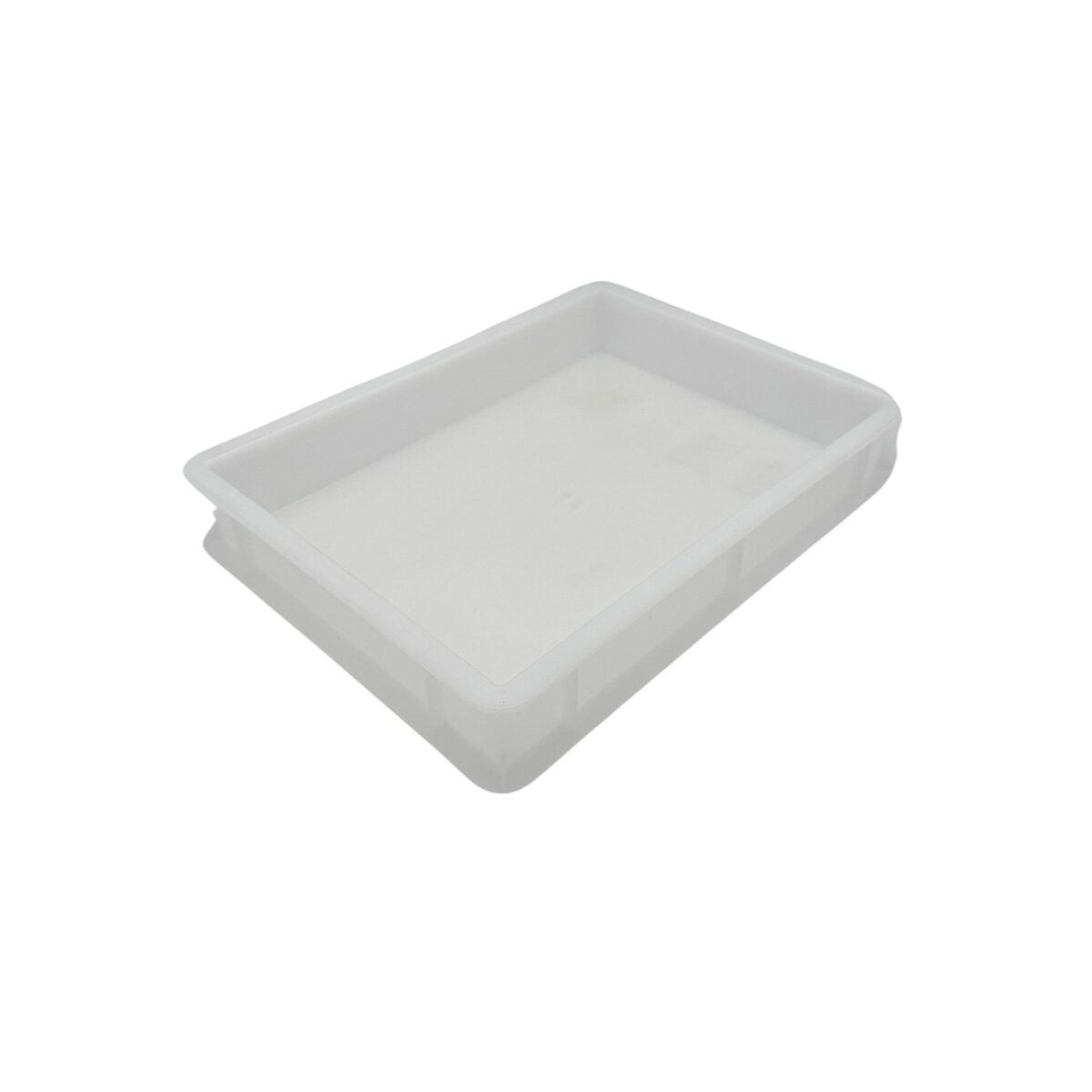 Pizza dough ball box 40x30x7cm, white*view at PizzaLaden ↗
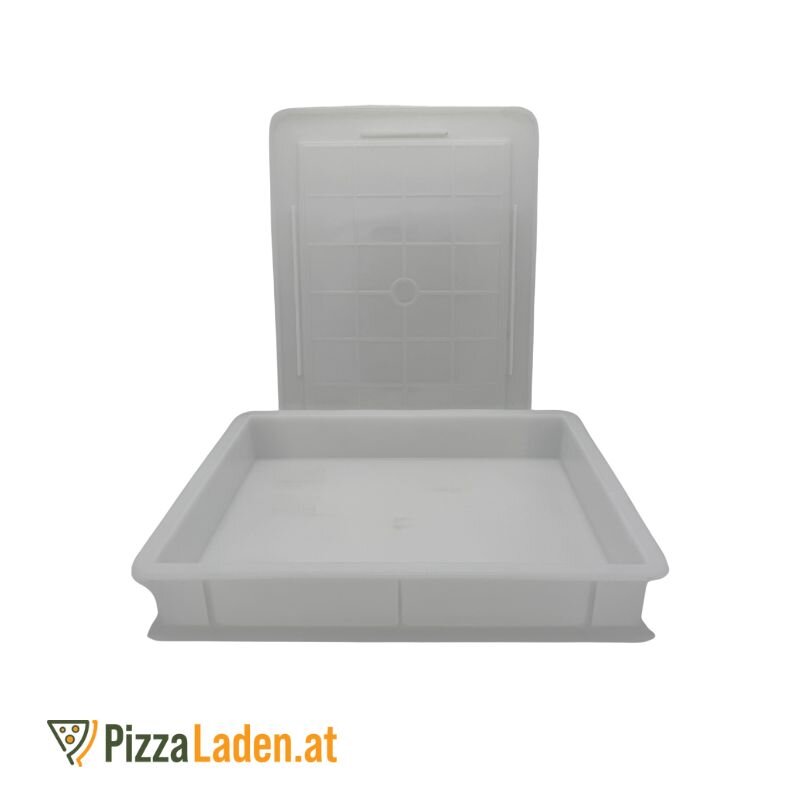 Pizza dough ball box set - 1x box + 1x lid, 40x30x7 cm, white*view at PizzaLaden ↗
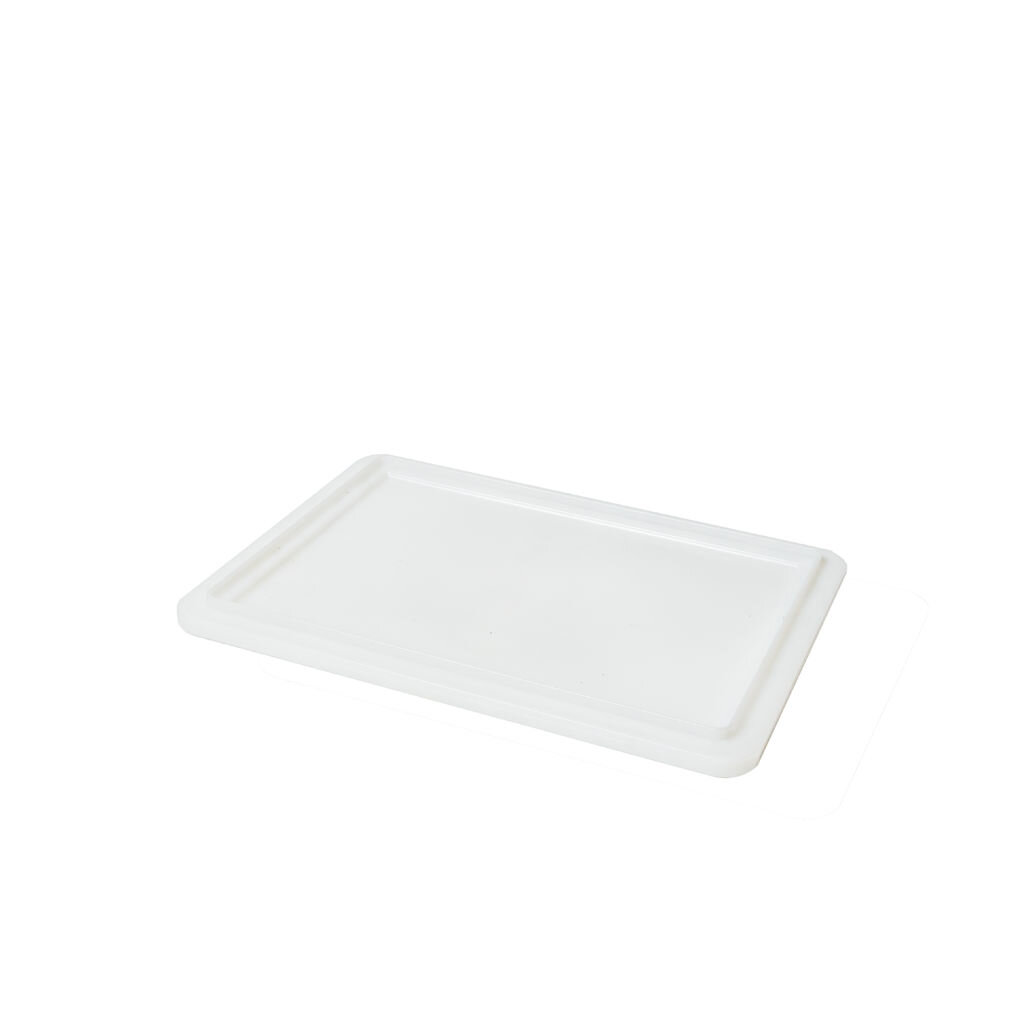 Lid for pizza dough ball box 40x30cm, white*view at PizzaLaden ↗
The Naples myth: “They never do that there!”
You hear it again and again: “In Naples, no dough ever goes in the fridge!” Honestly? Do you really think that at 35 °C in high summer the dough just sits around in the hot kitchen? 😉
I've been to Naples myself and can tell you how it works there: the dough is often made in the kitchen, but afterwards it goes into another room with a constant, cooler temperature. Nobody just leaves the dough to fate with extreme fluctuations. Controlling the temperature is everything – whether in a back room or in the fridge.
My verdict: what tastes better? 🏆
I've tested both until I dropped. My personal take:
- An RT dough (approx. 24 hours) often tastes a touch more “grainy” and aromatic.
- A CT dough wins with a great texture and, thanks to the long maturing time (e.g. 48h), often sits even lighter in your stomach.
My advice to you: Do what works best for you! If you're a beginner, start with cold fermentation in the fridge. It takes the stress off and you get to know the dough and how the yeast behaves better.
How about you? Are you Team Fridge, Team Wine Fridge, or does your dough get to enjoy the room air? Tell me in the comments below – I'm curious about your experiences!
Until next time, when it's once again: Let's talk pizza!
Servus and Baba,
your Klausi 🍕