



Your new pizza oven has arrived – and somewhere in the packaging there's a stone. Now what? Most people chuck it straight in and start baking. I know the feeling, but that's exactly where most of the mistakes happen that I see again and again in my workshops: wrong seasoning, too much water, the wrong cleaning method – and the stone cracks or stays sticky forever.
And yet looking after a pizza stone isn't complicated at all. You just need to know what material yours is made of – because the stone in your oven isn't always the same. Biscotto, cordierite and firebrick behave fundamentally differently when heated and cleaned. Here you'll get the answers the manufacturer usually doesn't give you.
Pizza stone types compared: biscotto, cordierite and firebrick
Before we talk about care, a quick explanation of the three materials – because that determines everything that follows.
Biscotto di Sorrento
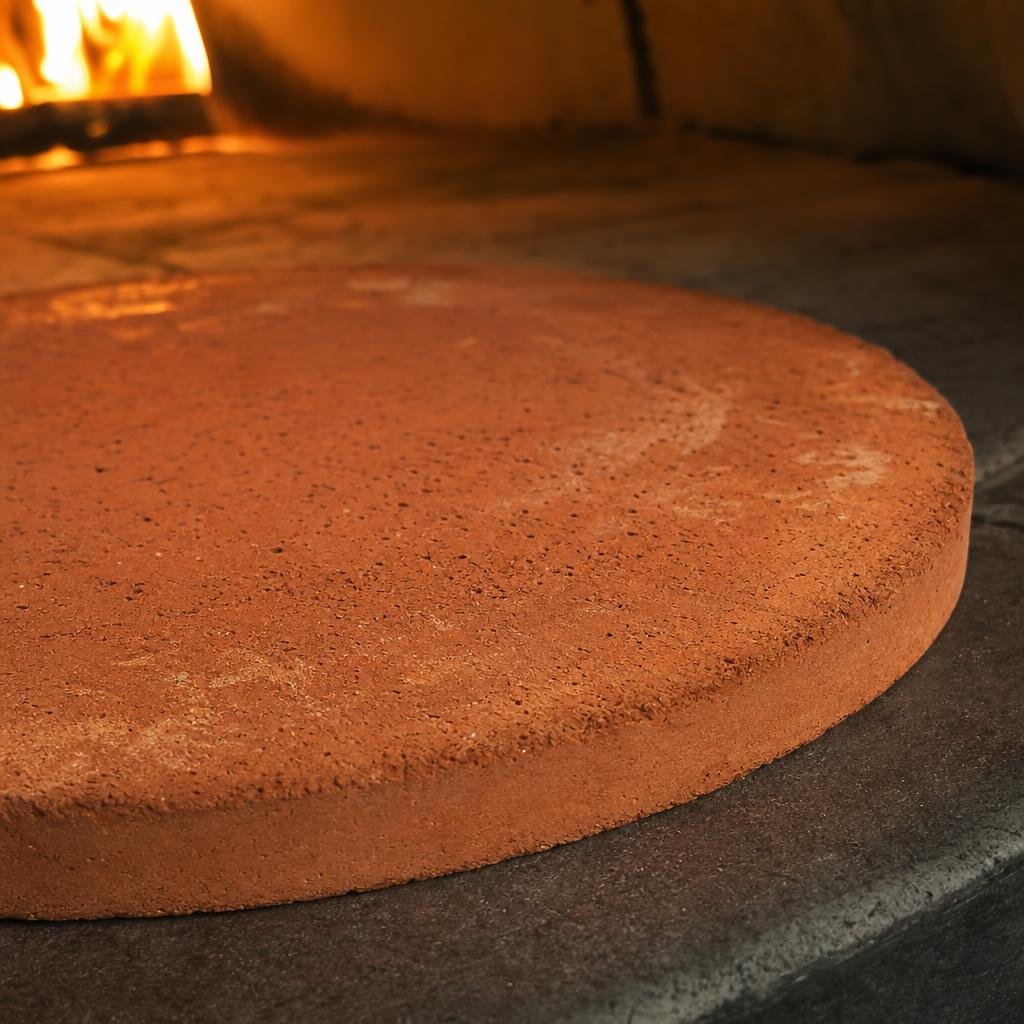
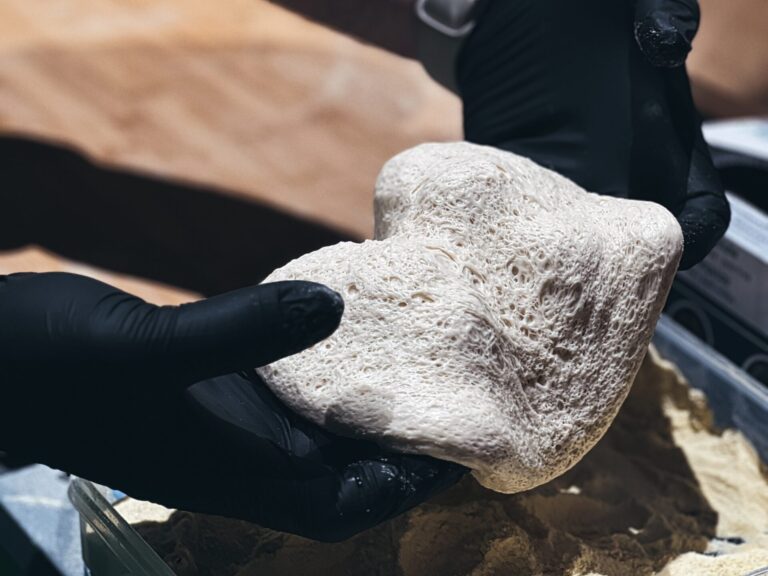
This is the king of pizza stones. Handmade from a special clay from the area around Sorrento, in Campania. Every stone is unique – slight differences in colour and shape are normal and not a defect.
What makes biscotto special: it heats up more slowly than cordierite, but in return it releases the heat to the pizza incredibly evenly – like the stone floor of a real wood-fired oven. The base browns evenly without burning, even at 450–500°C. You can leave a Neapolitan pizza on it for 60–90 seconds without the base turning black. That's the real reason pizzerias use biscotto – not because it's particularly cheap.
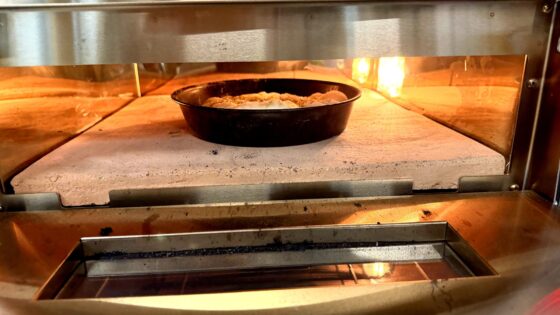
Biscotto is standard in Neapolitan ovens. One important note about the Effeuno Biscotto 2024: it's not a classic Biscotto di Sorrento, but a hybrid stone specially developed by Effeuno. Effeuno ovens used to ship with two stones; today they come with a single hybrid stone. It behaves much like a real biscotto – stores heat well, releases it evenly – but it holds a lot more moisture during the first seasoning than a classic biscotto. More on that in a moment.
Cordierite
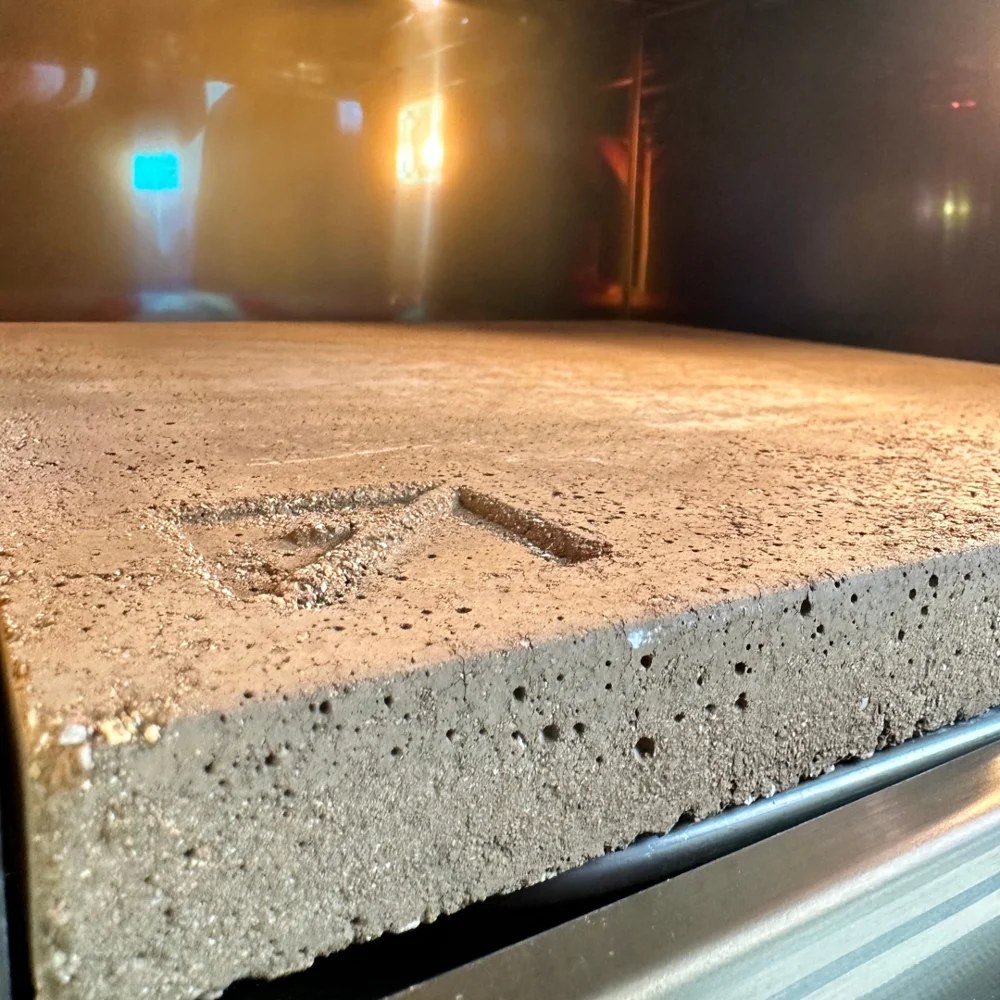
Cordierite is a natural stone and the most commonly used pizza stone in home ovens and gas pizza ovens like the Witt or Gozney. It conducts heat to the pizza much faster than biscotto – meaning the base gets crispy quickly, even if your oven can't reach 450°C. For normal home ovens at 250–280°C that's a real advantage. On the other hand, the heat distribution is a bit less even than with biscotto – at very high temperatures the base can burn faster in spots.
Cordierite is tougher than biscotto and handles temperature changes well. For home use up to about 350–400°C it's a very good choice. Pro tip: with cordierite, thickness matters more – a 1.5 cm stone stores much more energy than a 1 cm stone.
Firebrick (chamotte)
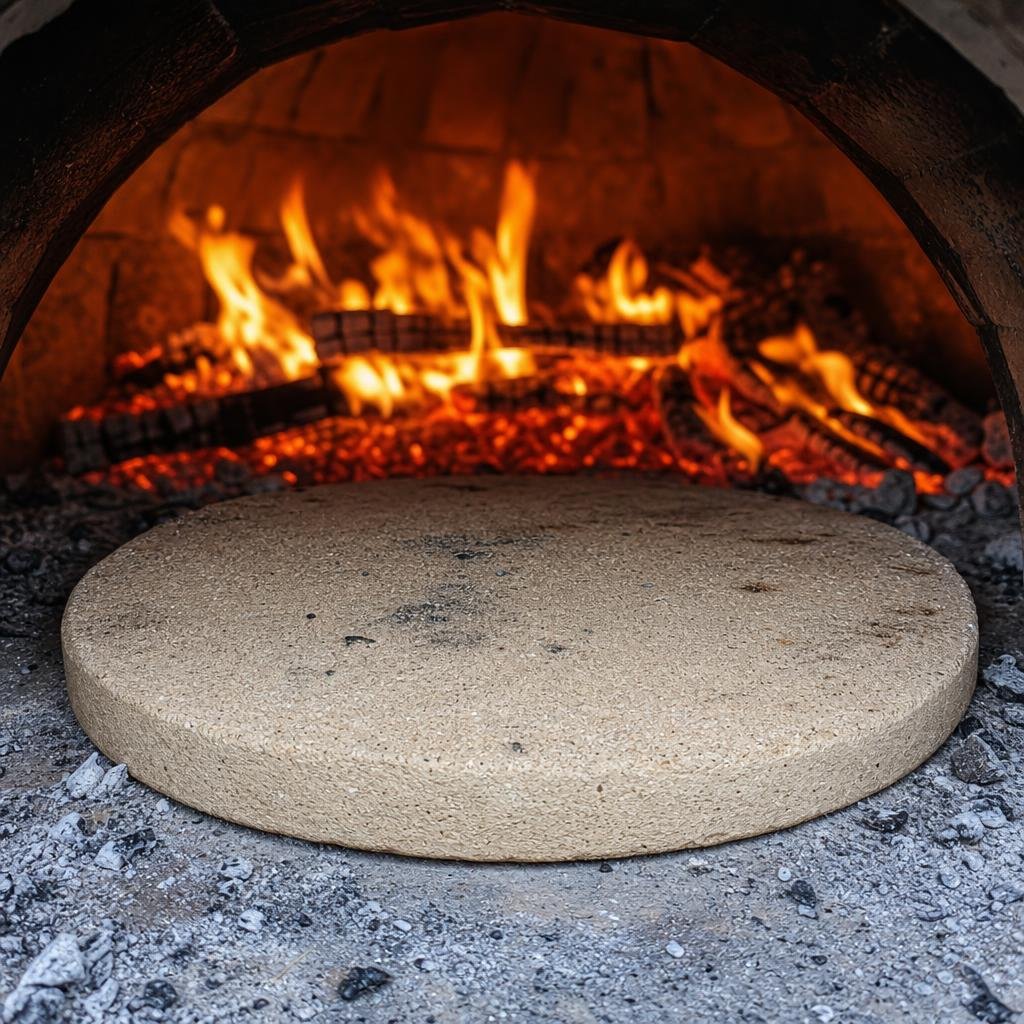
Firebrick isn't a natural stone, but a fired industrial ceramic product made from clay. Extremely heat-resistant, cheap and heavy. In terms of heat it sits somewhere between biscotto and cordierite: it heats up a bit faster than biscotto but releases the heat less evenly. For a wood-fired oven in the garden that's absolutely fine.
The downside: firebrick absorbs a lot of moisture. Once it's got wet and is heated quickly – the stone can crack. So be especially careful when cleaning. For outdoor wood-fired ovens, firebrick is a proven, affordable option.
| Material | Heat behaviour | Ideal for | Care |
|---|---|---|---|
| Biscotto | Heats slowly, releases very evenly | Neapolitan pizza, 400–500°C | Dry only |
| Cordierite | Heats fast, crispy straight away | Home oven, up to 400°C | Slightly damp is OK |
| Firebrick | Medium, robust | Wood-fired oven, grill | Dry only |
For the tech nerds: biscotto ~0.3–0.6 W/(m·K), firebrick ~1–1.3 W/(m·K), cordierite ~2–3 W/(m·K). Sources: PizzaBlab Baking Surfaces Guide, GGS Ceramics – Cordierite Properties.
Seasoning a pizza stone – how to prepare it properly
The term „seasoning“ (burning in) gets used for two different things, and that keeps causing confusion. I'll keep them clearly apart:
- Burning off the oven and grill: Every new oven – whether electric pizza oven, grill or wood-fired oven – should run empty at full temperature once before first use. That burns off production residue, manufacturing oils and any coatings. This applies to all ovens and grills, regardless of the stone.
- Seasoning the stone: The stone itself has to be brought up to temperature slowly – the first time, but also after any longer break when it's completely cold. The reason is thermal stress: ceramic and stone expand when heated. Too fast = cracks.
For comparison: in a real pizzeria, new ovens with biscotto stones are slowly fired up over several days – a few hours every day at increasing temperatures, until the stone is completely dried out and seasoned. Of course that's not necessary with a home oven, but it shows how seriously you should take slow heating.
The seasoning protocol (for biscotto and firebrick)
Cordierite doesn't need a special seasoning protocol – it's tougher and copes fine with normal heating up together with the oven. For biscotto and firebrick:
- Step 1: Put the dry stone into the cold oven. Never into a preheated oven – that's the most common mistake.
- Step 2: Heat the oven to 100°C, hold for 15 minutes. Open the door briefly so moisture can escape.
- Step 3: Increase to 150°C, another 15 minutes. Open the door briefly again.
- Step 4: Increase to 250°C, hold for 20 minutes.
- Step 5 (for high-temperature ovens): Keep increasing to maximum temperature, another 30–45 minutes. So with electric pizza ovens, up to 450°C.
During the first seasoning there may be a little smoke or an earthy smell – that's normal. The stone is „burning itself clean“.
Heads-up with the Effeuno hybrid stone: the glass fogs up
When seasoning the Effeuno hybrid stone, something happens that scares a lot of people: the oven glass fogs up, and water can even drip out at the sides of the door. That's completely normal – during the first seasoning the hybrid stone holds a lot more residual moisture than a classic biscotto.
What you should do:
- Open the door briefly at regular intervals so the moisture can escape.
- Wipe the glass from the inside with a damp cloth – careful: the oven is hot, risk of burns! Always work with long gloves.
- Just dab away the water running out at the sides – no problem.
- Better to season twice than once too fast: the first time up to 250°C, the second time all the way up to temperature.
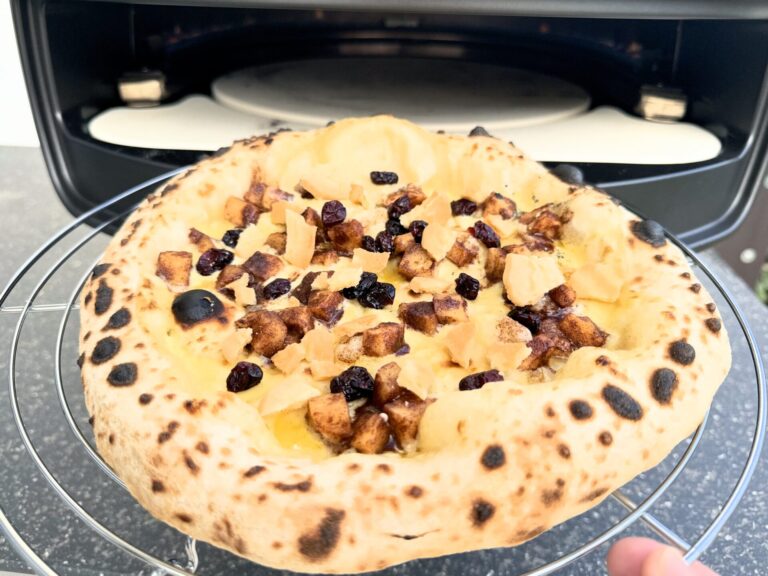
Pro tip: Do the first 2–3 bakes with simple focaccia or flatbreads before you put a proper pizza on it. The stone absorbs a bit of fat and the surface closes up. After that you'll bake better.
Cleaning a pizza stone – the golden rules
Here's the topic that raises the most questions in my workshops. And at the same time the one where most stones get ruined. So pay attention:
What you should never do
- Never use washing-up liquid. All pizza stones are porous. Washing-up liquid soaks into the pores, gives off fumes the next time it's heated and ruins the taste. Permanently.
- Never put water on a hot stone. Thermal shock – the stone cracks. Always let it cool down completely first.
- Never soak it. Firebrick and biscotto in particular soak up water. A soaked stone can literally burst from the steam pressure when it's heated.
- Never use metal scourers or steel wool. They scratch the surface and leave metal residue that burns in.
What really works
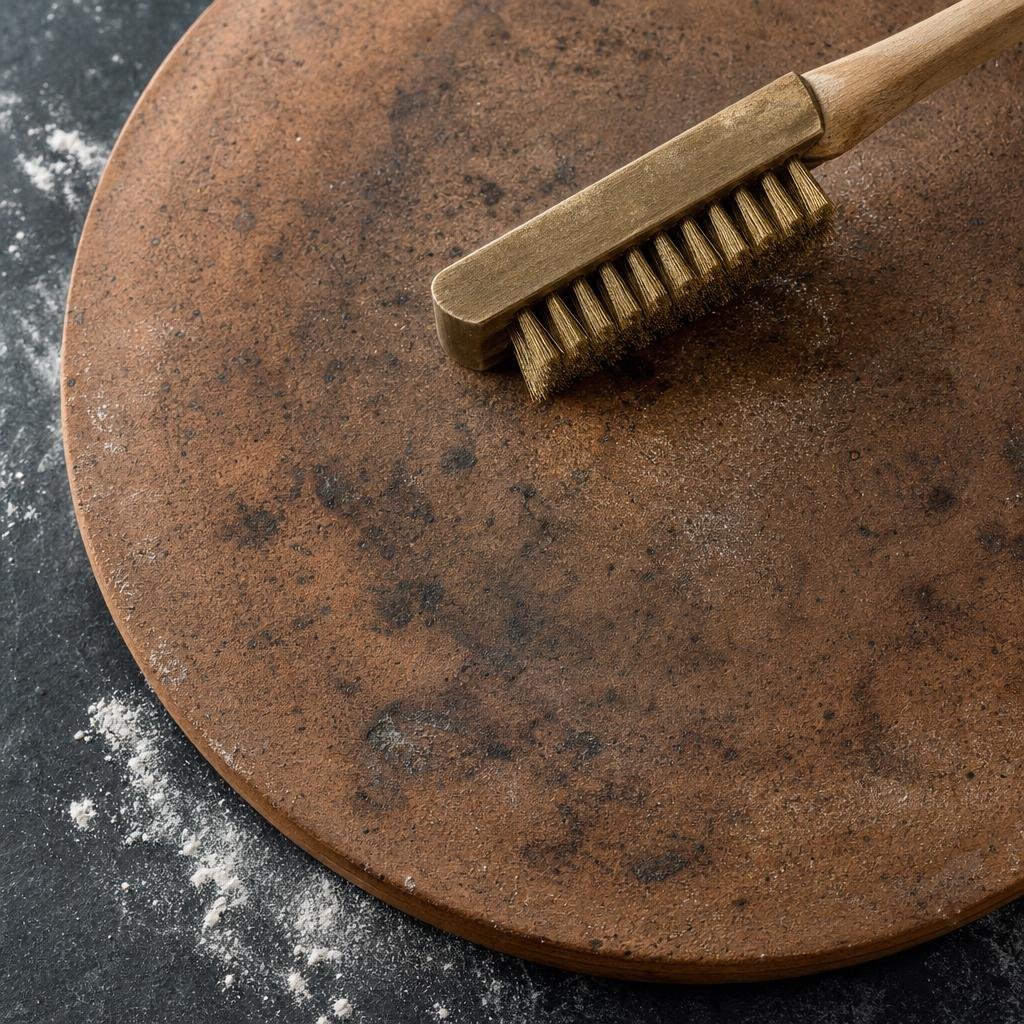
The best everyday cleaning method is the simplest: wait until the stone is cold, then brush it off dry. The right brush depends on the oven:
- For electric pizza ovens (Effeuno, Tentazione, Witt eGNITE): The Cerutti cleaning brush for electric pizza ovens – compact, fits nicely in the oven and reaches the stone.
- For larger ovens and wood-fired ovens: The Cerutti cleaning brush XL with extra reach – the long handle is worth its weight in gold if you don't want to stick your face into the hot oven.
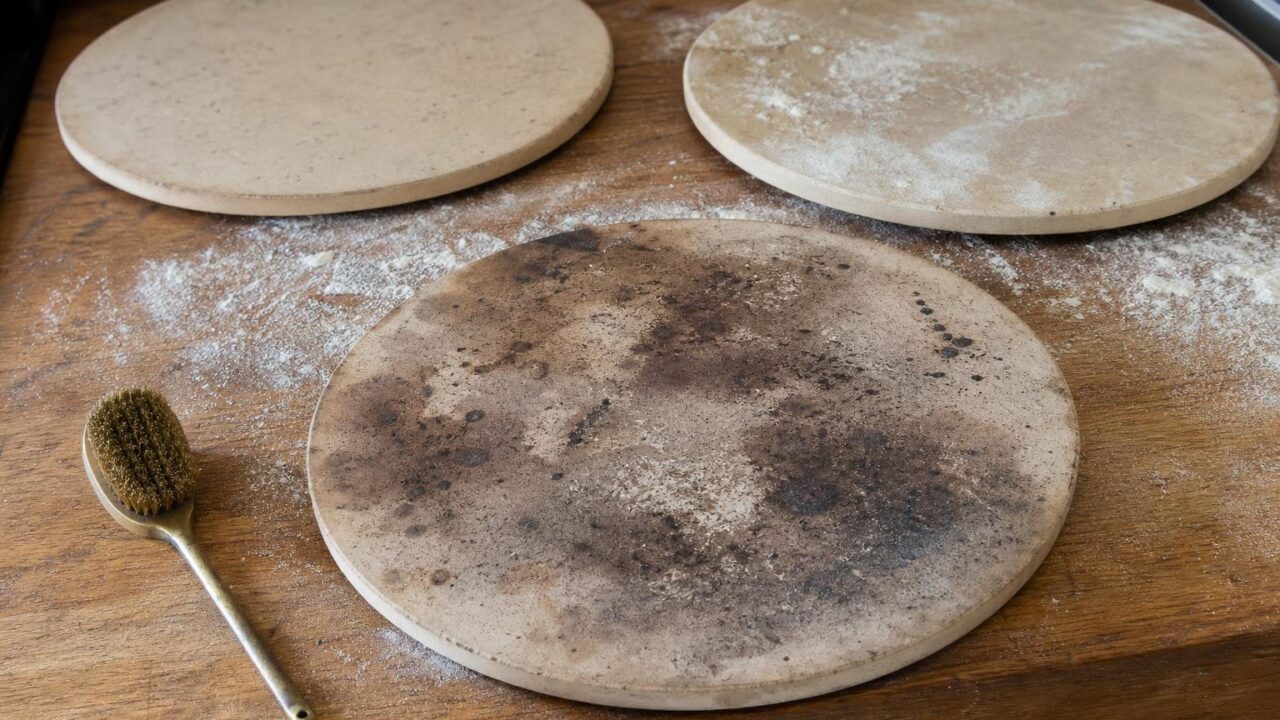
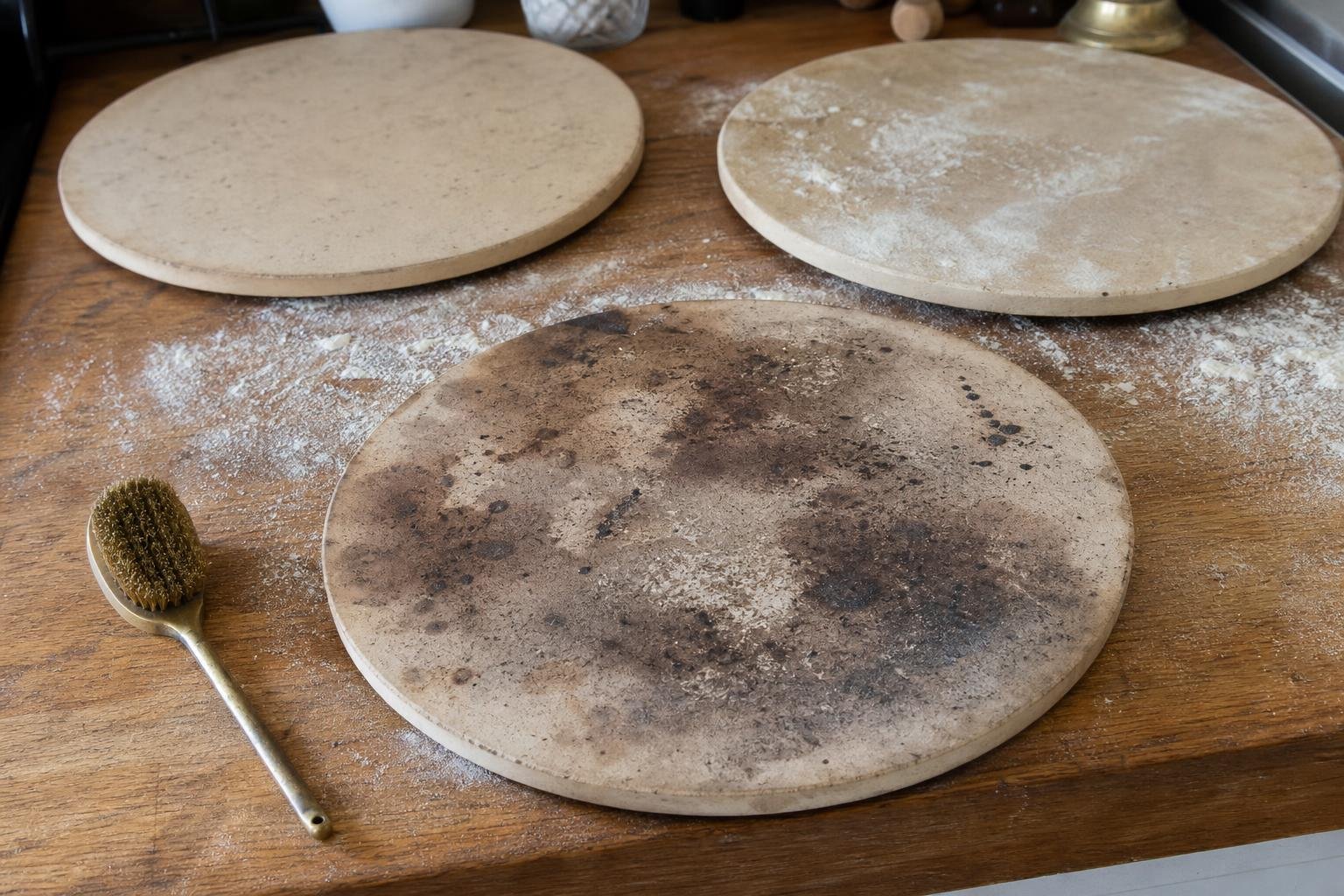
And then there's one more thing I tell everyone in my workshops: a dark, stained pizza stone is not a dirty pizza stone. The dark spots are burnt-in flour and fat residue – they won't hurt you, and in the long run they even improve the non-stick properties of the surface. Let go of the idea of perfection.
Stubborn stains? Pyrolysis first
If something has burnt on that won't brush off – cheese residue, tomato sauce, whatever – then pyrolysis is the first thing to reach for, not the last.
Run the stone at maximum temperature for a longer time. Everything organic burns off completely. Once the stone has cooled down completely, simply wipe away the ash or vacuum it up. Afterwards the stone looks almost like new again – without scrubbing anything.
That works brilliantly with electric pizza ovens that reach 450–500°C. With normal home ovens at 250–280°C it takes longer, but works just the same.
If pyrolysis isn't enough – which rarely happens – there's one very last option: baking powder paste (2 tsp with a little water to make a paste, apply, leave to work, wipe off) or fine sandpaper (400 grit, very light pressure). But honestly: if pyrolysis doesn't help, that usually won't either.
Cleaning by material – what to keep in mind
Cleaning Biscotto di Sorrento
Biscotto is the most sensitive. The rule here: clean it dry only. Brush it off when cold, done. If you really do need some moisture – wipe it briefly with a slightly damp cloth, then let it dry thoroughly right away before the stone goes back into the oven. Never heat up a damp biscotto straight away.
Oil stains on the biscotto look dramatic, but they're not a problem. They disappear by themselves during the next bake thanks to the high heat. Neapolitan pizza bakers call that „seasoning“ and see it as a feature, not a bug.
Cleaning cordierite
Cordierite is the toughest of the three materials. Once it has cooled down completely, you can wipe it with a slightly damp cloth or sponge (no washing-up liquid!). Then dry it well – ideally put it back into the heated oven briefly. The pyrolysis method also works brilliantly with cordierite.
Cleaning firebrick
Firebrick behaves much like biscotto – the rule here is also: clean it dry. Firebrick's high absorbency makes water a risk factor. Brush off, scrape out, done. If your firebrick stone sits outside in a grill or wood-fired oven and gets rained on: let it dry completely, then heat it up slowly using the seasoning protocol above before you bake again.
FAQ about pizza stones
My conclusion: care is easier than you think
The biggest mistake with pizza stones is being afraid of signs of use. A good pizza stone gets darker over time, picks up a patina, looks „used“ – and that's exactly when it's at its best. No washing-up liquid, no water while it's hot, always heat it up slowly – those are the three rules you need to remember. And if something really does go wrong: pyrolysis solves almost every cleaning problem.
If you're looking for a new pizza stone right now or want to know which one fits your oven: in the pizza stone category at PizzaLaden.at you'll find cordierite, biscotto and baking steels with all the specs. And if you have questions, just write to me.
What material is your pizza stone made of – and have you had any experiences with cleaning or seasoning? Write it in the comments, I'm curious!