



Servus, dear pizza friends!
Welcome to the latest edition of my little Pizza-Stunde. Today we’re kicking off an exciting new series in which I’ll put different pizza flours to the test in practice.
First up is the pizza flour from “Gut Hardegg” – it’s a type W700 wheat flour (Austria) that I spotted by chance at our local supermarket. Finding this flour was a little highlight for me, because up to now I’ve always bought my flours wholesale, mainly imported flours from Italy. Until now, the regular supermarkets in Austria sadly didn’t have a comparable product, which made me even more curious about local flours.
I found the Gut Hardegg flour in a Spar (Interspar) store and couldn’t resist taking it home right away. I want to stress that this isn’t an ad for any particular supermarket chain – it was pure chance that I found this flour there.
The idea behind this new series is to explore, together with you, the variety and quality of pizza flours available in Austria. I want to find out which flours are really worth it, and whether we actually always have to fall back on flours from neighbouring countries.
I’m really looking forward to this culinary experiment and to sharing my discoveries with you. And of course I’m curious about your opinions and experiences too. If you have a particular flour in mind that I should test, or if you’ve already tried the Gut Hardegg flour, let me know! Your tips and feedback are always welcome while we hunt for the perfect pizza ingredients together.
Without further ado, let’s dive into the pizza flour test adventure and see what the Gut Hardegg flour brings to the table (or rather, to the oven)!
First impression
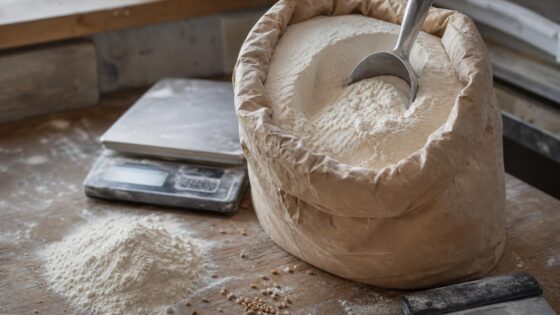
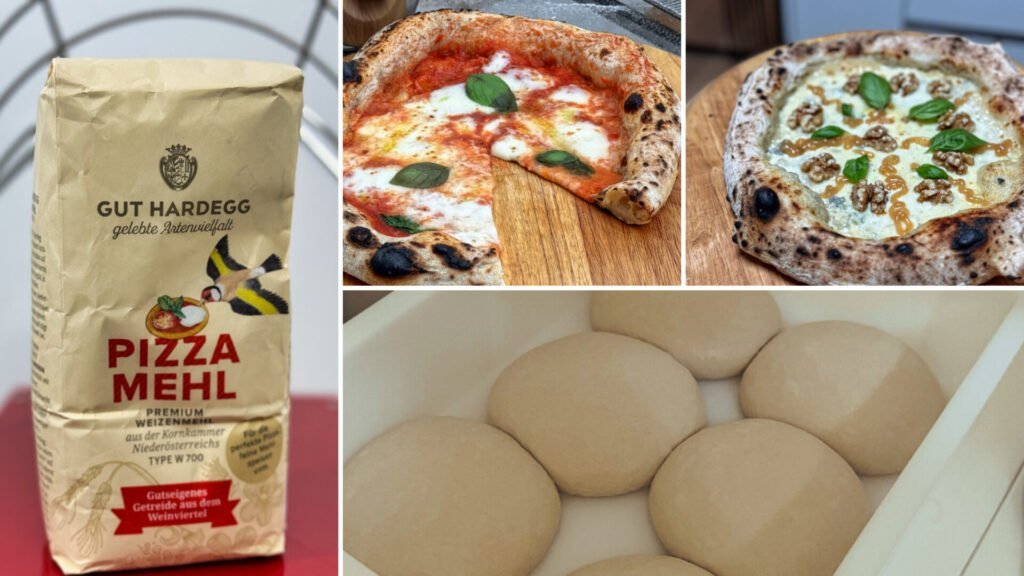
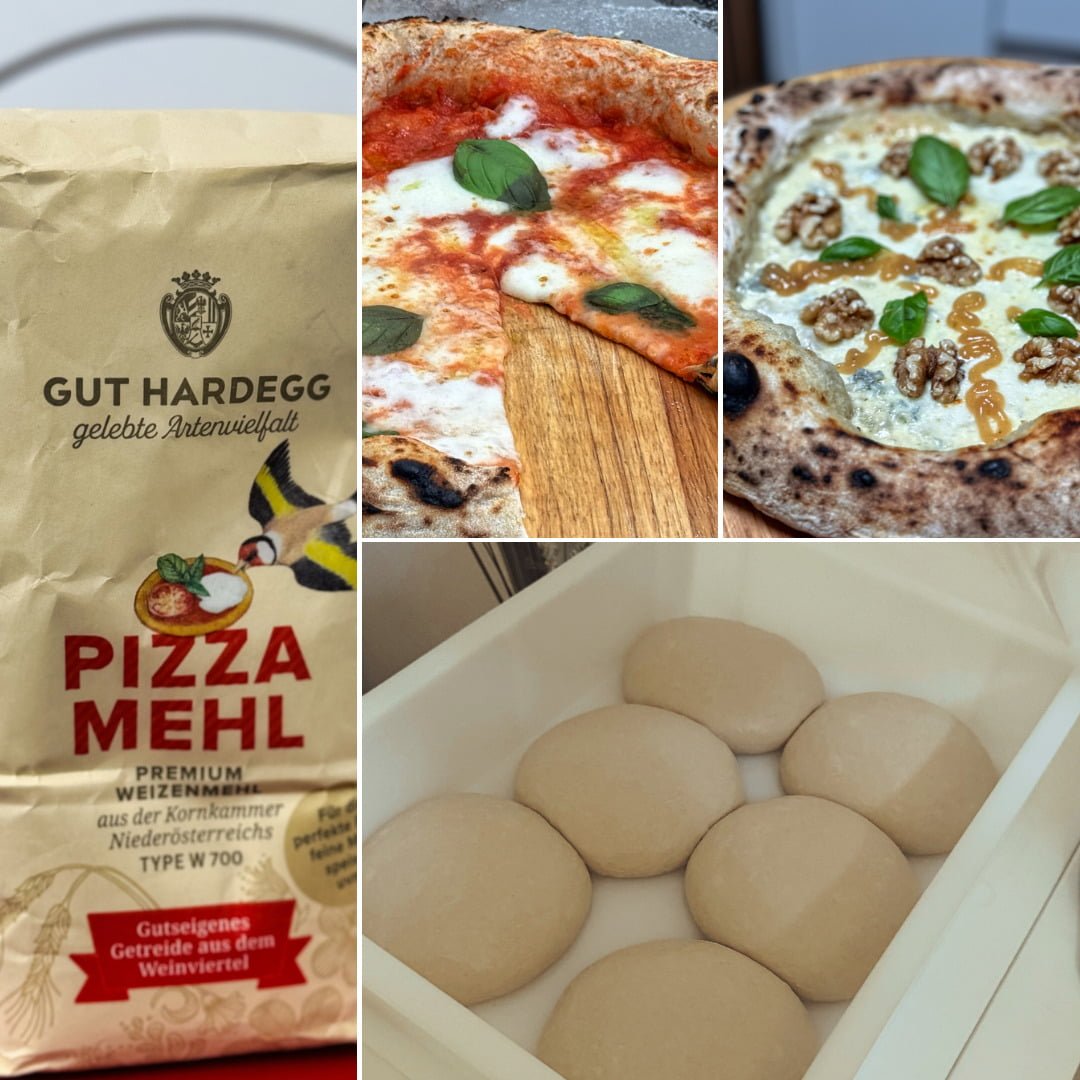
The packaging itself looks very high quality. It’s not the typical standard flour bag format, but a bit taller and narrower.
The packaging says: “100 % from the estate’s own grain from the Weinviertel”. It also states a protein content of 12.3 g / 100 g – that figure is what got me to buy it for a test.
The flour itself is very fine and feels good in the hand; visually I couldn’t see any difference to, e.g., Caputo Cuoco or La Farina 14. The flour is also milled in Lower Austria, at the Kittel Mühle mill.
Below you’ll find the nutrition table, which I copied from the packaging.
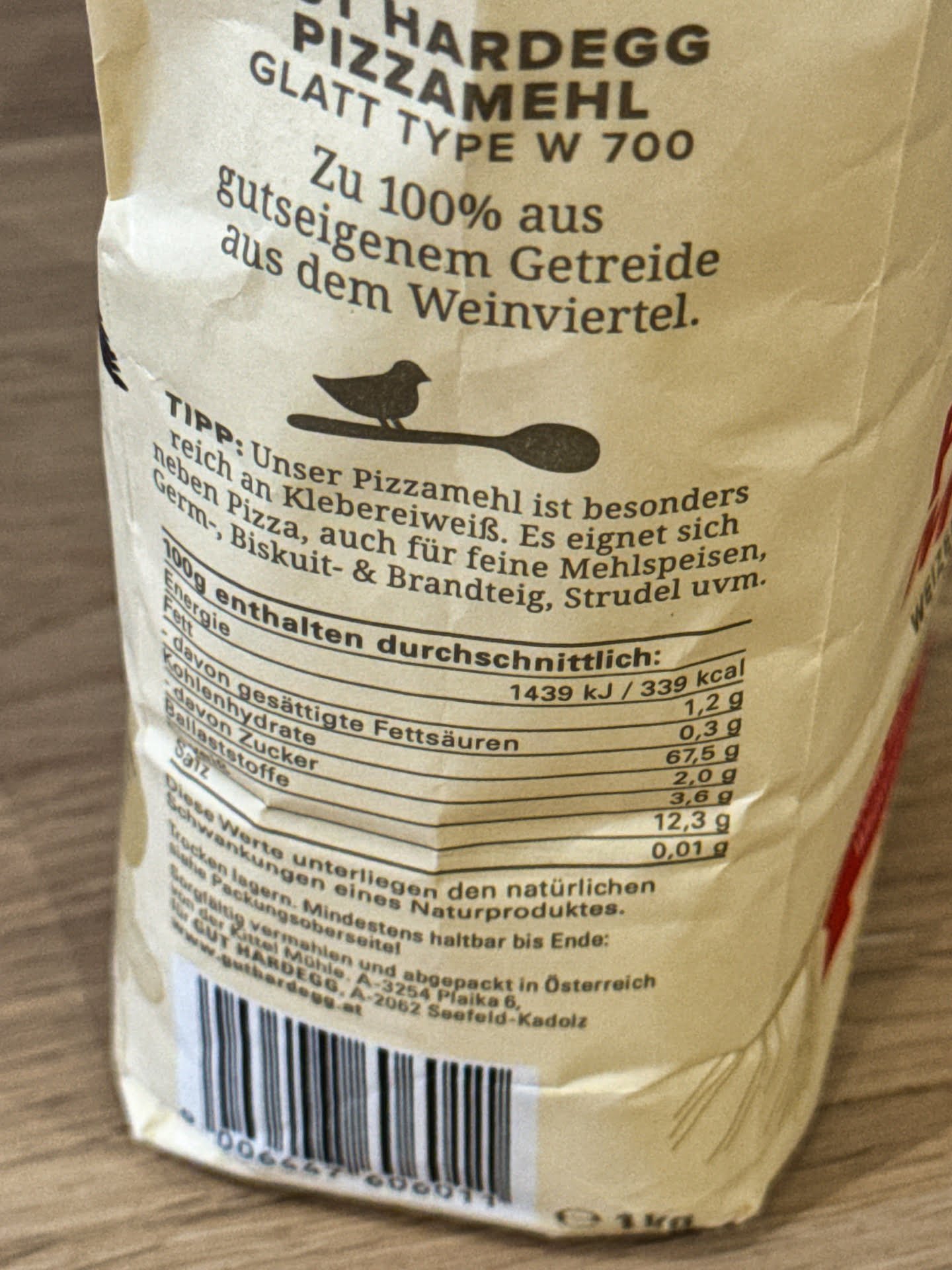
Nutrition table
| average per 100 g | |
|---|---|
| Energy | 1439 kJ / 339 kcal |
| Fat | 1.2 g |
| – of which saturated fatty acids | 0.3 g |
| Carbohydrates | 67.5 g |
| – of which sugars | 2.0 g |
| Fibre | 3.6 g |
| Protein | 12.3 g |
| Salt | 0.01 g |
All information without guarantee (as stated on the packaging)
Making the dough
For the test I went with a direct, warm fermentation at around 20 °C room temperature for 24 hours. The dough was made in a spiral mixer and then baked in an electric pizza oven (Effeuno).
Ingredients:
- 1 kg Gut Hardegg pizza flour
- 680 g water (from the fridge)
- 28 g sea salt (fine)
- 0.6 g dry yeast
Method:
- Put the flour and the dry yeast into the spiral mixer and combine on the lowest speed.
- Add about 2/3 of the water and raise the mixer speed to medium.
- Once the water has been absorbed, add the rest of the water a splash at a time until it’s fully worked into the dough.
- After all the water is in, increase the mixer speed. When the dough starts forming a slight pumpkin shape and begins to “slap”, add the sea salt.
- Keep kneading until the dough forms a nice pumpkin shape and is no longer sticky.
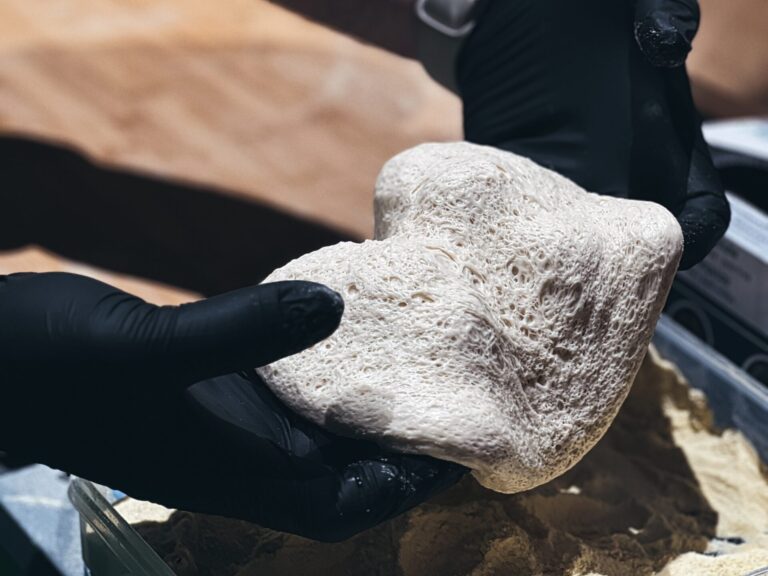
- Then take the dough out of the bowl, build tension with Stretch and Fold, and put it into a bowl coated with olive oil for bulk fermentation.
- Let the dough rest for approx. 30 – 40 minutes, then take it out of the bowl and do another Stretch and Fold.
- After the 2nd Stretch and Fold, cover the dough and leave it for just under 12 hours of bulk fermentation (room temperature approx. 20 °C).
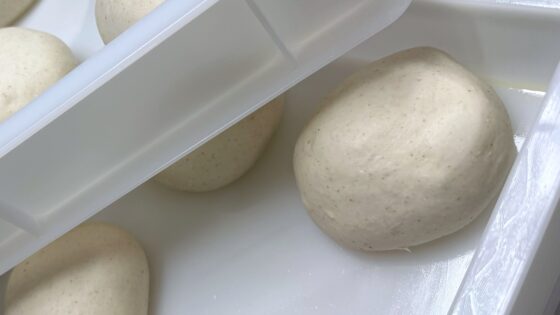
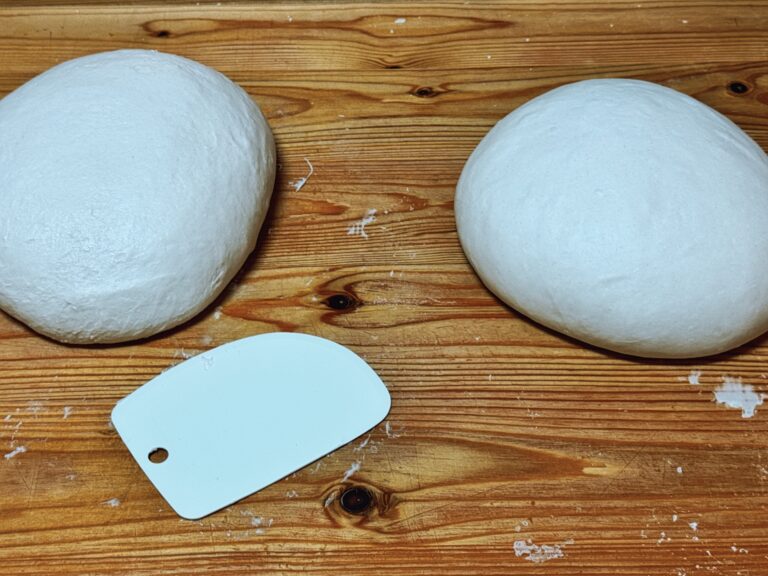
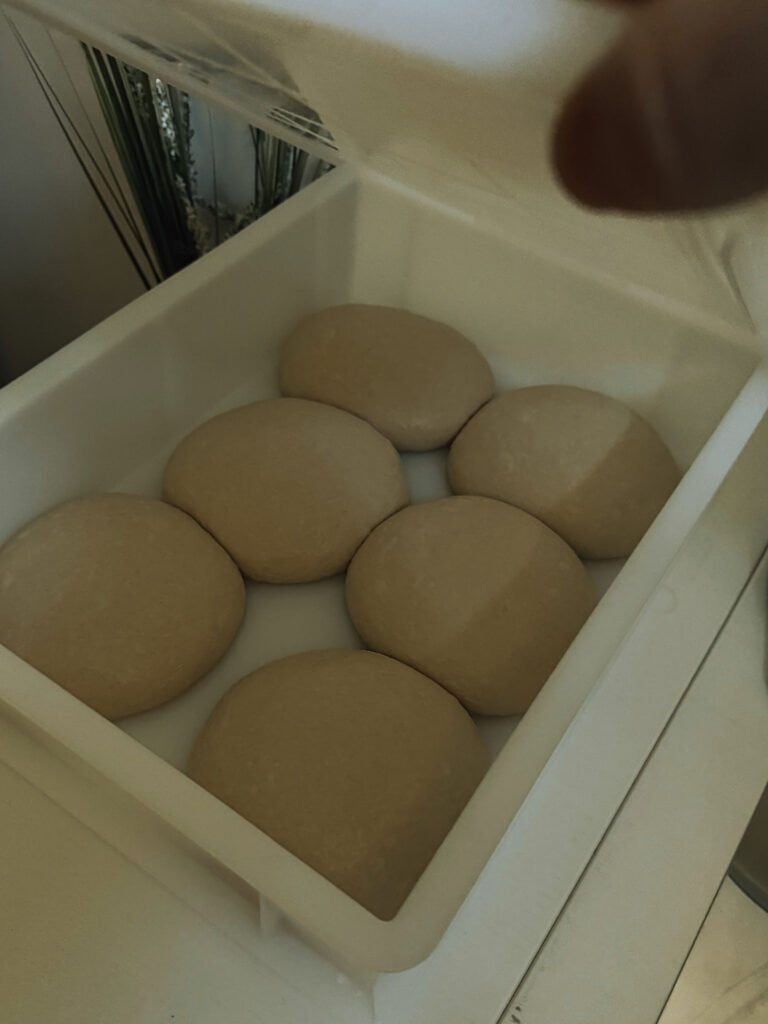
- After 12 hours, take the dough out of the bowl, divide it into 280 g dough balls, shape them with tension (as described in the original Neapolitan pizza dough recipe) and put them into an oiled dough ball box for another 12 hours of ball proofing.
- After about 24 hours in total, the pizza can be made and baked.
Baking
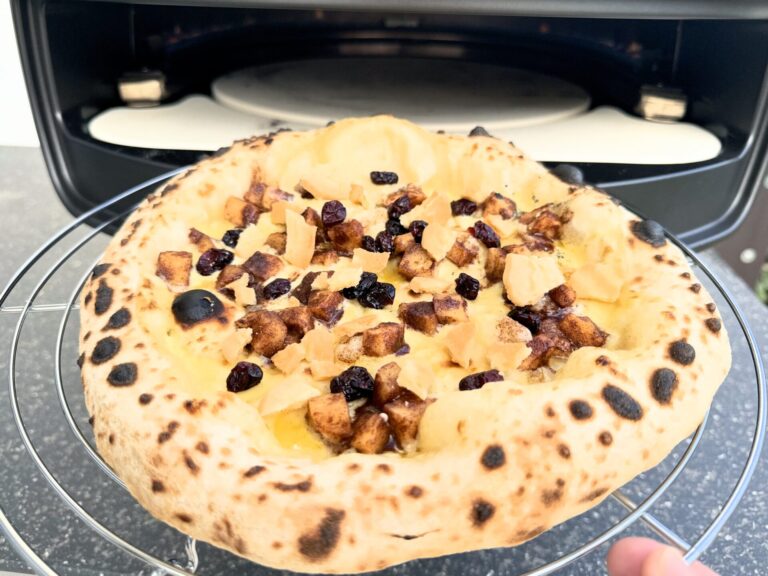
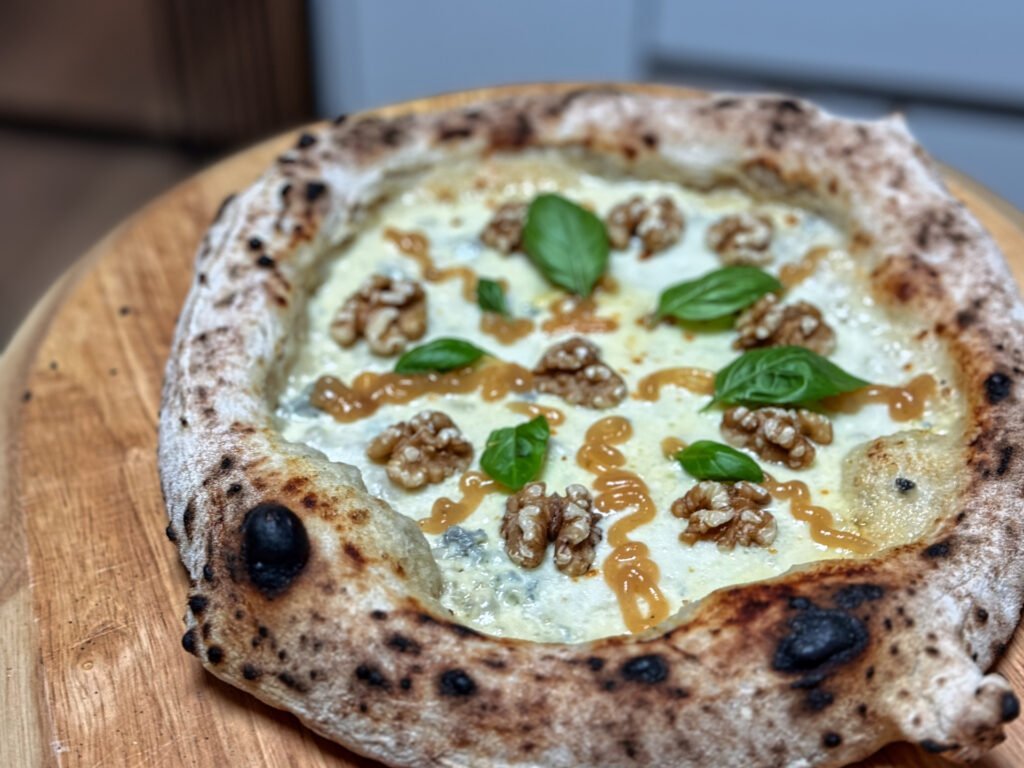
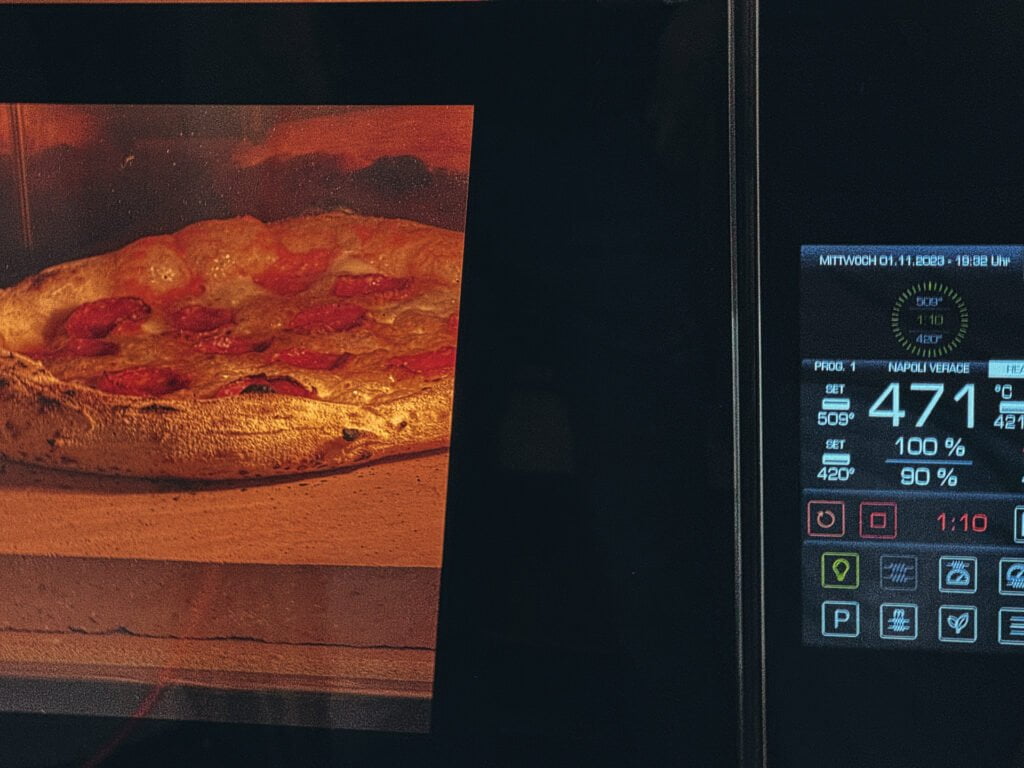
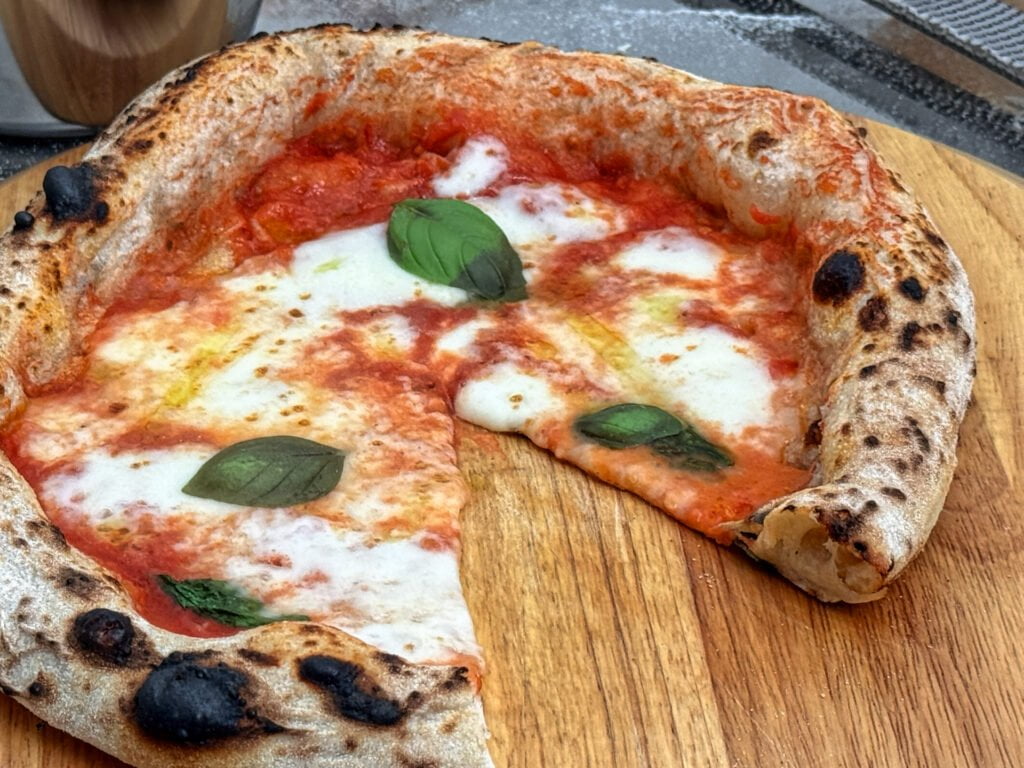
The pizza was baked in the Effeuno P134HA Evolution Extra Power oven. I used the “Napoli Verace” programme, with top heat at 509 °C and bottom heat at 420 °C. Baking time was 1 minute and 10 seconds. The result was excellent, as you can clearly see in the pictures.
Taste
The pizza baked with Gut Hardegg pizza flour tasted really good. The dough was crispy outside and soft inside, exactly as it should be. There was also a light wheaty note that added nicely to the overall flavour. The crust had a lovely golden-brown colour that didn’t just look good but tasted great too. For a direct comparison with other flours, I deliberately baked a simple Margherita first. The idea was that strong flavours from toppings like spicy salami or a punchy cheese could skew the result. That way I could judge the pure taste of the dough better. All in all, the Gut Hardegg flour made a tasty pizza and is a good base for further flavour experiments.
Value for money
Looking at value for money, Gut Hardegg pizza flour is a really attractive option, especially in a direct comparison with other brands.
During a promotion I got the flour for only € 0.99 per kilogram; the regular supermarket price is € 1.29 per kilogram, and in Gut Hardegg’s own online shop it’s € 1.79 per kilogram. By comparison, Caputo pizza flour costs between € 2.49 and € 2.99 per kilogram from online retailers. Another interesting flour is “La Farina 14” from the Frießinger Mühle in Germany, which is available in German shops for approx. €1.75 per kilogram, but this flour isn’t available in Austria.
Verdict
Gut Hardegg pizza flour has proven to be a promising choice for making pizza. For this test I went with a higher hydration, which made the flour a bit stickier to work with. Even so, it performed well in the oven and delivered convincing results taste-wise. In the next test I’ll probably drop the hydration to 65 %, similar to Caputo Pizzeria flour, to see how that affects handling and the end result. Price-wise, Gut Hardegg pizza flour is very attractive, especially compared to brands like Caputo and La Farina 14, and offers excellent value for money.
Being able to get a high-quality pizza flour at a lower price is a big plus, and the results of this test show that Gut Hardegg pizza flour is a recommendable option for pizzaioli.
*This test currently reflects a single use only and is not a long-term test
Neapolitan Pizza Dough with Gut Hardegg Pizza Flour
Try this simple pizza dough recipe with Gut Hardegg pizza flour and enjoy a crispy, delicious pizza at home!
- Prep
- 30 min
- Bake
- 1 min
- Resting
- 24 h
- Total
- 24 h 31 min
Ingredients
Method
- Put the flour and the dry yeast into the spiral mixer and combine on the lowest speed.
- Add about 2/3 of the water and increase the spiral mixer to medium speed.
- Once the water has been absorbed, add the rest of the water a little at a time until it's fully worked into the dough.
- When all the water is in, turn up the speed of the spiral mixer. As soon as the dough starts to form a slight pumpkin shape and begins to make a “smacking” sound, add the sea salt.
- Keep kneading until the dough forms a nice pumpkin shape and no longer sticks.
-
Then take the dough out of the bowl, build up tension with stretch and fold and place it in a bowl greased with olive oil for the bulk fermentation.
- Let the dough rest for about 30 – 40 minutes, then take it out of the bowl and do another round of stretch and fold.
- After the 2nd stretch and fold, cover the dough and leave it for just under 12 hours of bulk fermentation (room temperature approx. 20 °C).
- After 12 hours, take the dough out of the bowl, divide it into 280 g dough balls, shape them with tension (as described in the authentic Neapolitan pizza dough recipe) and place them in an oiled dough ball box for another 12 hours of final proof.
- Preheat your oven: 30 to 60 minutes depending on the oven (e.g. around 30 minutes for an Effeuno, around 60 for a Gozney Dome).
- After around 24 hours in total, your pizza is ready to be topped and baked.